Politics & Government
Town Hall Meeting on Public Education: Live Blog
Presentations will be made Wednesday night by the village of Lemont, Lemont-Bromberek Combined School District 113A and Lemont High School District 210.




Click here to watch a live video feed of the town hall meeting.
10 p.m.
Mayor Reaves closes the town hall meeting by thanking the community for allowing him to be their mayor.
"I treat that as an honor and privilege," he said.
Reaves commends the various taxing bodies in Lemont for their accomplishments in recent years, including the Lemont Park District and the Lemont Fire Protection District. He calls Lemont High School "a phenomenal place."
Find out what's happening in Lemontfor free with the latest updates from Patch.
He urges residents to continue spreading the word about what's going on in the community.
"You've got to get involved," Reaves said. "I can't stress that enough."
Find out what's happening in Lemontfor free with the latest updates from Patch.
9:55 p.m.
Q: District 210's finances are so sound. Can they guide District 113A in any way?
Doebert: Thinks District 113A has excellent advisers who have greater financial knowledge than she does. She commends District 113A for working with PMA.
Ricker: Says he's all ears. Also says the financial situation was explained to him when he came into the district five years ago, and the outgoing board president said at the time that the district needed a referendum to fix the problem.
9:47 p.m.
Q: Can districts cut teacher salaries to save or bring back teachers?
Ricker: District 113A teachers are under five-year contracts. Their contracts end June 30. The contracts are formed under state law. The unions have chosen to follow normal negotiation process, meaning the option is not there to go in and slash salaries. Negotiations are key, he says.
Doebert: District 210 follows the same laws as District 113A in regards to teacher contracts and negotiations.
9:40 p.m.
Q: Would District 210 issue another round of TAWs if the April 5 referendum were to fail and District 113A could not obtain them through a bank?
Marzec: District 210 would go through the same process. Personal opinion is that she would vote to help if the district were in a position to do so.
Q: Mayor Reaves, what about the senior citizens on fixed incomes who can't afford increased taxes?
Reaves: Says it pains him to see the community going through these difficult times, but emphasizes the importance of public education to Lemont.
9:35 p.m.
Q: Who pays the bill for attorney fees associated with ?
Ricker: Payment for bills of any litigation that would occur, once filed and insurance company notified, would go from attorneys to the insurance company. Earlier this week, the two lawsuits were consolidated into one because they were word-for-word exactly the same, he says. District pays premiums for insurance, so the more the insurance is used, the more it costs.
9:30 p.m.
Q: It was stated at another meeting that a state takeover would not happen if the referendum doesn't pass. Is this true?
Wright: Says $8 million from a successful $20 million referendum would be put in savings to build fund balances, which would allow the district to meet its financial obligations.
Ricker: Says the district must be able to meet financial obligations and must follow its financial plan, which calls for the elimination of borrowing.
Wright: What people need to understand is that financial oversight is triggered by TAWs being issued twice in one year. It's not tied to the referendum issue.
9:25 p.m.
Q: Has the board or superintendent ever considered any additional fees for students, such as tuition?
Ricker: District 113A does charge parents registration fees for students. Under state law, districts cannot charge for things that are part of the core academic program.
Doebert: District 210 also charges a registration fee, which varies based on the program (some classes have higher associated costs).
Q: How did we get here? What is the district doing to fix the situation and restore the public's trust?
Ricker: Says district is following financial plan, and has also adopted policies to ensure deficit spending ends. Fund balances will be built slowly, so by 2016 there will be 17 percent of fund balances. The only way to get them higher is to cut more.
Wright: Cites pattern of deficit spending in District 113A. The revenues have not kept paces with increasing expenditures.
9:18 p.m.
Q: How close did District 113A come to state takeover? Was the mayor contacted? Were we 24 hours away from this happening?
Wright: We began the process because we could not secure tax anticipation warrants through the banks. The led to creative thinking process with District 210. Says she never heard of the 24 hour rumor.
Reaves: Says he was never contacted by the state. Doebert called him as a courtesy to explain what was going on with District 113A.
Ricker: Process didn't happen in a week's time. Met with Deb Vespa, ISBE division administrator for school finances. Deb informed District 113A that she would be working with ISBE and various legislators because they needed to be prepared with the paperwork should the district need financial relief. The district never received a copy or draft of what they were doing.
Doebert: Talked to Durkin and Radogno, who said she was aware of the situation and was relieved state takeover was not going to happen because she was concerned about the loss of local control.
9:10 p.m.
Q: Some people are suggesting the districts' checkbooks be put online. Is that feasible?
Doebert: Without an explanation of school finance, things can be taken out of context. District 210 has not discussed the possibility.
Ricker: Says the district is not opposed to doing it. They have been approached by Americans for Prosperity about the idea. Business manager and treasurer are looking into process and believe it would be simple to do, but it's the board's decision.
Q: What percentage of teachers will be hired back to District 113A if the referendum passes?
Ricker: The board needs to be able to listen to the community and see what they think the standards should be.
9:05 p.m.
Q: What happened in the past with missing money in District 113A?
Wright: "There is no missing money. All monies that were spent were spent on operating expenses." Says the dollars were spent and approved in open meetings.
Ricker: Says accusations have been largely unproven.
Chialdikas: There was an article in the Chicago Tribune last year that used the word "embezzlement" in regards to District 113A? Are you saying nothing illegal occurred?
Wright: No one has ever found an evidence of mismanagement or embezzlement in District 113A.
9 p.m.
Q: Why did District 210 issue TAWs to District 113A? What were the circumstances?
Ricker: Tax anticipation warrants are funds borrowed against a taxing body's future property tax revenue. Says the district worked with PMA and attorneys on the idea to work with District 210. He and Wright had coffee with Doebert and Marzec to discuss the prospect of working together on the TAWs issue.
Representative from PMA: Because of all the elements going on in the economy and the district's reduced credit rating, none of the banks were willing to issue the TAWs. At that point, District 113A officials went to District 210.
Doebert: Says there were many conversations between district officials, PMA and attorneys to ensure that the partnership would be positive for both districts and that it wouldn't have any negative impact on the high school's finances.
Marzec: "It was almost our honor to be able to step in and help."
8:55 p.m.
Q: With all other current distractions, what are two districts doing to ensure the quality of education continues for students?
Ricker: Says assurance can be found in the quality teachers in both districts. Once test data comes back, he says the district will be able to assess the impact of the current situation on academic achievement. District remains focused on academics, he says.
Doebert: Says districts must make effective use of data to increase student achievement.
Q: There are people in the community saying District 113A debt could be restructured, is that true?
Ricker: There are currently five bonds out, and some are not callable, meaning they cannot be restructured. Says the district will continue looking at ways to save and reduce costs of bonds.
8:45 p.m.
Chialdikas begins the question and answer part of the program.
Q: Why don't District 210 and District 113A consolidate?
Doebert: Districts must be coterminous, meaning Districts 210 and 113A must have the same boundaries. Currently, they do not. In order for the districts to combine, either District 210 would have to give up Argonne or the other two elementary districts that share the property would have to. "It would be fiscally irresponsible for us to give it up," Doebert says.
Additionally, teacher salaries must align, and generally that happens by bringing the lower salaries up to the higher ones. To bring District 113A teachers up to the salary of District 210 teachers, resulting in an additional cost of $1.5 million per year going forward. Doebert says this fact also makes consolidation fiscally irresponsible.
Doebert says there is a perception that consolidating would take care of the debt in District 113A, but according to the law, the debt of any district remains with that district, even if it consolidates.
"Consolidating does not allow our fund balances to pay off the debt that District 113A is currently facing," Doebert says.
The most recent consolidation study is available at www.lhs210.net.
8:30 p.m.
Doebert outlines District 210 finances, including money received through the , which gives money to schools that lose property tax dollars to federal facilities (Argonne National Laboratory, in this case).
District 210 has budget of $20.9 million this year, and the expected revenue is $19.8 million, Doebert says. The district is owed more than $2 million by federal and state governments.
Though District 210 will be using about $1 million of its cash reserves, it is projected that there will be about $18.1 left in the reserve fund balances by the end of the year. This figure represents 86 percent of the annual budget. The recommendation by the state is for each school district to have 25 percent of the annual budget. The savings amount places District 210 in the top 12 percent of schools in the state, Doebert says.
For the past several years, the district has been under a program of reducing expenditures and increasing revenue from other sources. Doebert says the cash reserves were intended to be used in situations like this.
"There is no intention to put this community or District 210 in a position of asking for more tax dollars ... or more importantly, to be put in a situation where we are at risk," she says.
8:22 p.m.
Doebert is now at the podium to discuss Lemont High School District 210. First topic: curriculum and academics.
The current enrollment at LHS is 1,500 students, and the average class size is about 25 students. Enrollment is continuing to increase, though District 113A's is decreasing. Doebert attributes this to the rising average home values in Lemont.
Doebert says the building was built with the expectation that it would house 2,100 students by 2020.
The average ACT score last year was 22.7 — the highest score in school history. However, the school on the 2010 state report card.
8:10 p.m.
Discussing reorganization of District 113A, Ricker says he believes they will have to close Central School if the referendum does not pass.
8:05 p.m.
District has been "parallel planning," for a successful and unsuccessful referendum, Ricker says. According to the current plan, district must reduce expenditures another $670,000 for the next fiscal year if it does not increase revenue through referendum.
Additionally the district will need another round of TAWs in June, he says.
"The only way the state will come in and take us over if we're not able to meet our obligations and pay our bills," Ricker says. "If we're unable (to pay our bills in July), we will have been communicating ... with ISBE about where they would be able to help us with a School Finance Authority or the new Financial Oversight Panel."
The district will be looking at a reduction in force of about six to 10 teachers at the March 21 board meeting, for a total savings of roughly $800,000, Ricker says.
8:02 p.m.
District 113A's per pupil expenditure was $9,908 in 2010, Ricker says. The state average was $11,197.
8 p.m.
Ricker gives a rundown of the recent history of referenda in District 113A, which includes a $6 million limiting tax increase question in Feb. 2010 and an $8 million working cash bond question in Nov. 2010.
Says the Board of Education took community input into account when putting together the referendum question for the 2011 consolidated election. On April 5, Lemont voters will consider a .
7:55 p.m.
Ricker moves on to district finances.
Says the district had been deficit spending for more than 10 years. When the cash reserves were depleted in June 2009, the district was forced to borrow tax anticipation warrants to meet its financial obligations.
Says the district fell into financial difficulty (certified by the Illinois State Board of Education) because of its borrowing of TAWs. In Dec. 2009, the district was required to submit a financial plan to ISBE.
Plan approved by ISBE requires district to:
- Reduce and eliminate the deficit
- Reduce or eliminate borrowing
Ricker says the district has adopted a balanced budget and will continue to follow the financial plan.
7:50 p.m.
Ricker discusses the district's performance on the Illnios State Report Card.
Class sizes were lower than this year's, but were no where near the state average.
"Academics are the bread and butter of the school district," Ricker says.
Test scores have been holding steady over time, he says. The district is proud of high student achievement in reading and math.
"Those are some good strong numbers," Ricker says. "Our focus will always be on academics ... and improvement."
The district will continue to work with subgroups, and also with parents, to improve academic and social development and children in the classroom.
The district will also focus on students with Individual Education Plans (IEPs) and students who struggle with English. The goal is to help these subgroups move toward achieving Adequate Yearly Progress (AYP).
As a whole, District 113A does not currently meet AYP. However, the only areas in which the district does not meet AYP are the in those groups of students with disabilities or deficiencies in mastering the English language.
7:35 p.m.
Ricker begins his presentation by saying that "kids come first in District 113A." The district adopted four goals in August of last year:
- Maintain student-centered philosophy: providing academic needs of all students
- Build constituent support: expand communication
- Treat employees as assets: build relationships with teachers
- Acquire adequate resources: generating revenue, determine fiscal responsibility and gain trust of the community.
7:30 p.m.
Reaves mentions the large number of laws that govern property taxes in Illinois. Because of this, he says, "taxes are not in the hands of the people that pay them."
Wehmeier walks the audience through the homeowner's tax equation.
7:25 p.m.
Wehmeier starts with an overview of property taxes.
There are 15 taxing districts within Lemont, including Cook County, schools, library, park district and village. Wehmeier goes on to discuss PTELL and CPI, which sets the tax cap.
7:20 p.m.
Reaves explains Lemont's position as a small community in Cook County. He put together the forum to better educate Lemont residents about the way taxing agencies work in the county.
"Public education is the backbone of any community," he says.
7:15 p.m.
Reaves explains how the night is going to go. The three taxing bodies have prepared presentations based on questions they have been receiving during the past month. Audience members will have the opportunity to ask questions after the presentations.
Reads letter from State Sen. Christine Radogno (R-Lemont) and Rep. Jim Durkin (R-Western Springs):
"As proponents of local control we truly understand it is up to voters to decide the outcome of the referendum ... We cannot allow our schools to fail. No matter what the outcome, we will work to make sure all the students receive a quality education."
7:05 p.m.
Village Trustee Paul Chialdikas will serve as the moderator this evening. He urges the audience to listen carefully and consider all the facts before heading to the polls April 5.
Panelists are: Mayor Reaves and Village Administrator Ben Wehmeier; District 113A Board President Lisa Wright and Superintendent Tim Ricker; and District 210 Board President Beverly Marzec and Superintendent Sandra Doebert.
7 p.m.
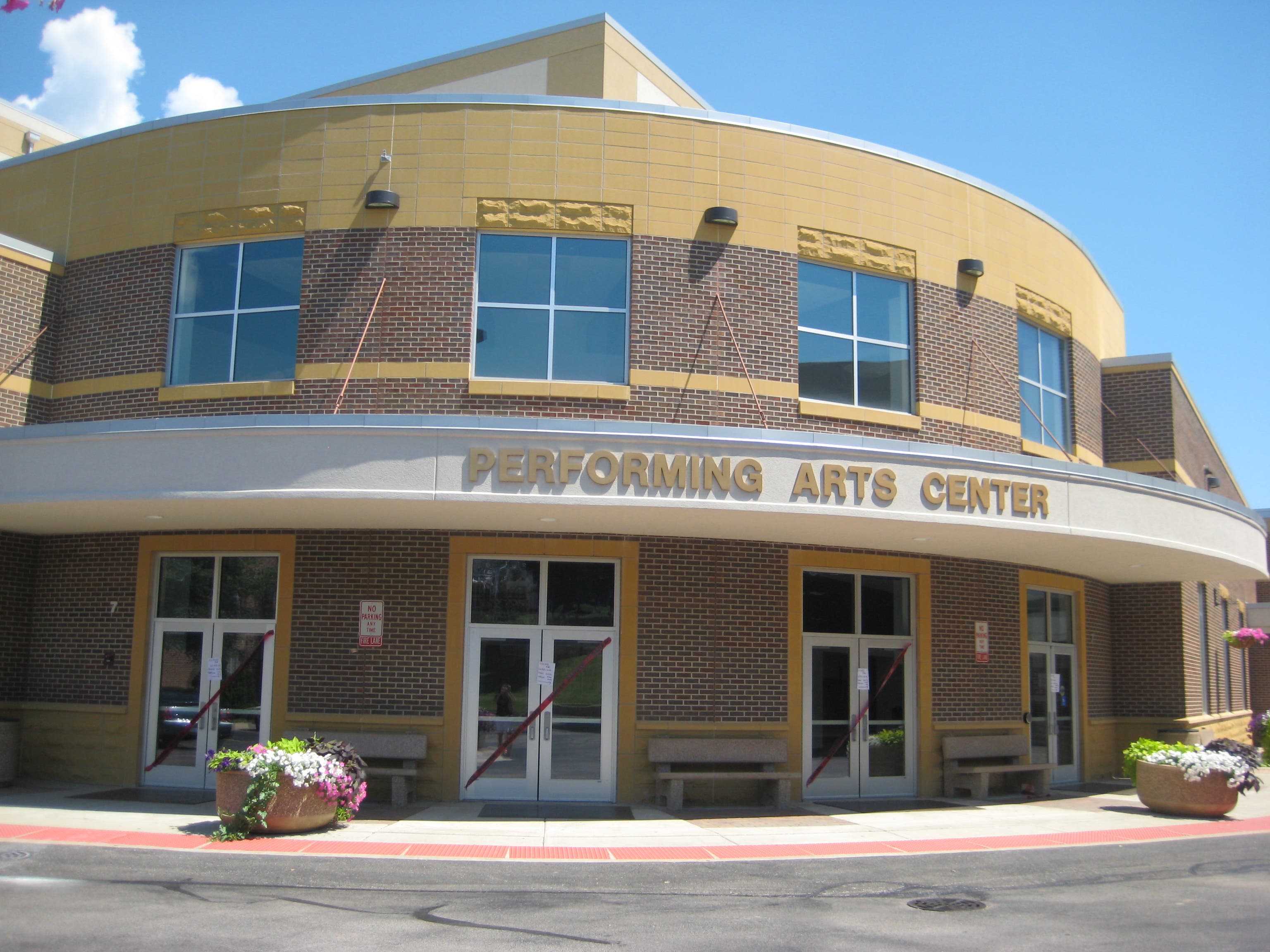
Welcome back to Lemont Patch where we're live blogging from Mayor Brian Reaves's town hall meeting on public education, which is being held at the Lemont High School Performing Arts Center.
Presentations will be made by village officials, as well as representatives from Lemont-Bromberek Combined School District 113A and Lemont High School District 210.
Please be advised that this blog will contain brief notes and sound bites from the forum. I will do my best to provide the most complete, accurate blog possible.
Get more local news delivered straight to your inbox. Sign up for free Patch newsletters and alerts.