Neighbor News
Staying in Shape - Pounds Lost and Joints Preserved
Local orthopedic surgeon discusses slowing progression of arthritis in the hip and knees
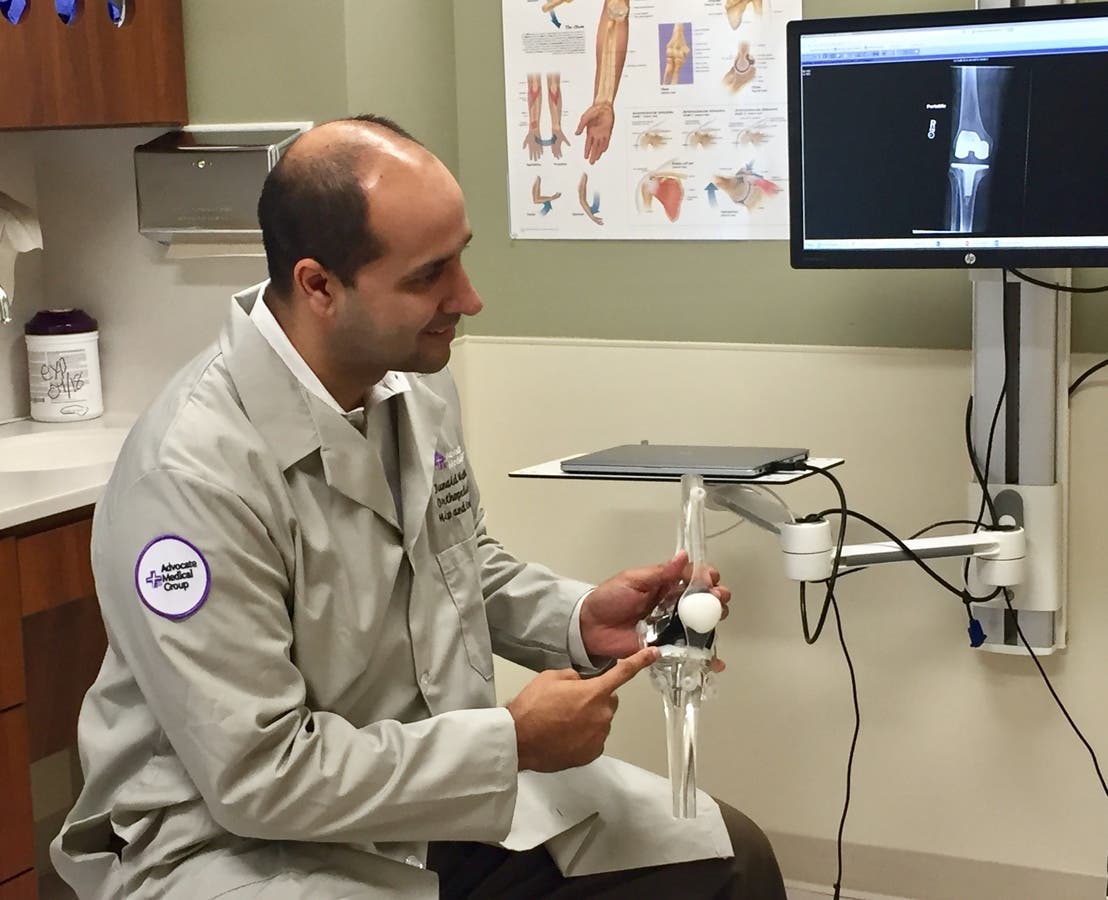
After a certain age, most of us struggle to maintain an ideal body weight. Sedentary work and life commitments combine with an age-related downward shift in metabolism to make all the old tricks for weight loss obsolete. As a total joint specialist, I see the serious health consequences of obesity in a significant number of my patients suffering from painful and disabling osteoarthritis of the hip and knee.
It’s no secret that Americans struggle with obesity. While I’m not advocating that we adhere to supermodel weight goals, maintaining a close to ideal body weight can help to prevent arthritis and extend the life of already arthritic joints. There is a tremendous force transmitted through the weight-bearing joints in each step we take. This is compounded by high-impact activities like running or jumping. I tell my patients that for every pound lost, it takes 3-4 pounds in force off of the joints. That’s a great return!
Osteoarthritis of the hips and knees in influenced by several factors - most significantly by genetics, lifestyle and weight. Some individuals have a genetic predisposition to early osteoarthritis which is a wearing of the smooth cartilaginous surface at the end of the bones. Cartilage is designed to protect the bony surfaces of the joint and to facilitate smooth, effortless range of motion. Wear of the cartilage from osteoarthritis produces a condition where the surface becomes worn and “gritty.” Friction that limits range of motion and painful weight bearing is the result.
Find out what's happening in Libertyvillefor free with the latest updates from Patch.
Lifestyle is another important factor in development of osteoarthritis. Individuals who have demanding, physical jobs and those who engage in running or other pounding activities sometime accelerate wearing of articular cartilage. Progression can often be delayed by switching to lower impact exercises such as swimming, biking or walking. Cross training can be helpful to avoid repetitive, damaging jarring of the joints.
By far, obesity is the greatest contributor to osteoarthritis of the hips and knees. The extra weight and force exerted on the joints is damaging to cartilaginous surfaces. In addition, I remind patients that obesity makes eventual total joint replacement more difficult as the anatomy and access to the joint is obscured by a thick layer of fat.
Find out what's happening in Libertyvillefor free with the latest updates from Patch.
I do many of my total hip arthroplasties using an anterior approach. This new surgical technique allows me to access the hip joint from the front of the hip rather than from the traditional, posterolateral approach that involves making an incision through thick muscle. Patients find the anterior approach less painful and the recovery period shorter and less severe. This approach is not possible in an obese patient as the additional weight and short tissue make surgical access impossible.
Keep in mind that if you currently have an arthritic hip or knee, the longer you can reasonably wait for total joint replacement surgery, the better. I talk to my younger patients about the average life of a prosthetic hip or knee implant. Most implants currently last between 20-25 years. In a younger patient, this is a significant problem as they are likely to face a difficult revision surgery in their lifetime. Decreasing weight can extend the life of the natural joint.
No one ever said that weight loss and weight control is easy. We all struggle to integrate exercise into our busy lives. It comes down to a simple ratiofor calories consumed to calories burned. There’s really no other viable solution.
If you’re having difficulty getting started, consider the following:
1. Move - any type of activity burns calories, so work on taking stairs whenever possible. Osteoarthritis becomes a vicious cycle as patients are reluctant to move due to pain. They, in turn, gain more weight from inactivity. Work on increasing the number os steps taken each day.
2. Consider a nutritionist - many insurance plans will cover a consultation with a nutritionist to develop a healthier diet.
3. See an orthopedist early - don’t let joint pain take control of your life. Seek help from medications or injections to decrease arthritic pain, making movement and a healthier lifestyle easier.
4. Work with a physical therapist - orthopedic surgeons frequently work with physical therapists and prescribe exercises designed to increase range of motion and to strengthen the important muscles that help move the joint. Therapists can help you learn how to correctly exercise and which exercises to avoid .
As an orthopedic total joint specialist, I love to operate, but no surgical intervention, regardless of the surgeon’s skill, is ever as good as a natural joint. I work hard to make sure my patients understand the factors contributing to their painful, arthritic joints, and I do what I can to ensure that they have access to services that will keep them fit and healthy and that will extend the life of their joints. So, in the early weeks of fall, take advantage of some of the Midwest’s best weather and stay active. “Use it or lose it …..get moving to stay moving.”
Junaid Makda, M.D. is a board-certified total joint specialist with Advocate Medical Group Orthopedics. His specialty is total joint replacement, including anterior hip replacement and partial knee arthroplasty. Dr. Makhda is currently seeing patients in the Lincolnshire (100 Village Green Drive) and Libertyville (825 South Milwaukee Avenue) offices. He is accepting new patients - call (847) 634-1766 to schedule.