Politics & Government
Video Shows Train Narrowly Missing Traffic When Gate Malfunctions
The gates malfunctioned on Nov. 8, 2018, at the 191st intersection in Mokena.


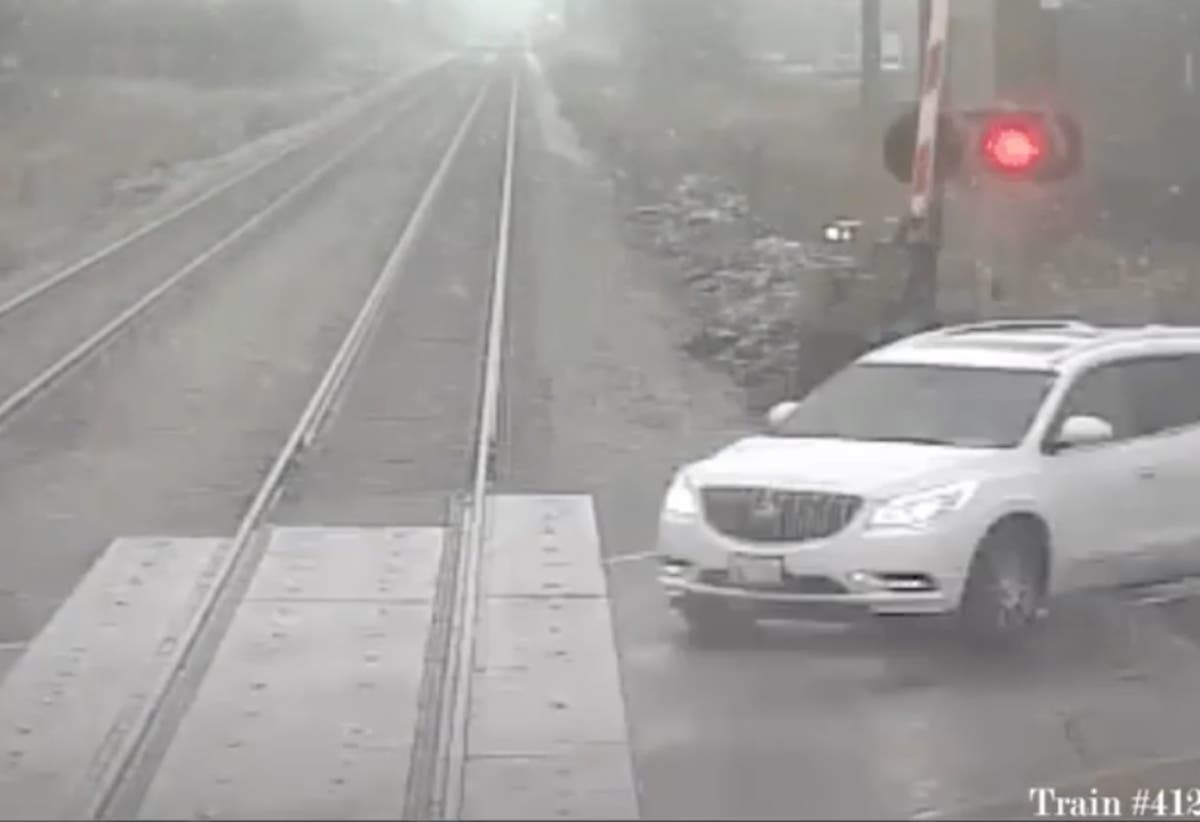
MOKENA, IL -- Metra has released video footage showing a train narrowly missing traffic crossing the 191st Street intersection in Mokena when a railroad gate malfunctioned during the morning rush hour in November. Train 412 heading through the area at about 7:25 a.m. on Nov. 9 had its horn blaring as heavy traffic can be seen continuing over the railroad tracks as the trains gets closer. The red flashing lights at the grade crossing were activated but the gates did not go down.
As the train enters the roadway traveling at 49 mph, a white car comes close to the train, apparently unaware it was coming through. A little later, the gates went down but then back up for Train 416 at about 8 a.m. Traffic was already stopped at the intersection and did not appear to travel across the grade crossing as the train entered the roadway, traveling at about 40 mph, Metra officials said.
At about 8:42 a.m., the gates again failed to activate. The train traveled through the 191st crossing at 52 mph. A Mokena Police Department dashboard camera also captured footage of that incident, according to a report released Thursday by Metra.
Find out what's happening in Mokenafor free with the latest updates from Patch.
An intermittent short in the electrical circuit that controlled the track signal and gates was to blame for the issues, Metra officials said Thursday. Following the close calls, Metra put guidelines and extra protections in place until the problem was fixed by 3:40 p.m. on Nov. 8, 2018.
The gates and track circuits went through exhaustive testing before the extra protections were lifted, Metra officials said.
Find out what's happening in Mokenafor free with the latest updates from Patch.
In the detailed report, Metra officials shared information regarding their investigation into its railroad gates. Metra also proposed and adopted a new operating rule meant to improve safety, which will require trains to travel at 20 mph or slower when encountering issues similar to the Nov. 9 railroad gate malfunctions, according to the Metra report.
Metra officials also noted that there are 566 grade crossings across its coverage area and "they operate without problems hundreds of times a day and hundreds of thousands times a year."
"But one failure is one too many. There is nothing more important to Metra than the safety of our customers, employees and the public – it is our highest priority, it is job one," according to a news release. "Metra has proactively released this information to demonstrate its commitment to transparency and to describe the steps it has taken to create the safest possible railroad."
The video below shows footage release Thursday by Metra. The onboard video cameras on all Metra trains are positioned to capture images at a point beginning 150 feet down the tracks from the train’s actual position, which means the bottom of the frame is not the front of the train but is 150 feet ahead of the train.
A full report describing the malfunctioning gates and Nov. 2018 incident at the grade crossing in Mokena can be found below.
Nov. 9 issues and first response
On the morning of Nov. 9, the first six inbound trains through Train 410 passed through the area, which includes four grade crossings, without incident. But then the engineer on Train 412 encountered a signal along the track requiring him to stop at a location where trains don’t usually get a stop signal, just before the Mokena Front Street Station about 1.8 miles from the 191st Street crossing. Following the procedure then in place, the engineer contacted the Metra train dispatcher, received permission to go past the stop track signal and then, once past the signal, proceeded at a speed allowed by the signal in his cab.
The dispatcher then notified a signal maintainer, who began working his way along the tracks in the area in an effort to diagnose the problem with the track signal and initiate repairs. This took some time, and while he was working the three following inbound trains, 414, 416 and 506, encountered the same track signal requiring an unusual stop and followed the same procedure: contact the dispatcher, receive permission to go past the signal and proceed at a speed allowed by the signal in the cab.
At about at 8:42 a.m., as Train 506 went through the 191st Street crossing at 52 mph, the crossing gates failed to activate before the train reached the intersection. That was the incident captured by the Mokena police dashboard camera.
As required, the engineer of Train 506 stopped the train and reported the gate activation failure to the Metra train dispatcher. The dispatcher then reported the gate activation failure to the signal maintainer, who was aware of it because he was already at the scene trying to diagnose the track signal issue. The dispatcher immediately put precautions in place that prevented trains from proceeding through the intersection without first stopping and having a conductor get off the train, walk to the crossing with a red flag and clear the train through the intersection. In addition to trying to diagnose the track signal issue, the maintainer then began investigating the cause of the gate activation failure.
The cause of both the track signal issue and the gate activation failure was the same: an intermittent short in the electrical circuit that controlled the track signal and gates. It was repaired by 3:40 p.m. the same day. The gates and track circuits went through exhaustive testing before the extra protections were lifted.
After an extensive review of the incident with Train 506 on Nov. 9, Metra implemented a new operating rule on Dec. 6. In situations where engineers are given permission by dispatchers to pass a “stop” track signal, they must now proceed at restricted speed – 20 mph or less – until the train reaches the next track signal that indicates the train can proceed at the maximum authorized speed, no matter what cab signal they receive. This reduction in speed will decrease the stopping distance required for a train in the event of a grade crossing protection failure or other emergency.
Second review and response
In Metra’s second review of the incident, it found that two of the earlier trains that were cleared to proceed past the track signal also experienced gate activation failures at 191st Street. The gates did not activate for Train 412 before it entered the crossing at 49 mph at about 7:25 a.m. and the gates were lowered but then went up and down again as Train 416 went through the intersection at about 40 mph at about 8 a.m. (As evidence of the intermittent nature of the problem, the gates activated for Train 414, which went through the intersection at about 7:42 a.m., after 412 and before 416.)
Metra is reviewing the actions of its employees in regards to that day’s events and will work within its collective bargaining agreements on any corrective or disciplinary steps. Metra has since reinforced with all relevant personnel the reporting procedures following a gate activation failure. Metra reported the gate activation failure with Train 506 to the Federal Railroad Administration on Nov. 13 and has made the FRA aware of the additional information. Metra is fully cooperating with an FRA investigation of the day’s events.
While the onus is on Metra to maintain a safe railroad, we also ask you, the public, to help us when possible. Gate activation failures are rare, but they do happen. If a commuter or a citizen witnesses a grade crossing issue, they can report it by calling 911. If possible, a better reporting option is to call the number listed on a blue sign affixed to every crossing, which connects directly to dispatchers. That sign also includes the reference number for that particular crossing. Metra plans to use its communication channels to educate the public about how to report grade crossing issues.
There are 566 grade crossings in the Metra system and they operate without problems hundreds of times a day and hundreds of thousands times a year. But one failure is one too many. There is nothing more important to Metra than the safety of our customers, employees and the public – it is our highest priority, it is job one. Metra has proactively released this information to demonstrate its commitment to transparency and to describe the steps it has taken to create the safest possible railroad.
PHOTO VIA METRA VIDEO
Get more local news delivered straight to your inbox. Sign up for free Patch newsletters and alerts.