Health & Fitness
EEH: Fully vaccinated against COVID-19? You might need a boost
The COVID-19 vaccine provides strong protection against severe infection requiring hospitalization, but the effectiveness wanes with time.
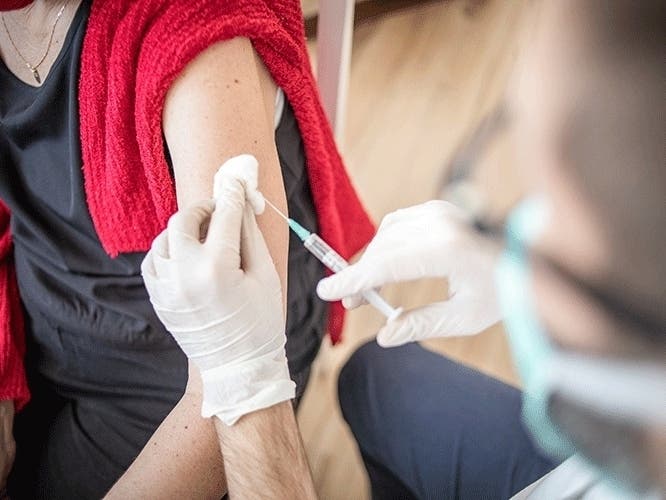
Over the last year, health experts have been studying the effectiveness of the COVID-19 vaccines.
Real-world evidence showed the vaccines offered outstanding protection against COVID-19.
Vaccine effectiveness does wane with time, however, and is not as strong against the delta variant. While breakthrough infections became more frequent in some vaccinated people, the vaccine still provides strong protection against severe infection requiring hospitalization. For those over age 65, there is a slight decrease in protection against severe infection.
Find out what's happening in Napervillefor free with the latest updates from Patch.
Health experts found the slightly waning immunity combined with the emergency of the highly contagious delta variant provided less protection against infection or mild illness.
Does the booster availability mean the vaccines don’t work?
Find out what's happening in Napervillefor free with the latest updates from Patch.
No. In fact, the boosters are intended to better protect those with weakened immune systems (from disease, treatment or age), and decrease the likelihood of infection or mild illness in healthy people that could result from increased exposure to the contagious delta variant. Even without the boost, all the COVID-19 vaccines provide strong protection against hospitalization and death.
On Oct. 21, 2021, the Centers for Disease Control and Prevention (CDC) authorized booster shots of Pfizer, Moderna and Janssen (J&J), and approved mixing vaccine boosters — for instance, someone who received a shot of J&J could get a booster shot of Moderna.
“A booster dose of the Moderna or Pfizer vaccine, given six months after the primary series, elicits a much stronger immune response with antibody levels several fold higher against the delta variant,” says Dr. Jonathan Pinsky, Medical Director, Infection Control & Prevention, Edward Hospital. “This results in better protection against infection across all ages and a much lower chance of needing hospitalization for older age groups.”
In the U.S., two doses of the Janssen (J&J) vaccine, given more than two months apart, had an efficacy of 94% in preventing symptomatic infection, compared to one-dose that was 70% effective.
Medical experts are learning more about COVID-19 and how the vaccines work in real time. With more time and study, they will better understand what is necessary to maintain immunity.
Other vaccines, such as polio, HPV, MMR (measles/mumps/rubella) and Tdap (diphtheria/tetanus/pertussis – adults should get a booster dose of Tdap every 10 years) require multiple doses to be effective.
Who’s eligible for a booster shot?
If someone received Pfizer or Moderna:
- Adults age 65 and older and adults age 50-64 with underlying medical conditions
- Adults age 18 and older who live in long-term care settings
- Adults age 18 and older who have underlying medical conditions
- Adults age 18 and older who live or work in high-risk settings (such as first responders, healthcare workers, education staff, manufacturing employees, public transit employees or grocery store staff)
If someone received Janssen (J&J):
- Adults age 18 or older
When can people get a booster?
- 6 months after the second Pfizer or Moderna shot
- 2 months after a single J&J shot
Still have questions about a COVID-19 booster shot?
People with questions about their eligibility for an additional COVID-19 vaccine booster dose should talk to their doctor.
For more information, visit EEHealth.org/coronavirus.