Community Corner
Naper Settlement Trees Get Tapped
Sap from a maple tree is eventually turned into maple syrup. Although the sap is thinner than syrup, the light-colored liquid is still sweet and delicious.


Nature provides a number of healthy and delicious foods, and during the cool temperatures of early spring, one of those treats is waiting to be tapped.
The held its annual Maple Sugaring Days this weekend providing demonstrations on how people originally tapped the maple trees to collect the sap that, eventually, is turned into maple syrup.
The maple syrup purchased in grocery stores is created with artificial sugars and corn syrup. But the syrup that drips from a tapped maple tree is almost clear in color, is much thinner than purchased syrup but is still very sweet.
Find out what's happening in Napervillefor free with the latest updates from Patch.
Justin, who works as the blacksmith at Naper Settlement, demonstrated how people used to tap the trees to collect the sap.
“You make a hole just shy of 2 inches deep into the tree, but make sure it is 3 feet or less above the ground," he said. "You want to drill the hole on the warmest side of the tree, which is usually the east side, because that is where the sun hits it. Ideally, the (air) temperature should be around 40 degrees, because that is when the sap comes up from the roots. A good tap can produce from five to 10 gallons.”
Find out what's happening in Napervillefor free with the latest updates from Patch.
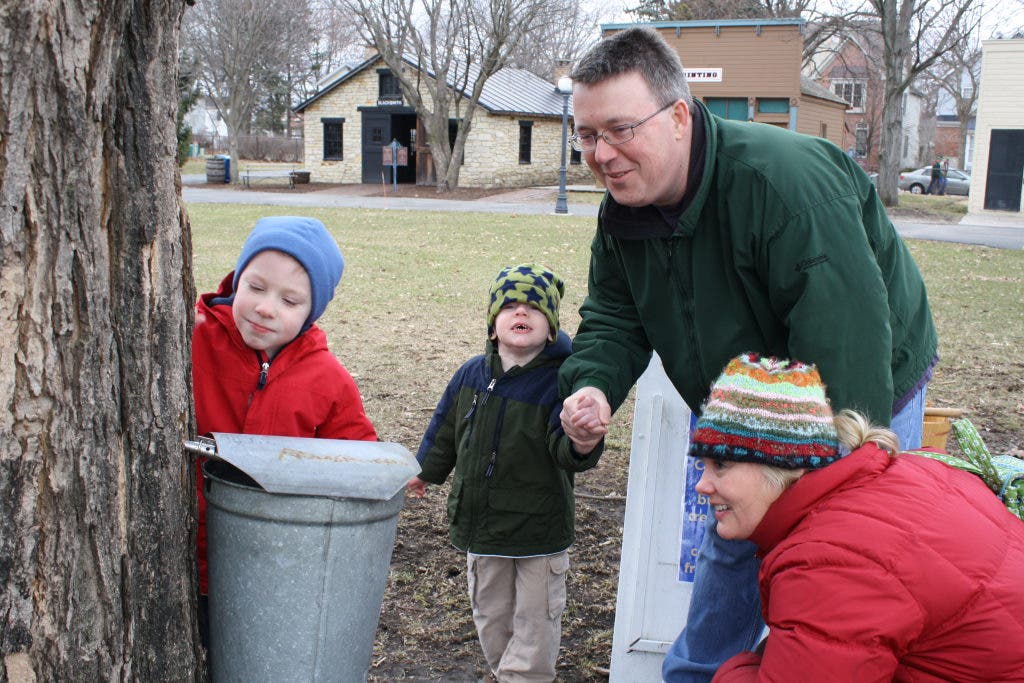
He then drilled a hole into the tree with a hand-held tool and, almost immediately, sap slowly began dripping. A special metal bucket to collect the dripping sap was attached beneath the hole and a lid was placed on top to keep out rain water and animals. There is no harm to the trees with tapping, he added, explaining that some trees can be tapped several times a year if they are large enough in diameter.
“Vermont makes about 38 percent of consumer sap, but Wisconsin taps more each year but their sap goes into processed foods,” Justin said. “The tapping season last about 20 days and then it starts to get too warm.”
After he finished tapping the tree, 5-year-old Steve Walsh of Wheaton tried tapping the tree in another way—by kicking it with his foot.
“The tree is filled with maple sap and when you hit it hard it makes the syrup come out faster,” he said.
Steve was there with his family, Amy and Steve Walsh Sr., and his younger brother, Frank.
Amy Walsh said the couple took the boys to the settlement because she thought the demonstration would be interesting to see and something her boys would enjoy.
“I like maple syrup on my pancakes,” the younger Steve explained.
Samples of the sap were available for tasting and Ruth Seeler of Chicago and Kathleen Furitano of Naperville enjoyed the sweet treat served snow cone-style.
“It’s kind of fun to see how they do they do the tapping,” Furitano stated. “This is the second year we came and I learn something new every time.”
“Last year it was too warm so the sap didn’t start running” like it did today, Seeler said. “For the sap to run it has to be freeze during the night and then thaw by day. I just find this all so interesting.”