Community Corner
'Not Going To Give Up': Family Behind 'Finley Forever' Faces New Battle After Teen Daughter's Diagnosis
Known for helping others after the loss of daughter Finley, the Brackens of New Lenox are waging a new battle for sibling Macie, 16.


NEW LENOX, IL — A New Lenox family known for their support of others enduring cancer battles in Chicagoland now finds themselves in need of the same kind of help they've rallied for others.
Lacey and Dan Bracken started the Finley Forever Foundation in Sept. 2021, following the death of their 2-year-old daughter Finley less than a year after she was diagnosed with neuroblastoma. The foundation's efforts focus on providing hope, support, and financial assistance to Chicago-area families impacted by cancer.
Now, just six years after Finley's death, the couple's 16-year-old daughter Macie battles a debilitating and life-altering illness, with symptoms that started three years after her younger sister died. As the family faces mounting medical costs, they've turned to their community for support, with a GoFundMe campaign.
Find out what's happening in New Lenoxfor free with the latest updates from Patch.
"We never thought our family would find ourselves needing to ask for help again," Lacey Bracken wrote on the fundraising site, "but here we are, reaching out with honesty, hope, and no other choice."
It was a vulnerable moment for the family who, through their foundation bearing their daughter's name, have provided vital support for families in cancer fights. Their work for families has included financial donations, care packages, sponsorships, and touching shows of compassion through holidays.
Find out what's happening in New Lenoxfor free with the latest updates from Patch.
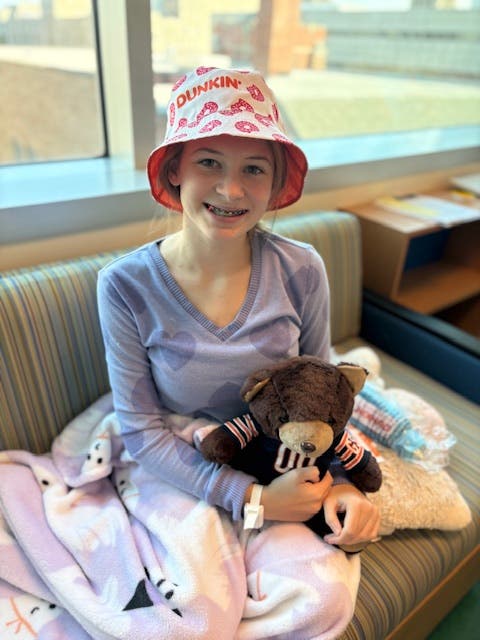
As medical costs loom, Bracken looked to share their story in hopes of stirring support.
"It was very hard, to make the decision to start a GoFundMe," Bracken said. "I knew once I did it, it's out there and you’re in the public eye. ... People saying that she’s faking it for attention. People asking why we keep switching doctors—it's because no one will help."
With Macie enduring years of symptoms including mobility issues, fainting, speech difficulties, hearing and vision issues, brain fog and more, Bracken found herself mobilized as her daughter's full-time advocate, fighting to get her the care she deserves. Medical teams have seemed stumped by— and oftentimes dismissive of — her daughter's symptoms, Bracken said. But she had seen them surface in real time, from difficulties walking to seizures, altered mental states and more. Specialists seemed to look to other areas as the source of Macie's symptoms, each pointing the family in another direction.
"It’s just a really hard situation to navigate," Bracken said. "All the doctors who are involved just need to sit down in the same place and talk about it."
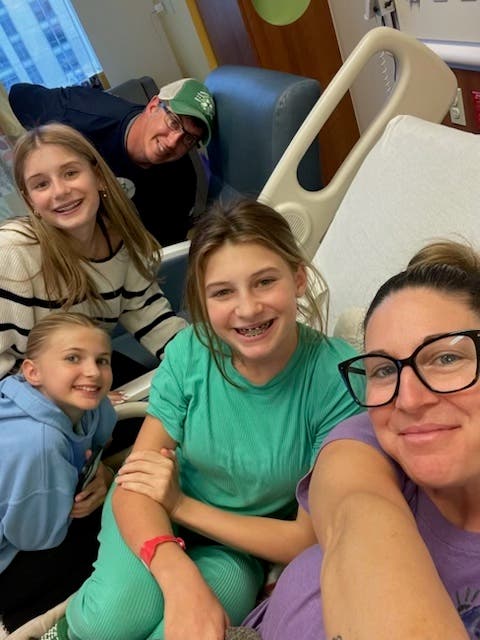
Macie and her parents have moved through the last three years in a flurry of tests, appointments, specialists, hospital visits — and mounting medical bills.
In 2023, one doctor issued a diagnosis of Functional Gait Disorder, brought on by anxiety and stress. He recommended talk therapy. For three months after, Macie used a walker until she regained her strength to walk.
"... she’s able to start walking, is doing great until the next year," Bracken said, recalling that point in time. "Then she has a relapse of not being able to walk again."
Macie has since been given several diagnoses, including PANS (with mold toxicity and Lyme infections) and POTS. The former is an acronym for Pediatric Acute-onset Neuropsychiatric Syndrome, a diagnosis given to children who have a dramatic—sometimes overnight—onset of neuropsychiatric symptoms including obsessions/compulsions or food restriction, according to Stanford Medicine.
"This is what happened to Macie," Bracken said. "She changed overnight into a completely different child. Her personality changed, she was having hallucinations, seizures."
Another of her diagnoses was POTS. Short for postural orthostatic tachycardia syndrome, it is a condition that causes a number of symptoms when you transition from lying down to standing up, such as a fast heart rate, dizziness and fatigue, according to the Cleveland Clinic.
The most recent diagnosis—that of Functional Neurological Disorder (FND)—is a brain and nervous system disorder that affects how the brain sends and receives signals throughout the body, Bracken said. Although it has historically been misunderstood—and many patients are wrongly dismissed as “faking” their symptoms—ongoing research continues to show that FND is a very real, brain-based neurological condition.
Combined, the symptoms of all the conditions have drastically altered Macie's and her family's daily lives, limiting the teen's ability for movement and activity. Having just enrolled at Lincoln-Way West at the onset of her symptoms, she's no longer able to attend school in person, Bracken said. She can no longer drive or experience the independence most 16-year-olds enjoy.
It has been heartbreaking for her parents to witness.
"As parents, watching this happen to our child has been devastating," Bracken said in the GoFundMe. "We want Macie to have the chance to feel like a teenager again—to regain independence, confidence, and quality of life.
"... Before FND, Macie was a gymnast—strong, active, and constantly on the move. To see her go from doing what she loved to struggling with basic mobility has been heartbreaking beyond words. We have done everything we can to get Macie help."

'I’m not taking no for an answer'
There is currently no cure for any of Macie's diagnoses. Treatments focus on managing symptoms and retraining the nervous system, and what works can vary by patient, her parents say. With the right individualized treatment plan, she may be able to reach remission or learn how to better live with and manage the disabilities she now faces. At this stage, most treatment options covered by insurance have been exhausted, and the family is now focusing on therapies that address nervous system regulation and brain retraining—a critical component in treating FND. The therapies are highly specialized, largely out of pocket, and often require travel, including the possibility of extended stays out of state.
"Many online therapies cost around $400 per session, more intensive treatment programs can cost up to $50,000 (for one stay), and that does not include lodging and travel costs," Bracken said in the GoFundMe. "We are committed to being thoughtful and responsible with the support we receive. We plan to pursue the most accessible and affordable treatment options first in hopes of getting Macie the quickest relief possible, while continuing to work toward more intensive therapies as we are able."
Macie is currently experiencing approximately 6–12 seizures daily and is using a wheelchair full-time. She continues to have uncontrolled movements, difficulty speaking and swallowing at times, and episodes of paralysis. In her parents' latest efforts to seek relief for her, Macie will undergo a regimen of treatment at the Neurologic Wellness Institute, and on Thursday completed her fourth visit.
"While we haven’t seen a significant change yet, we do feel encouraged by how thoroughly the doctors are treating her and continuing to dig deeper for answers," Bracken updated on the Go Fund Me.
Bracken, in the meantime, is fully devoted to Macie's care, often sleeping on the floor beside her daughter, to be at her side should a seizure occur.
"You don’t really get choices," Bracken said, of caring for her to that extent. Though some doctors have told Bracken that Macie will require lifelong, hands-on care, she recalls feeling,"'No, I’m not accepting that!'"
She added, "I’m not taking 'no' for an answer. I’m not going to give up. There’s no way I’m going to let my child live life this way. I just keep pushing. If someone’s going to tell me no, then too bad."
As they continue to seek treatment, Macie's condition continues to fluctuate.
"There are days where she’s cognitively OK, then days where she can’t think straight," Bracken said. "Sometimes she can’t talk, hear or see. It’s just the craziest thing, and it’s horrible to watch."
'Finley Forever' Helps Family Give Back
Coupled with the stress and strain of an ongoing medical battle, Bracken knows the toll it's taken on her family and other children, Teagan and Molly. With the onset of Macie's symptoms so soon after Finley's death, the experience feels all too familiar and heavy for the family — steeped in grief and the frustration of the unknown. As they navigate Macie's struggle, Bracken also wonders about the future of Finley Forever — an organization that has done so much, for so many.
During the 2024–2025 donation years, the foundation provided four dedicated parking spaces for families in the Oncology/Hematology Unit at Lurie Children’s Hospital—a $24,000 donation that removed one daily stressor for families navigating long hospital stays. The foundation also runs its Courage Kit program, donating backpacks filled with essential and comfort items to families whose children are undergoing stem cell transplants.
It also provided direct financial assistance to 18 families at Lurie. In 2025, most families received $1,000 per month for six months, helping to offset everyday expenses and ease some of the financial and emotional strain, Bracken said.
Since its inception, it has channeled manpower and funds into its Lights and Ladders Brigade—an organized effort to plot a course to decorate the homes of families fighting illness during the holidays. The program—which in recent years has decorated homes in Manhattan, New Lenox, Mokena, Orland Park and Frankfort—has touched the lives of 34 families between 2021 and 2024. The program started on the South Side of Chicago, branching out into the suburbs in recent years.
The Brigade was paused in 2025, due to Macie's increasing need for treatment and the costs associated with that.
"I think one of my biggest hurts in my heart, besides her, is the foundation," Bracken said. "We’ve had to cancel stuff. No Lights and Ladders. No Finley Fest. Those choices were really tough to make., because it’s really important to me. It meant a lot to me to help other people, but if you can’t take care of your own family, own self … I just can’t help. It just hurts. We’ve had to turn people down.
"... There’s a lot of good that comes out of the foundation. I don’t know what the future holds, we’ll see."
As she's been forced to step back from the organization to care for Macie, Bracken has channeled her voice to speak up for her daughter, speak out about what they've experienced within the healthcare system. Murky processes that have seemed to keep the family chasing care in a dizzying world; some doctors who have seemed reluctant to believe her daughter.
"I just feel like I’m going to keep going," Bracken said. "I know I worry a lot about what people might think, what they might say. … Now I’m just frustrated. I'm pissed."
Through her sharing Macie's story, she's formed connections with other local moms whose children are having similar symptoms and experiences with healthcare providers.
"We’re going to figure this out," Bracken said. "I’m not going to give up.”
Read more about Macie, her journey, and updates on the GoFundMe.
Get more local news delivered straight to your inbox. Sign up for free Patch newsletters and alerts.