Business & Tech
The Dryer Vent Wizard Doesn't Want You to Wait Till It's Too Late
Seventeen-year New Lenox resident and certified Dryer Vent Wizard Joe Enzenberger says that if you're wondering if you need your dryer vent checked out, the answer is yes.
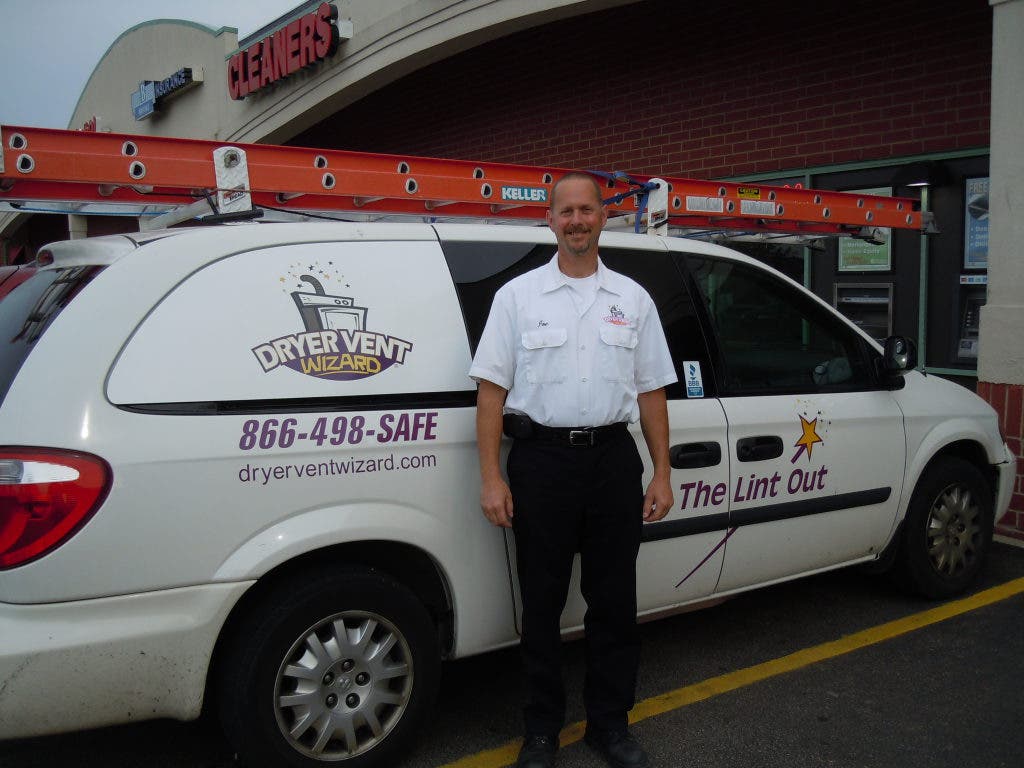

After working for many years in such fields as biochemistry, botany and construction management, resident Joe Enzenberger decided it was time to put his experience and knowledge to start his own company. He just needed to figure out what that company would do.
When he looked into becoming certified for ventilation systems, he discovered that this area was dangerously underserved by professionals. So two years ago, Enzenberger became the president of Dryer Vent Wizard, a franchise based out of New Lenox that covers a large area including all of Will County, plus parts of Cook, DuPage and Kankakee counties. He specializes in the cleaning, repair, alteration and installation of dryer vents and related connections and pipes.
The local fire departments were happy to see Enzenberger set up shop in New Lenox; his service prevents fires and saves lives. for the New Lenox Fire Department, says that in New Lenox there are two or three house fires per year caused by dryer lint.
Find out what's happening in New Lenoxfor free with the latest updates from Patch.
"People don't understand that it acts like kindling," Leader said. "Lint is very flammable."
Leader also advises against storing things next to or on the dryer. "Dryers get very hot, so items such as boxes, clothing and cleaning supplies can ignite and start a fire; they should not be kept next to the dryer," she said.
Find out what's happening in New Lenoxfor free with the latest updates from Patch.
Enzenberger said that most people don't call him until there's a problem, but we should be acting preventatively.
Enzenberger, who is certified by the Chimney Safety Institute of America, said that depending on the design of our laundry rooms and the frequency with which we do laundry, we should have our dryer vents inspected once a year (for families who do many loads a week and/or have long dryer vents) to once every two years (for single or older people who don't go through very much Tide and have short dryer vents).
Leader advises cleaning the vents at least once a year and suggests homeowners learn how to do basic cleanings themselves.
"Dryer vent fires are more common than most people realize," Enzenberger said. "Nationally, over 15,000 house fires per year are caused by overheated clothes dryers."
Dryers become clogged in two main ways: day to day build up of clothes lint and animal interference. When the vent becomes clogged, the dryer doesn't work as efficiently; towels or jeans refuse to dry. Enzenberger says that when this happens, people often think there's something wrong with their dryer, and call an appliance repair service (which, then, often refers the client to Enzenberger).
When a vent is blocked, the heat cannot escape; it's pushed back to the dryer and the dryer overheats. Since lint is highly flammable, as are other potentially flammable items that might be stored near the dryer, such as chemicals, the super-hot dryer becomes a fire hazard. An inexpensive annual check would prevent this potentially dangerous situation.
Sometimes a vent becomes blocked by animals who choose to nest there. From late February to mid June, Enzenberger is called to several bird nest calls a week, often because the homeowner can see twigs protruding from the vent on the outside of the house. If you suspect something, it's best to call right away, hopefully before she lays her eggs. Birds are skilled at making efficient, airtight nests, so when they move in, it's bad news.
Enzenberger recently had a bird fly past him and into the house when he opened a dryer door, and once, he discovered that a squirrel had begun storing its winter acorns in a client's dryer. On his second-ever call, Enzenberger had to remove sections of a client's kitchen ceiling to remove a squirrel who had decided to move in, breaking pipes along the way. Luckily, Enzenberger's work van is stocked with the tools and supplies he needs to make most repairs, and his background in construction comes in handy for more involved situations.
Around here, the animals most likely to nest in our dryer vents are mice, squirrels and small birds. Oftentimes, the homeowner doesn't even realize they have uninvited houseguests until they've died. This is precisely what recently happened to Elaine Johnson, the local editor for Downers Grove Patch. Two days after she saw her cat chasing a chipmunk around the vicinity of the outdoor dryer vent, she noticed an unpleasant odor in the dryer. The temperatures were expected to reach 90, so Johnson was desperate.
"I was concerned my whole house would start smelling, or at least the kitchen, which is just above my laundry area," she said. Johnson used Google to find Enzenberger.
Luckily, vents are too small for raccoons and other large rodents. But farther south, Enzenberger says, Dryer Vent Wizards have been known to wrestle a snake or two.
"They all bite, and the bites hurt," he says, "even if the snake's not a deadly species."
Enzenberger is a busy one-man team, handling all service calls, plus the sales and marketing. He's considering adding another person, which would mean a second work van and twice as many tools and supplies. But with the quantity of dryers in his territory, the investment seems a safe bet.
Just a word of advice to Enzenberger's future employee: Study hard for the ventilations systems certification exam. You need 90 percent to pass.
Dryer Vent Wizard
- Phone: 312-848-4146 or 866-498-7233
- Accepts: Visa, Mastercard and checks
- Certification: Chimney Safety Institute of America
- Facebook: See the business' Facebook fan page.
- Website: www.dryerventwizard.com
- Patch Places: Check out our .