Community Corner
2008 Economic Collapse: Market- or Man-made
Super Cup regular and political thinker, Harold Taggart shares his opinion on recent history.

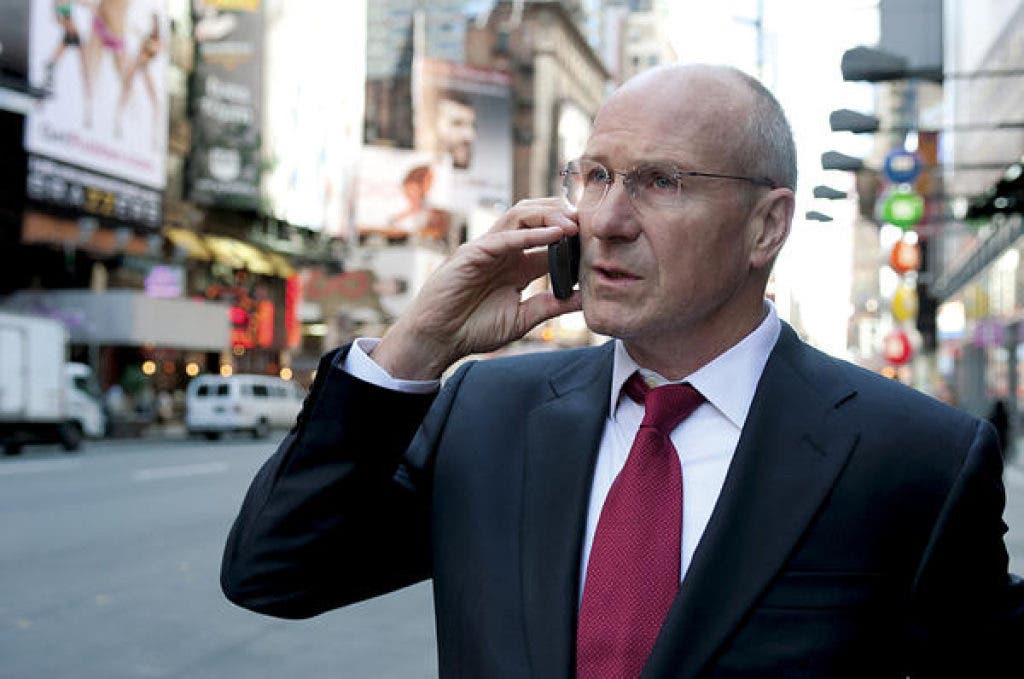
In May 2011, HBO aired Too Big to Fail. The movie revealed the names, chicanery and complicity behind the economic collapse of 2008. How many trillions of dollars were lost remains to be calculated, if that is possible.
The film exposes dozens of failures and weaknesses in the U.S. economic, political and justice systems. Most glaring is the cozy relationship between the government and Wall Street. Most alarming is the media’s complete failure to warn us about the obviously doomed policies leading up to the collapse, and the massive theft of the wealth and savings of our nation, pension funds, investment funds and small individual investors. It seems a $60,000 real estate deal gone bad is the limit of our media’s investigative abilities.
Ellen Brown, an attorney and author of Web of Debt, a book that is critical of the rogue Federal Reserve system, has conducted an in-depth investigation into the collapse. She concluded that the collapse was engineered by Wall Street financial institutions with the complicity of the Treasury Department and the Federal Reserve System.
Find out what's happening in Niles-Morton Grovefor free with the latest updates from Patch.
Brown adds important details to the movie, which is an adaptation of an account of the events by Andrew Ross Sorkin. Brown believes the big financial and investment firms realized economic collapse was imminent, so, following the formula outlined in The Shock Doctrine authored by Canadian-born journalist Naomi Klein, decided to take advantage of the disaster to enrich themselves.
The following is my understanding of recent history, through readings and document
Find out what's happening in Niles-Morton Grovefor free with the latest updates from Patch.
If they knew exactly when the collapse would occur, they could sell short, divest themselves of endangered investments and reap huge profits. Profiting from insider information is illegal, but the Bush administration and recent Justice Departments had a weak and reluctant record for enforcing laws restricting Wall Street firms. Going to jail for wrecking the national or world economy was not a major concern. Potential wealth was unlimited.
A national election was a few months away. An administrative change could jeopardize the plans of the conspirators. Members of Congress concentrating on upcoming elections and eager to get home were more likely to accept suggestions without questions or hearings.
All that was lacking was a trigger for the collapse. The failure of a major financial firm would serve that purpose. In March, 2008, Bear Stearns became the harbinger of problems inevitable in the milieu of un- and ill-regulated financial enterprises. The government stepped in and arranged an acquisition by JP Morgan Chase at $2 per share. Previously its shares sold at $133.
A History of Bail-Outs
The government had come to the aid of failed corporations in the past. Continental Bank of Illinois was the first to be declared “too big to fail” when it got into trouble in 1984 after taking excessive risks encouraged by deregulation under Presidents Carter and Reagan.
Then a whole string of banks and savings and loans failed, proving that if left unregulated and given a chance to steal, they will. The American people accepted the scam.
In 1998, Long-term Capital Management of Connecticut, a hedge fund that claimed to have a foolproof strategy for high returns on investments using arcane formulas, proved not to be foolproof after all. It was declared “too big to fail” and was bailed out by the Fed and member banks. Again, the American people accepted government welfare for a huge, economically useless financial firm. It’s sole function was to provide profits for rich investors.
Banks like to have all their money earning profits, so they have tricks for keeping reserves as low as possible. One of the tricks is to borrow money from other banks to cover short term fluctuations in reserve funds. The Federal Reserve and large financial firms provide that service.
The Glass-Steagall Act passed by Congress in 1932 and signed into law by President Roosevelt in 1933 put constraints on excessive risk-taking by financial institutions, dividing them clearly into investment and depository institutions. The Clinton Administration effectively repealed it in 1999. Wall Street now was Wild West Street.
On Sept. 11, 2008, as most people were occupied memorializing the tragic events on that date in 2001, Lehman Brothers became the subject of massive short selling [a gamble of selling stocks you don’t have, with the hope of buying them at a lower price at a later date.] No financial firm would lend to it, claiming it was under-resourced. Rumors abounded that Lehman was in trouble. This had all the characteristics of a deliberate, calculated attack on the firm. In response to urging from the Treasury Department and the Federal Reserve, Lehman Brothers filed for bankruptcy protection on September 15, 2008. It was the fourth largest investment firm in the U.S. after Goldman Sachs, Morgan Stanley and Merrill Lynch.
Then the government intervened and gave $700 billion with $100 billion plus loans to all of the major financial firms whether they wanted it or not. It was important to give the impression that this was a widespread economic problem, not just the failing of a couple corporations.
The government intervention gave psychological support to foreign investors that the government would make good on investments in U.S. corporations. As the biggest borrower in the world, the U.S. is dependent on foreign investments and loans to stay solvent.
Conflict of Interest
The HBO movie portrays the conflicts of interest among Treasury Secretary Henry (Hank) Paulsen (former Chairman and CEO of Goldman Sachs), Federal Reserve Chairman Ben Bernanke, and New York Federal Reserve Chairman Timothy Geithner (current Secretary of the Treasury). When deciding which master to serve, their country or their corporate economy, they chose the latter.
On Dec. 10, 2010, Bernie Sanders, an independent Senator from Vermont, conducted an eight-and-a-half hour filibuster on the Senate floor. He reported that the Fed made an astounding $12.3 trillion in loans in the wake of the collapse, in true “Shock Doctrine” tradition. Loans went to foreign banks and spouses of corporate executives. The plan appears to have been to flood the market with cash, stimulating purchasing. Giving that money to defaulted mortgage homeowners probably would have been a far better idea, but helping the people never seemed to be a consideration.
The Fed wouldn’t tell Congress where it got that money, Sanders said. Since it prints all paper money, we can assume it just printed it. The media apparently was unable to grasp a figure that large and largely ignored it. Bloomberg Business and Financial News took the case to court to force the Fed to divulge its Midas talent. The courts decided it was better that the public didn’t know.
Debt is the major security for U.S. currency, according to Brown. More debt run up by bank loans justifies printing more money. In the past, it had been gold, then deposits from savers. Gold and deposits are a bird in the hand. Debt is a hope that borrowers can and will repay.
Debt became the measure of a bank’s assets, according to Brown. Debt, whether a mortgage, home equity loan, vehicle loan or credit card balance, owed to a financial institution represented a commitment to pay the holder of the note. That justified the creation of more debt particularly when home values were rising. When the debt became an amorphous bubble, the financial and investment institutions created a new product for investors called derivatives since the contents were indefinite. In theory, there were some bad loans, but good loans more than offset them.
Nebulous Shell Game
The financial markets became a nebulous shell game, according to Baker. The financial firm executives and their collaborators in government punched another hole in the sinking ship and set out to save themselves and remnants of their useless industry.
The U.S. is stuck straddling two economic spheres. First is its own sphere as the world’s largest economy and military superpower. Second is its hope to take hegemonic economic control of the world through the World Trade Organization [WTO].
As the U.S. continues to shoot itself in the leg every few years to save an economic relic, at least two coalitions of nations are observing from the wings, waiting for an opportunity to move in and replace it. First is the European Union. Two insane, disastrous world wars have chastened it somewhat, but it shows signs of primitive instincts that could reignite its savage and predatory tendencies toward other nations.
The other economic powerhouse is the BRICS coalition. The name is an acronym for Brazil, Russia, India, China and South Africa. With 40 percent of the world population and an abundance of resources, this coalition has massive potential. The rest of Latin America and Africa likely would join the coalition, if invited.
This could be a true Third Millennium movement to change the world.
Editor's Note: The views above reflect the opinions of Mr. Taggart.
Get more local news delivered straight to your inbox. Sign up for free Patch newsletters and alerts.