Health & Fitness
Vote For Legendary Artist Iannelli's Studio As A 'Place That Matters'
World-class artist Alfonso Iannelli's endangered Park Ridge Studio has been selected for the 2011 This Place Matters Community Challenge. Please help us win $25,000 by voting online!
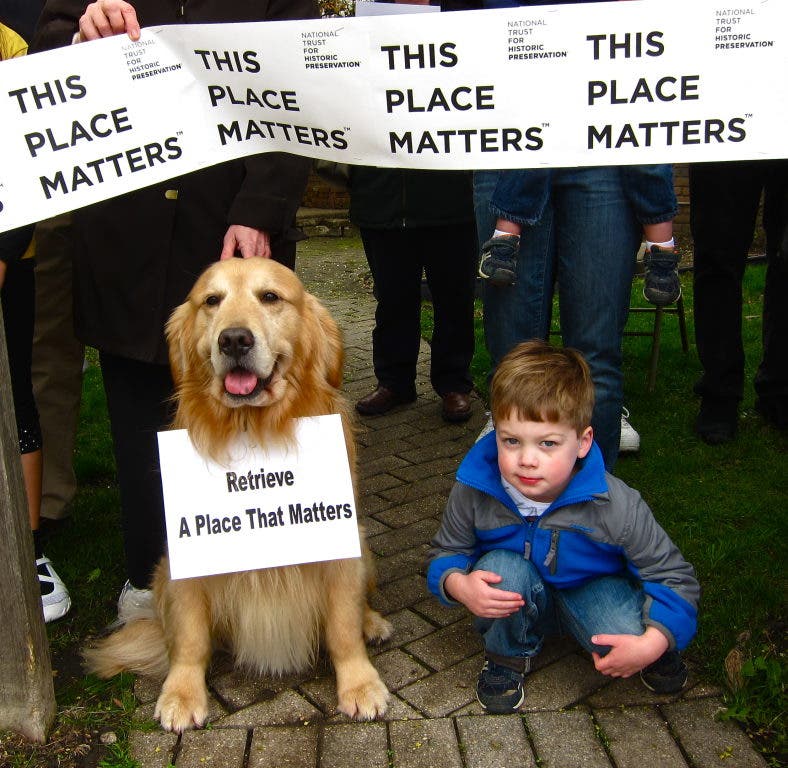
The Park Ridge studio of noted artist Alfonso Iannelli, whose work is seen in top-flight museums around the world, is endangered. You can help save this "treasure beyond measure," which has been selected for the National Trust For Historic Preservation's 2011 This Place Matters Community Challenge! This home to American modernism is one of 100 nationwide finalists competing for $25,000. You can help us win!
Find out what's happening in Niles-Morton Grovefor free with the latest updates from Patch.
and cast your vote for Ianelli Studios. Then, tell everyone you know using Facebook, Twitter, email…even shouting in the streets! For more information, go towww.kalofoundation.org
Drawn to the Park Ridge Artist Colony in 1919 after five years in various rented locations in Chicago, Alfonso Iannelli, sculptor, artist and industrial designer, and his wife, Margaret Spaulding Iannelli, worked with architect Barry Byrne to renovate the former blacksmith shop associated with the brickyard that gave Park Ridge its 19th Century beginnings as Brickton. It was here that they established the new home of The Iannelli Studios at Northwest Highway and Elm in Park Ridge. When Iannelli died in 1965 the studio continued operating for few years under the direction of Ruth Blackwell, an artist who had worked with Iannelli at that location since the 1920s.
Find out what's happening in Niles-Morton Grovefor free with the latest updates from Patch.
Why does this place matter? Its weather-beaten and neglected facade is just a superficial veneer covering the true magic of the place, according to Eric O'Malley, co-founder and contributor to PrairieMod.com. who says that a rich archive of photos, drawings and original blueprints could be used to restore the building to what it once was. Even though Iannelli Studios may not look remarkable, it's what happened there, what it stands for, and what could be done with it ”telling not only the Iannelli story, but the larger narrative of the artists" colony that flourished in Park Ridge at the turn of the 20th Century and beyond that makes it worth saving.
When restored, Iannelli Studios Heritage Center will be a vibrant community gathering place, energized by every facet of the Park Ridge art colony legacy, including sculpture and art and silversmithing classes, music and photography and printing programs, permanent and traveling gallery exhibits, architectural and cultural heritage tours, an art shop and more. Further, Iannelli Studios Heritage Center is expected to draw visitors from all over the world who are interested in the roots of American Modernism to our town.
Iannelli studios was "the place where Chicago's creative architecture found its art" according to historian Tim Samuelson, who says the site is integral to the design roots of American Modernism. In addition to his work as a sculptor of ornament for many Prairie School-designed buildings in collaboration with such architects as Barry Byrne, Purcell & Elmslie and Frank Lloyd Wright, Iannelli and his studio assistants, including Ruth Blackwell, Bruce Goff, and Edgar Miller, produced a wide range of other designs, including advertising, architectural interiors, and industrial products.
In 1925, his studio teamed with the architectural firm of Zook & McCaughey on the Pickwick Theater, just a short walk from the home and studio, which was named to the National Register of Historic Places in 1975, insuring its preservation as a cinema treasure and recently designated as the first City Landmark for the City of Park Ridge under the new Historic Preservation ordinance.
Nationally recognized as the most successful commercial studio in Chicago when the World's Fair came to the city in 1933, Iannelli sculpted the 12 signs of the Zodiac as bronze plaques for The Adler Planetarium, as well as the eight known planets in relief for the lobby. In the 1940's he dedicated himself to the development of industrial design reinventing the look of the American household as he refreshed the appearance of utilitarian objects such as refrigerators, shavers, mixers and coffee pots for such companies as Sunbeam, Oster, and Goodyear. In his last and largest sculptural commission, the artist created a relief of the Rock of Gibraltar on the face of the Prudential Tower, then Chicago's tallest skyscraper.
But his legacy also extends into the larger world. Iannelli's work is widely held by museums including the Metropolitan and the Museum of Modern Art in New York, the Art Institute of Chicago, the Musee' d'Orsay in Paris, and the Victoria and Albert Museum in London.