Community Corner
Good News For Hip Pain Sufferers
A less-invasive procedure, hip arthroscopy, can be performed on patients with a condition called FAI. By Ritesh Shah, M.D., Orthopaedic Surgery, Advocate Lutheran General Hospital


Maybe you feel it when you’re pivoting into your golf swing. Or maybe it happens doing something as normal as turning from the stove to the counter to grab something behind you. For a lot of people who sit for long periods of time -- at a desk, in a car, on an airplane -- that’s when they feel it. A sharp, stabbing pain or dull ache in the groin or along the outside of the hip. Over time, the pain becomes intense enough that sufferers find themselves giving up pastimes they love -- like golf -- or dreading the travel required by their jobs. For many people, everyday tasks become more and more difficult.
Hip Arthroscopy
Find out what's happening in Niles-Morton Grovefor free with the latest updates from Patch.
There is some good news for people suffering this kind of pain and discomfort. Your problem could be femoroacetabular impingement (FAI). If you meet the strict indications and diagnosis, you might be a candidate for hip arthroscopy. A surgical advance that is becoming more popular over the last 10 years, yet is performed by a small number of orthopaedic surgeons in the Chicagoland area, hip arthroscopy is gaining prominence as treatment for FAI. As one of the orthopaedic surgeons who performs the procedure, I have found hip arthroscopy to be an effective treatment for those who suffer from FAI and meet the very strict criteria to undergo the surgery.
A less-invasive procedure
Find out what's happening in Niles-Morton Grovefor free with the latest updates from Patch.
Hip arthroscopy, or hip scope, is an outpatient procedure during which conditions associated with FAI, such as labral tears and other structural deformities of the joint, can be addressed. A labral tear occurs when the labrum, a thick cartilage that serves as a sort of bumper cushion around the socket of the ball and socket hip joint, tears away from the socket, usually as the result of the structural deformities or an injury. The resulting pain from this condition can be felt in the groin area and/or the outer hip.
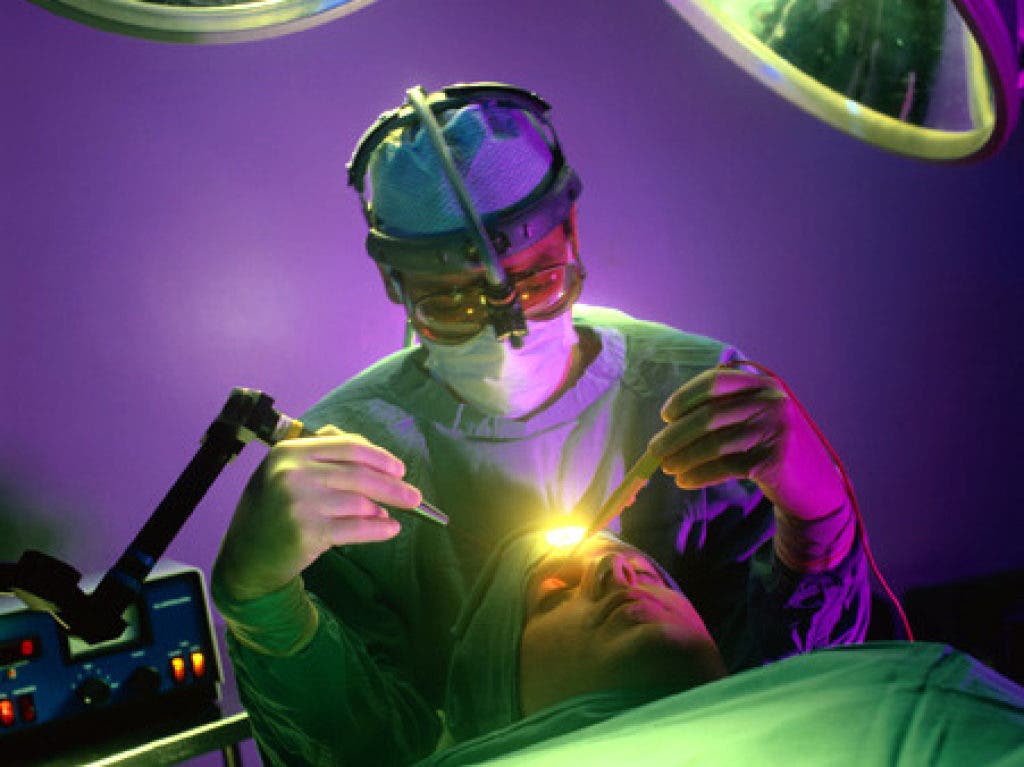
Hip arthroscopy is a less invasive, very involved, and precise procedure. Surgeons work in a very small space -- just 10mm to 12mm -- which provides the benefit of a much smaller incision, usually 8mm. Using arthroscopic long cameras and minimally invasive instruments, they are working to heal native structures – like cartilage.
Misdiagnosis is common
As with all medical conditions, getting an accurate diagnosis is critical. Unfortunately, FAI is commonly misdiagnosed. Because the pain frequently presents in the groin area, hernias and other conditions are often suspected. Arthritis is another common misdiagnosis. Misdiagnosis is often followed by ineffective treatment, such as physical therapy that is focused on improving range of motion when strengthening exercises are more appropriate. When good answers aren’t found or prescribed treatments don’t alleviate the condition, patients are frequently told that they are simply going to have to live with the pain.
Clinical studies have found that patients generally have seen three to four other doctors including sub-specialists, over more than a two to three-year period, before being correctly diagnosed with FAI. Delayed diagnosis is, sadly, very common.
You might have FAI if...
Patients with FAI have similar symptoms and often share lifestyle traits. The symptoms of FAI include:
- sharp stabbing or dull, insidious onset pain in groin or lateral (outer) hip
- discomfort while sitting, especially in low-seated vehicles (like sedans), airplanes, desks
- clicking, popping, snapping, catching, locking in the hip, itself, or the vicinity of the hip
Adults with FAI may work spending much of the day in a seated position working on a computer. They may be “road warriors” who travel a great deal -- either commuting to work or flying as part of their jobs. Frequently, they may be athletes involved in hockey, football, baseball, gymnastics, ballet, dancing, yoga, or Pilates.
Diagnosing FAI requires a specific diagnostic protocol. After a complete medical history is taken, a clinical exam, composed of very specific maneuvers on the hip to determine the presence of FAI as well as rule other other causes of pain, is performed. Specific radiographs are commonly required. If the symptomology persists, an MRI with contrast called an MR Arthrogram may be needed. The specificity of this process is essential to an accurate diagnosis of FAI.
Getting back into the swing of things
The recovery and rehabilitation period following hip arthroscopy is approximately two to three months. The process begins with partial weight bearing movement and use of crutches immediately after the surgery, and advances to rehabilitation with a physical therapist within one week. Specific phases of rehabilitation are required to have a successful outcome.
Patients who undergo hip arthroscopy typically do so to control pain associated with FAI, regain functionality in their daily lives, and improve their quality of life. Overall, hip arthroscopy is an effective treatment for FAI and, according to statistics, patients without arthritis do particularly well after surgery when the criteria, indications, and protocol are followed.
Finding the right orthopaedic surgeon -- one who is trained in hip arthroscopy -- is essential to the diagnostic and treatment process. Information about a surgeon’s training is readily available on their practice’s web site, as well as the web sites for the hospitals with which they are affiliated.
Get local news delivered to your email. It's free. Learn more.
Get more local news delivered straight to your inbox. Sign up for free Patch newsletters and alerts.