Politics & Government
Police Surveillance Drones At Protests Approved By Illinois House
Lawmakers are lifting restrictions on the warrantless use of unmanned aerial vehicles by police to monitor large public gatherings.


SPRINGFIELD, IL — Lawmakers passed a bill Wednesday permitting police to fly drones above political protests and other large gatherings. Supporters of the legislation said it will give police necessary tools to keep people safe at public events and could help save many lives. Its opponents argued it could have a chilling effect on free speech by effectively gutting privacy protections in a bill that passed overwhelmingly five years ago.
The modification to the Illinois Freedom from Drone Surveillance Act tacks on an additional exception to the state's strict prohibition on the warrantless use of unmanned aerial vehicles by law enforcement. Sponsored by Rep. John D'Amico (D-Chicago), it passed the House on the penultimate day of the legislative session by a vote of 74-35. Due to a floor amendment, the bill goes back to the Senate, where it passed earlier this month 36-2.
Passed in May 2013 and signed into law by then governor Pat Quinn, the state's existing drone law include five exceptions for law enforcement agencies to use drones:
Find out what's happening in Niles-Morton Grovefor free with the latest updates from Patch.
- With a warrant.
- During a disaster or a public health emergency.
- While looking for a missing person outside of a criminal investigation.
- For traffic crash and crime scene photography.
- With reasonable suspicion of threat of harm, escape of a suspect or destruction of evidence – for up to 48 hours.
- If the Department of Homeland Security determines there is credible intelligence indicating a high risk of a terrorist attack.
Adopted May 30, Senate Bill 2562 inserts a sixth exception for monitoring events estimated to be attended by more than 1,500 people. It also adds a requirement that law enforcement report when, where and why they have used the drones.
"Basically it just promotes safety across the state of Illinois," D'Amico said. "We've had some issues where, whether its a terrorist, a lone shooter, whatever it may be at some of these events, this would be able to help law enforcement, hopefully, prevent it, or maybe even identify people who have been wounded in these large crowds so our emergency vehicles, our responders could get to them immediately."
Find out what's happening in Niles-Morton Grovefor free with the latest updates from Patch.
Sen. Martin Sandoval (D-Chicago) said he was motivated to change the law by last year's mass shooting of concertgoers in Las Vegas after he introduced the bill in February. It has been strongly supported by Chicago Mayor Rahm Emanuel, and lawmakers said Chicago Police Superintendent Eddie Johnson had been personally lobbying for its passage.
"When things go wrong, the first ones we want to call is our police to come and help, and they're here asking us for our help," said D'Amico, whose 15th District includes parts of Niles, Morton Grove and Glenview as well as portions of Des Plaines and Chicago's North Side. "They want to use this tool that's available to help them make things safer for us. So I think now is the time to stand up and stand with our police officers. This is no time to turn our back on them."
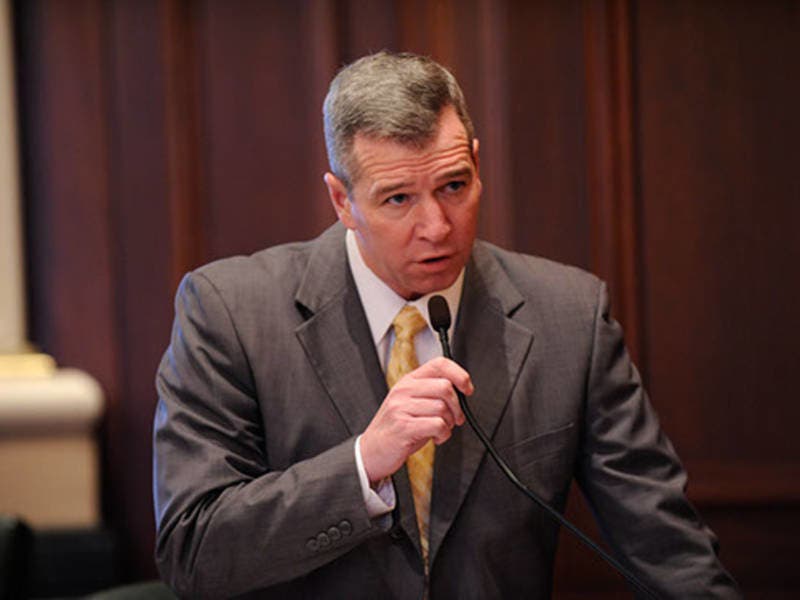
Civil liberties and privacy advocates worried that drones could be used to monitor political activity, using facial recognition technology to build databases of demonstrators.
The governmental affairs director for the Illinois American Civil Liberties Union said police never provided a single example of lacking necessary authority under current law.
“With the passage of this bill, we are one step closer to a future of constant police surveillance in Chicago," said Khadine Bennett. "The Chicago Police Department has already said they plan to target and monitor any public gathering of 100 or more people, which could be anything from a major protest such as the Women’s March to a block party. "
Because the amended law permits drones to be used for "identifying possible criminal activity," police could use the devices to target "those smoking pot at a concert or underage drinking at a festival."
"Do we really need this sort of powerful technology for these sorts of 'crimes?'" Bennett asked.
Earlier this month, the director of the ACLU's Police Practices Project said in a release the bill gave too much unchecked authority to law enforcement and stifle free speech.
"During the next large scale political rally, drones could identify and list people protesting the Trump administration,” Karen Sheley said. “The sight of drones overhead, collecting information, may deter people from protesting in a time when so many want to exercise their First Amendment rights.”
An unchanged part of the act requires police to delete any records gathered from drone flights within 30 days, unless there is a suspicion the records have evidence or a criminal activity or is relevant to an ongoing investigation. An amendment in the House to reduce that number in the case of political protests were rejected.
"They said, 'No, we need to keep it for 30 days.' To me, that immediately raises my red flag, my suspicion. Why do they need to keep the tape? Well, maybe because they're going to run it through that facial recognition software," said Rep. Steven Andersson (R-Geneva).
"This is about liberty. This is about privacy. We already have too little of both. This will just exacerbate it," he said.
A spokesperson for the mayor told the Chicago Sun-Times that the amendment aimed to balance "privacy rights and ensuring the safety of those attending large-scale events in Chicago – whether at the annual Lollapalooza music festival or an impromptu World Series celebration... This update simply allows CPD to monitor and secure large-scale events where a legitimate public safety interest exists in a more efficient manner, as we do currently with the existing security camera network."
There are no restrictions under state law on how many drones a law enforcement agency can operate.
"What is there to prevent law enforcement from flying over every large event everywhere?" asked Rep. Michael McAuliffe (R-Chicago).
"They wouldn't do that," D'Amico said. "They're going to use their discretion to fly it when they think it's necessary."
Get more local news delivered straight to your inbox. Sign up for free Patch newsletters and alerts.