Politics & Government
Parking Ticket Standoff Heats Up In Northfield Township
An amendment to the Cook County vehicle code would allow Sheriff's Police to bypass the court system for minor violations, like parking tickets—but meets political deadlock to passage in Northfield Township.


Editor’s Note: This is part two of a two-part story on the political standoff over how to handle vehicle violations on Northfield Township roads. , which lists who else has signed on nearby and explains what the money could mean for Northfield Township.
If the Cook County Sheriff’s Police write you a ticket for parking illegally on one of the roads maintained by Northfield Township, chances are you may never be forced to pay that fine.
Given the volume of such tickets and the small amount of each fine, those violations often don’t get adjudicated by the State’s Attorney’s Office, according to Dave Feller, legislative coordinator for the Sheriff’s Police. That also means the money from the fines never gets distributed to the state, the county or the township whose roads the ticket was written on.
Find out what's happening in Northbrookfor free with the latest updates from Patch.
“We were writing all these parking tickets and they were just hanging out in the atmosphere,” he said.
Feller hopes to bring the tickets back to the ground through an amendment to the Cook County vehicle code and an intergovernmental agreement with Cook County townships. If enacted by townships, the agreement would allow the Sheriff’s Police to substitute administrative hearings for adjudication in court in the case of minor vehicle violations, thereby speeding up the process.
Find out what's happening in Northbrookfor free with the latest updates from Patch.
“What we’re doing now is we’re streamlining the court system,” said Feller, who drafted the legislation.
In order to do so, the Sheriff’s Police must enter into separate agreements with each of the 19 townships in Cook County that have road districts, in order to write tickets on the roads those districts maintain. So far, 10 have signed on, according to Feller.
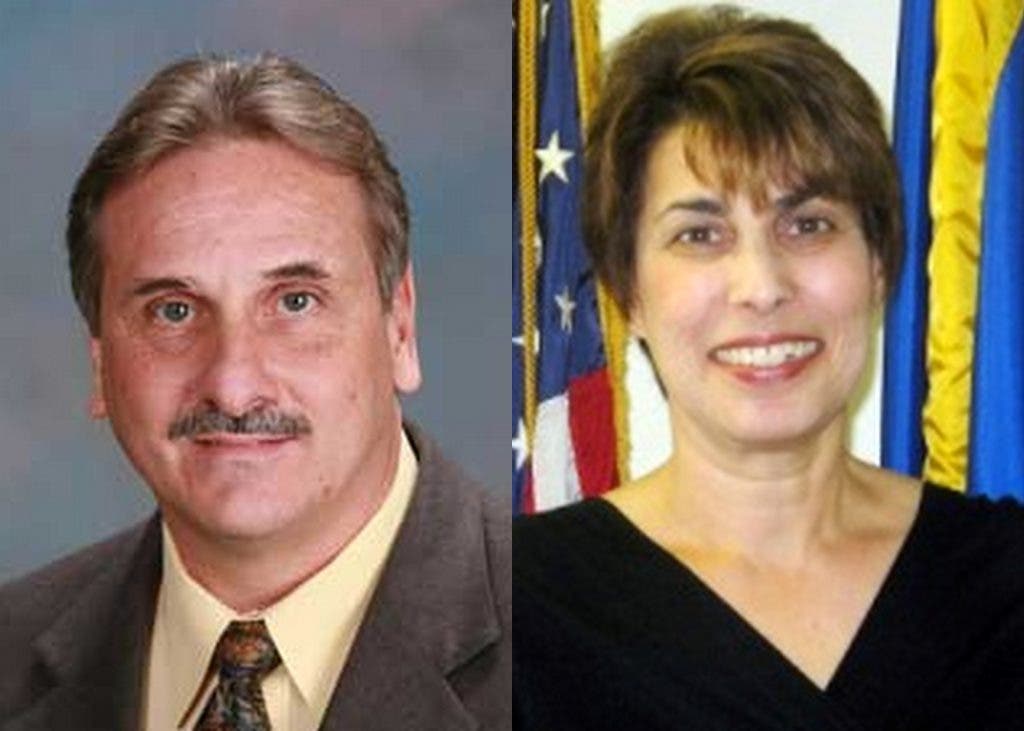
But in Northfield Township, the intergovernmental agreement has met political deadlock: the board of trustees approved the amendment, but Highway Commissioner Peter Amarantos has refused to sign it.
“The agreement won’t go through. It can’t go through. I won’t sign it,” Amarantos told Patch. “We’re all taxed enough as it is, and basically this is another tax. The Cook County Sheriff is trying to find another revenue stream because they’ve been cut on the county side.”
Northfield Township trustee Carol Blustein, on the other hand, believes the amendment is a good thing.
"The purpose of this legislation was to streamline and enable cost effective enforcement of nuisance violations in the unincoporated Cook County areas," she wrote in an e-mail. "By [Amarantos'] refusal, he blocked good government and a revenue stream for the township."
Board of Trustees And Road District Have Contentious History
Northfield Township’s board of trustees and its highway commissioner—both separately elected units of local government—have often battled over money in the past, and specifically the road district’s yearly budget. According to Illinois law, the township supervisor serves as treasurer of the road district, and the board of trustees has the power to approve the highway commissioner’s budget either in part or in full.
Trouble began with Amarantos’ proposed 2010-2011 budget, in which he created a position for an emergency management director at a salary of approximately $55,000. When he submitted it to the trustees, however, they cut that salary to $34,000 before approving the budget.
Amarantos followed up by filing suit against the board of trustees, arguing they had overstepped their authority and that the salary should be restored to $55,000. In July, a Cook County circuit court judge ruled that the board of trustees had “exceeded its statutory authority” by making a specific change to the road district budget.
As for the intergovernmental agreement, Amarantos maintains that his refusal to sign has nothing to do with previous squabbles over money.
“If you know me, that’s absurd,” he said.
Follow The Money
While Feller maintains that the amended vehicle code is meant to streamline enforcement, Amarantos argues that the change is really about something else: money. And that, he says, is the one reason why he won’t sign.
“The Cook County Sheriff is looking for another revenue stream, and on that side, I don’t agree with what they’re trying to do,” he said. “They’re basically going to write more tickets and make more money off our people.”
Feller emphasized that the amendment is about streamlining a process, not about collecting more money.
“I don’t want to give the impression that this is some sort of money grab or blatant revenue generator,” he said. “Tickets were being written and they were not being acted on.”
How The Fees Are Divided Matters
Previously, the Cook County Sheriff's Police wrote minor vehicle violations as state tickets, and 12 percent went to the state of Illinois, 41 percent to Cook County and 47 percent to the township. In contrast, the new amendment would direct 30 percent of the fee collected to the township and 70 percent to county, according to Feller.
Given that townships would collect a greater percentage of the fine under Illinois’ old vehicle code, the agreement might not be in their best interest, argues Amarantos’ lawyer, Anthony Spina.
“Does that make sense to you? It doesn’t make sense to me,” Spina said. “The problem here is with the sheriff’s department not having a sufficient budget to police unincorporated roads.”
But Feller described the revenues from vehicle violations as “found money” for townships.
“People were asking us, ‘How much are we going to get?,’” he said. “The number to keep in mind is zero—that’s what you’re getting right now.”
Check Would Be Made Out To Township—Not Road District
Beyond simply the way the money is divided, Spina and Amarantos balk at the fact that the new amendment would direct money to the township—not to the road district, which is responsible for maintaining the roads upon which the tickets are written. Legally, however the new code had to be enacted as an agreement between the township board of trustees and Cook County, according to Feller—meaning funds must directed to the township, not the highway commissioner.
Among the highway commissioners who have signed on to the agreement—including Wheeling and Des Plaines townships’ highway commissioners—some have agreed that money from fees should be signed over at least in part to the road district. Others have simply agreed that the small sum that would be collected should remain with the township.
“I would have thought that the townships and the road districts would be working together for this ordinance,” said Joe Stanfa, who is president of the Cook County Highway Commissioner’s Association and Bloom Township Highway Commissioner.
“I would have thought they would be cooperating together.”
Eleni DeMertzis contributed reporting to this story.
Get more local news delivered straight to your inbox. Sign up for free Patch newsletters and alerts.