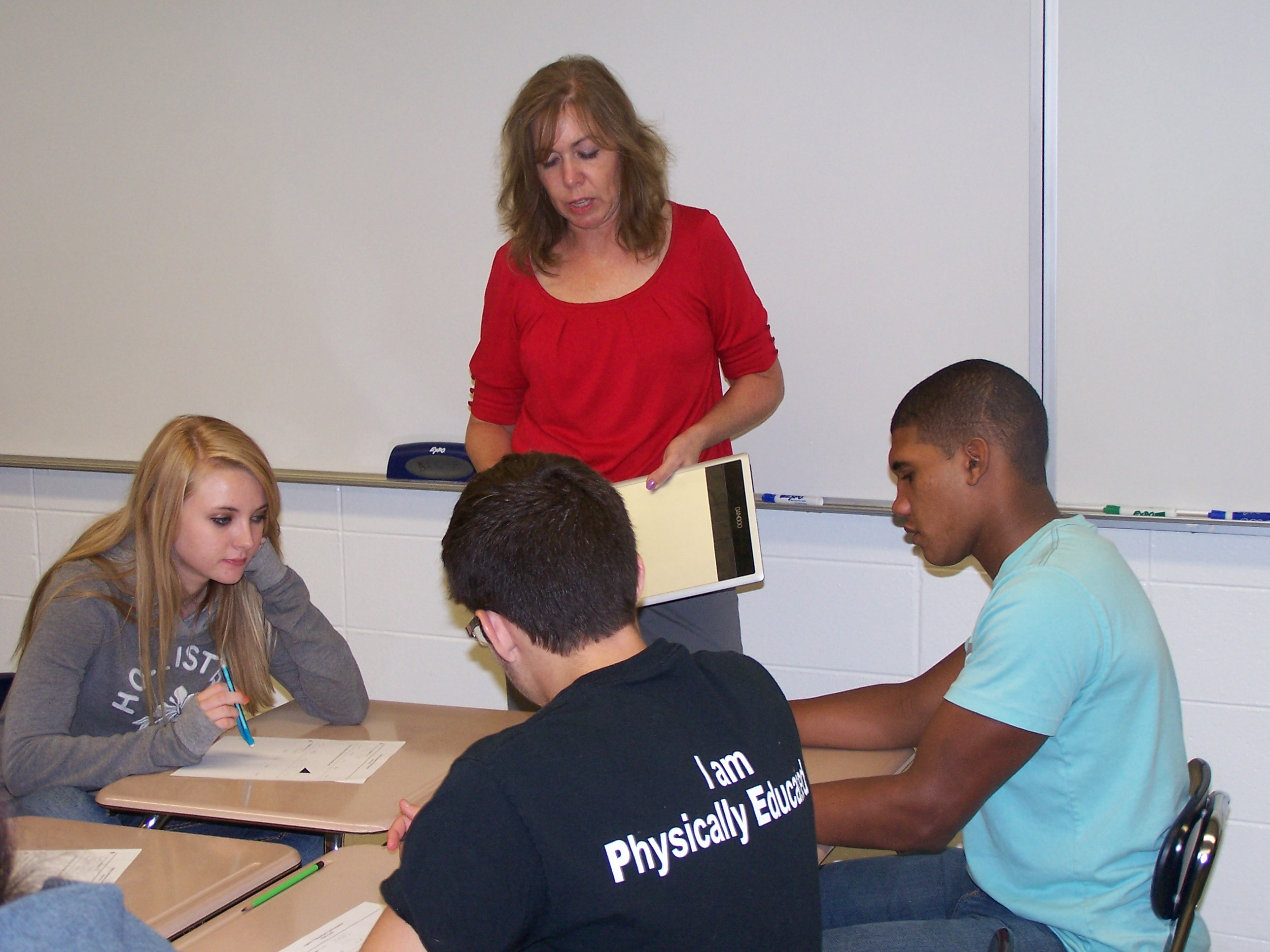
Oak Forest High School mathematics teacher Ms. Pat Banach is flipping for her math instruction.
Actually, Banach is practicing an innovative teaching strategy called “flipped instruction.” A student in a flipped classroom watches and takes notes on a 15-25 minute video of the teaching lesson in the comfort of their home on a computer or smart phone and then works on homework assignments in their classroom with Banach.
The classroom is not organized in a traditional way, however, for students to work on their homework. Students are assigned to family groups for each chapter. Banach called them family groups because they are “living each unit together.” At the end of a chapter, students are placed into a different family group. Banach said, “The benefit of the family [group] allows students to develop positive peer relationships and to get their questions answered from their peers.”
Find out what's happening in Oak Forestfor free with the latest updates from Patch.
Oak Forest High school student Kaitlyn Harman agrees that this style of learning is easier. “It is easier than how teachers normally do things. It is less stressful because you don’t have to remember homework. All you have to do is take notes at home [to prepare for class].”
Oak Forest High School student Jacob Griffin also thinks flipped instruction is easier. He likes it because “you can go back over notes if you don’t get it. In class you can ask questions as you do your homework.”
Find out what's happening in Oak Forestfor free with the latest updates from Patch.
Banach was inspired to try this style of instruction after a colleague told her about Khan Academy and how they structure their classes. She developed the program of flipped instruction with fellow Tinley Park High School mathematics teacher Ms. Kelli Dasher-Lattyak.
At the beginning, Banach and Dasher-Lattyak spent 4-5 hours producing the instructional videos for their classes. What the students see is not a video of the teacher but a demonstration of the physical problem set. They also hear their teacher’s voice explaining the problem.
Banach said, “Test scores indicate that students are getting a better understanding of concepts.” Those test scores are backed up by a survey that Banach delivered. Almost 70% of students surveyed felt that flipped learning was geared for today’s learning.
Additionally, students are becoming more confident in their math. Banach said, “This [style of learning] allows students to become independent thinkers and learn that they are responsible for their own learning because the lessons address students at where they are in their mathematics understanding.”
If a student is absent, he or she can catch up by watching the video at home and taking notes.