Arts & Entertainment
Oak Lawn's John Deere Connection
The father of modern farming gets inspiration while visiting the village.

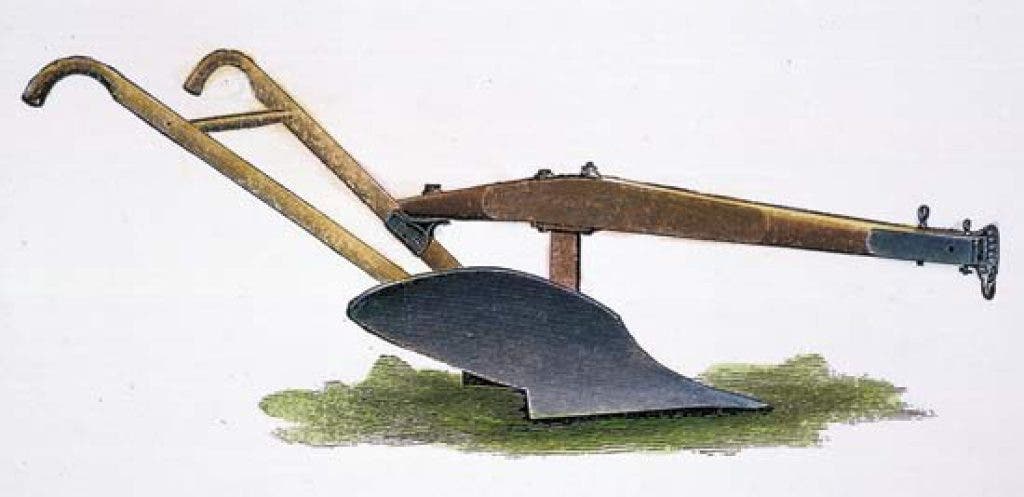


We’ve all seen them from our cars, dotting the bountiful cornfields of the state. If you’ve ever stopped in scenic Moline, IL, you may have caught a glimpse of a massive, multi-million dollar headquarters that provides cutting-edge farming equipment for farmers across the globe.
While we all know that distinctive green John Deere logo, it surprised this writer to find out that one local family’s past was directly connected a dynamic figure. Deere’s patented steel plow revolutionized the way Americans tended their land. But had it not been for John Simpson of Oak Lawn, Deere might not have had the inspiration to take his ideas past the drawing board.
When the village celebrated its 50th anniversary in 1959, local historians and librarians sent out hundreds of letters, seeking out the descendents of Oak Lawn’s first families. After waiting several weeks with no responses, it seemed that all their efforts had been in vain. However, with one trip to the mailbox, their fortunes changed one day in late spring.
Find out what's happening in Oak Lawnfor free with the latest updates from Patch.
Bert J. Simpson, grandson of John Simpson, had recently relocated to a small town in Oklahoma and was eager to share his family’s story with others. In particular, one anecdote detailed how his grandfather came face-to-face with the future head of one of the most successful corporations of the 19th century.
John Simpson, originally from Scotland, traveled to the United States to escape excessive debt and tenacious creditors. Arriving in the countryside outside of Chicago, he sold his Scottish bank stock for 62 cents per share and began buying up fertile land. By the 1830’s, the return on his investment was minimal, a direct result of plunging property values. During the infamous Panic of 1837, amid a wave of land speculation, inflation skyrocketed and drove many banks out of business.
Find out what's happening in Oak Lawnfor free with the latest updates from Patch.
Seeking to cut his losses, John focused solely on farm work as a way to provide for his family. As he attempted to till the rocky soil, he found that his horse-drawn plow kept getting caught on tree stumps and boulders. After visiting a blacksmith, Simpson came up the idea of fastening iron plates to his plow’s frame, creating a stronger tool that could endure greater use.
Recounting the story in his letter, Bert maintained that “My grandfather helped develop the walking plow in Illinois. He and a blacksmith from Lockport helped invent one of the first iron plows in America”.
At the time, John Deere, a little-known bankrupt farmer had also noticed that modern plows were unable to traverse tough prairie ground. After working in his father’s tailor shop, Deere was inspired to visit other Midwestern farmers for their input. Although historians have argued that Deere dreamed of the idea of a steel plow years before, he nonetheless traveled extensively through Illinois, hearing the almost constant demand for a stronger plow.
According to Simpson family lore, Deere was coming back from a trip in Chicago when he heard from locals about the custom farm tool developed in Oak Lawn. John Simpson responded to a knock on his door one day to find the soon-to-be famous businessman on the front porch, asking about the new creation. After meeting with the blacksmith that had sculpted the iron plates, Deere suggested steel as a stronger metal. Initially skeptical, the men experimented with different plowing techniques for several hours. Deere soon left, eager to develop his prototype.
The next year, 1837, he created the first steel plow in the United States. After patenting his discovery, Deere sold the first model to neighbor Lewis Crandall, who spread the word about Deere’s work. By 1841, Deere was producing 100 plows each year, making him one of the wealthiest men in Illinois. For the next four decades, he would expand his company to produce other agricultural equipment. By the time of his death in 1886, Deere’s corporation was a leading manufacturer of farm implements; second only to Cyrus McCormick’s Harvesting Machine Company.
Though the Simpsons did not achieve the same success, son Charles was instrumental in bringing the Wabash Railroad to Oak Lawn, as well as producing the first recorded history of the town in 1912. Many still consider the Simpsons the first “true” family of Oak Lawn, having first settled the area in the late 1830’s.
Bert Simpson remained optimistic about his grandfather’s encounter with Deere. Although John received almost no credit for the ideas he pitched to the future business leader, Bert maintained that his ancestors were merely looking for a way to make their lives easier. In a twist of irony, 50 years later, Bert found himself using the very same plow his grandfather developed to prepare land for the laying of train tracks in downtown Oak Lawn.
“Those were weary days for all of us,” he wrote. “The only joy and rest we workers had was listening to the boys who played the fiddle every night”.
At the time of his correspondence with Oak Lawn officials in 1959, Bert Simpson was the last living employee that had toiled to bring the Iron Horse to Oak Lawn.
The Simpson-Deere episode remains a mere footnote in history, but connects our town to one of the influential characters of the 19th Century business world. While the thought of Deere himself traveling to Oak Lawn might seem implausible, historians have agreed that he drew much of his inspiration for the steel plow from hard-working Illinois farmers. John Simpson certainly could have been one such man.
Next time you drive past one of those green, lumbering contraptions on your trip downstate, remember that their birthplace may not be as far away as you thought.
For more information on the Simpson family and other individuals from Oak Lawn’s past, visit the Local History Room of the Oak Lawn Public Library.