Real Estate
Chicago Region Population Grows for Third Straight Year
New Census data shows Chicagoland stabilizing even as population growth slows across most U.S. metro areas.


For years, the narrative has been simple: people are leaving Chicago. But new data suggests the story is far more nuanced — and, in some ways, more encouraging.
According to new Census Bureau estimates highlighted by Crain’s Chicago Business, the Chicago metro area grew for the third consecutive year, even as population growth slowed across most of the country.
Chicago region grows despite national slowdown
The 13-county Chicago metropolitan area — stretching from the Wisconsin border into Indiana — grew by 0.2% in 2025, reaching approximately 9.4 million residents. This growth happened even though international immigration, which had fueled population increases in many cities, dropped significantly.
Find out what's happening in Oak Park-River Forestfor free with the latest updates from Patch.
In fact, 80% of metro areas nationwide experienced slower growth last year, largely due to declining international immigration. Chicago, however, continued to add residents.
Fewer people leaving the region
Another key shift: fewer people are leaving Chicagoland.
Find out what's happening in Oak Park-River Forestfor free with the latest updates from Patch.
While the region still saw more people move out than move in domestically, the outflow has been shrinking each year:
- 2022: 122,143 net domestic outflow
- 2023: 67,022
- 2024: 42,706
- 2025: 33,708
Among the 10 largest metro areas in the country, Chicago was one of only four that saw improvements in domestic migration last year.
What this means locally
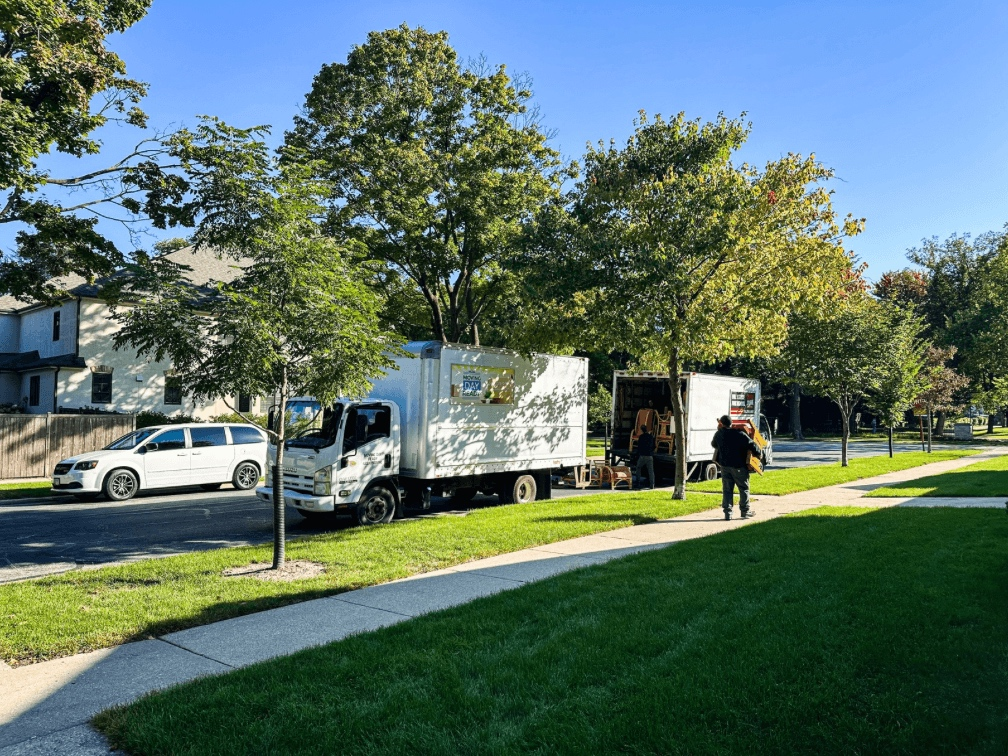
On the ground, this aligns with what many in the housing market are seeing. People aren’t necessarily leaving the Chicago region altogether. Instead, many are making moves within it.
Some are relocating from the city to nearby suburbs for more space. Others are downsizing but staying close to family and community. And relocations into Chicagoland continue, driven by job opportunities, relative affordability compared to coastal markets, and quality-of-life factors.
The takeaway isn’t that population trends have reversed overnight. It’s that the long-standing narrative of mass departure doesn’t fully reflect what’s happening today. The Chicago region is stabilizing — and in some areas, growing.
As housing demand adjusts alongside these shifts, understanding the bigger picture helps both buyers and sellers make more informed decisions about timing and strategy. If you’re thinking about a move within Chicagoland — whether that’s relocating, upsizing, or downsizing — having a plan based on current trends can make a meaningful difference.
About the author:
Laurie Christofano is a Chicagoland real estate broker with RE/MAX In The Village, helping buyers and sellers navigate moves across Chicago and the near-west suburbs including Oak Park, River Forest, Elmwood Park, and Berwyn. With nearly two decades of experience, she focuses on helping clients understand local market trends so they can make informed decisions about when and how to move.