Community Corner
Patch in the Parks: Lindberg, Scoville and Mills
A progress report for the Park District of Oak Park.


Back in 2005, the sought a referendum that raised property taxes in exchange for the promise of more robust park offerings throughout the village.
Six years and more than a dozen master plans later, renovations for many local parks are either underway or nearing completion.
This is theexamination of the that the Park District has accomplished. As in our stories, we'll add up the for how much the renovations have cost. In other words, it's a look at what your money's been paying for the past several years.
Find out what's happening in Oak Park-River Forestfor free with the latest updates from Patch.
Where: On Greenfield Street between Marion Street and Woodbine Avenue, one block east of Harlem Avenue, one block south of North Avenue.
Size: Approximately 13.9 acres, the park district's largest facility.
History: The site of a former refuse dump, Lindberg Park was acquired in 1925 and named after Gustav A. Lindberg, the first superintendent of parks. In 1972, the Presidential Walk was established, with a sugar maple planted there for each former village president. In the late 1990s, the gardens were restored to Lindberg's original vision in the 1930s. Improvements completed in 2000 included remodeling the "comfort station" and concession stand, resurfacing the tennis courts, installing irrigation under the fields, and replacing 120 trees. The tennis courts were resealed in 2009.
Find out what's happening in Oak Park-River Forestfor free with the latest updates from Patch.
Features: The park features a comfort station with restrooms, an age appropriate playground area, two baseball fields, two multi-purpose fields, three tennis courts, a native prairie plant garden, and a drinking fountain.
Work Accomplished So Far: A master plan was approved in 2010. Upgrades, which will be undertaken next year, will include replacing an existing tot lot; adding a shelter; installing new backstops, benches, fencing, bleachers and warm-up areas with small backstops; putting in ADA detectable warning strips to pedestrian entrances; adding an entrance to the northeast corner of the park.
Costs: Estimated at $450,000.
Grant funded: No.
What's Next: These are all of the improvements scheduled at Lindberg for now.
Where: 800 Lake St. at Oak Park Avenue.
Size: 3.98 acres.
History: Acquired in 1913, Scoville was named after Charles B. Scoville, the previous owner of the land and an advocate for creation of the park district. It was the first park built after the district’s was set up in 1912 and is one park that retains most of the designs of its creator, Jens Jensen. It serves as a village green with the installation of a “Liberty” flag pole in 1915, a World War I monument dedicated by U.S. Vice President Charles Dawes in 1925, which was re-dedicated last year. A bronze marker noting the location of the home of Joseph Kettlestrings, the first white settler in Oak Park in 1927, is also housed. Grove Avenue was vacated in 2001 and a new plaza was built adjacent to the park. Scoville Park was added to the National Register of Historic Places in 2002. The was restored and re-dedicated last year.
Features: Comfort station with restrooms, an age-appropriate playground area, three tennis courts, drinking fountain and an open space used for summer concerts and events.
Work Accomplished So Far: A master plan was approved in 2010, but it has not yet been decided which projects will be done in Phase I and which in Phase II. Identifiable needs include renovating the southeastern entry plaza and area near the library entrance, improving the walkways and planters, creating a formal plaza area around the WWI memorial, evaluating possibilities for the performing stage and replacing the playground equipment.
Costs: $725,000.
Grant funded: No.
What's Next: The work at Scoville is still being planned.
Where: 217 S. Home, three blocks east of Harlem Avenue, three blocks north of Madison St.
Size: 4.43 acres.
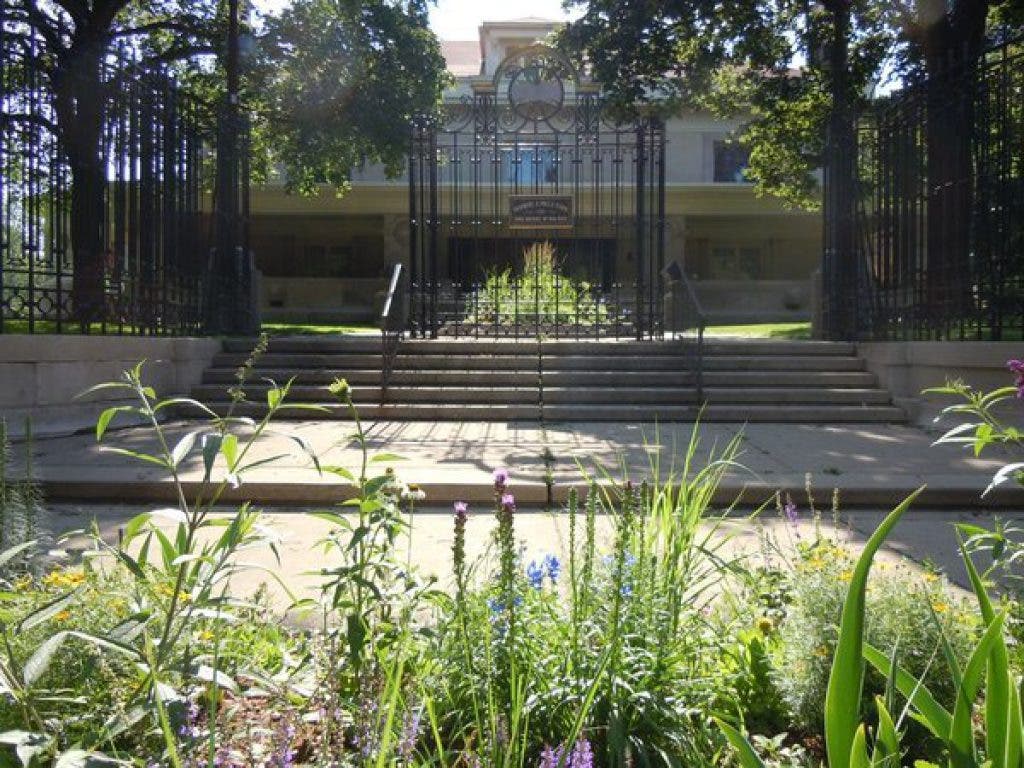
History: Acquired in 1939, the historic John Farson House, known as “Pleasant Home”, is a National Historic Landmark designed in 1897 by architect George W. Maher. Outbuildings on the attendant grounds were subsequently razed and Mills Park has been maintained as open space for many years. Pleasant Home was used for decades as a community center and is now also rented out to the public for events. The offices are located in the home. Since the 1960s the museum and offices of the of Oak Park and River Forest have been located in the home.
Features: Restrooms, banquet facilities and room rentals at the Pleasant Home adjacent to the park, floral displays.
Work Accomplished So Far: A master plan was undertaken in 2008 and approved in December 2008. A historical fence has been restored allowing for entrances to be added at Home Avenue and at Pleasant Street. About $150,000 is allocated in 2011 for lead remediation. Additional plantings and a tree seat and daisy meadow will be added.
Costs to Improve: Overall, improvements at the park and the center will cost around $1 million.
Grant Funded: Yes. The park district received a $400,000 from the Illinois Department of Natural Resources. Bills will go out in August. The children’s adventure area, labyrinth and additional walking paths will be added with that money.
What's Next: Approximately $75,000 is allocated in 2012 to upgrade the summer dining porch. Approximately $125,000 is allocated in 2013 to replace windows. And $870,000 is allocated in 2014 for roof replacement and Tuff-Kote wall repair.