Arts & Entertainment
Cleaner Air Could Be A Houseplant Away
This week, Heather shows us natural ways to breathe clean in our homes, just like the astronauts are using these days.


The air you breath at home could be making you sick.
And now that winter's grip is upon us, our homes lock in even more toxins as windows are rarely opened and we spend more time indoors. The invisible toxins that would float out of the windows in the warmer months have nowhere to go. So they hang around and wreak havoc on our respiratory systems.
Energy efficiency in the home is a beautiful thing. But it's also a major contributor to "Sick Building Syndrome." As homes become "tighter", there's even less of a chance that fresh air will enter. Making matters worse are the modern building and cleaning materials that release pollutants.
Find out what's happening in Orland Parkfor free with the latest updates from Patch.
There is a very simple solution. Houseplants. Not only do they beautify the space, but houseplants filter the air we breathe. Consider the initiative for more trees and green space across the globe. That same idea can be carried over into the home.
In 1989, NASA partnered with the Associated Landscape Contractors of America (ALCA) to study the effect of houseplants in space stations. At the conclusion of the study, it was determined that space stations as well as earthly dwellings would benefit from a houseplant or two.
Find out what's happening in Orland Parkfor free with the latest updates from Patch.
In addition to converting carbon dioxide to oxygen, houseplants also remove common indoor pollutants like trichloroethylene (TCE), benzene and formaldehyde from the air. Benzene is found in paints and oils while formaldehyde is used in cleaning products and building materials. TCE is in paints, inks, varnishes and adhesives.
All houseplants however, are not equal according to a recent study at the University of Georgia. Researchers set out to determine the effectiveness of the most common houseplants.
The following plants were credited with "Superior Removal Efficiency:"
- Hemigraphis alternata: Red Ivy
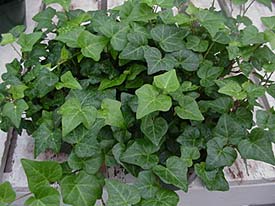
- Hedera helix: English Ivy
- Tradescantia pallida: Wandering Jew
- Hoya carnosa: Porcelain Flower
Those receiving "Intermediate Removal Efficiency" were:
- Ficus benjamina: Weeping Fig
- Polyscia fruticosa: Ming Aralia
- Fittonia argyroneura: Silver Nerve Plant
- Sansevieria trifasciata: Mother-In-Law's Tongue
- Gusmania sp.: Bromeliad
- Anthurium andreanum: Flamingo Flower
- Schefflera elegantissima: False Aralia
But how many plants does it take to change the air quality? The NASA study recommends that at least 15 plants be spaced throughout a home of less than 2,000 square feet. When placing each plant, consider its light requirements. A plant that thrives in low light will never be happy in a sunny window. Locating plants away from heat sources also is crucial. Read plant tags. They give light requirements as well as any other pertinent information about the care and upkeep of the plant.
The hardest part (for me at least) is remembering to water them. I'm a pro at maintaining my garden, but struggle with remembering this vital requirement.
For a guide to the light requirements of the most common houseplants, check out the University of Illinois Extension's website at http://urbanext.illinois.edu/houseplants.
And here's to a healthier home!