Politics & Government
Dodge Touts Retail Progress, 12-Hour Police Shifts, Collaboration During Orland State Of The Village
"We've come a long way as a town"; Mayor Dodge on Tuesday reflected on town's roots, outlined key successes of his first year in office.


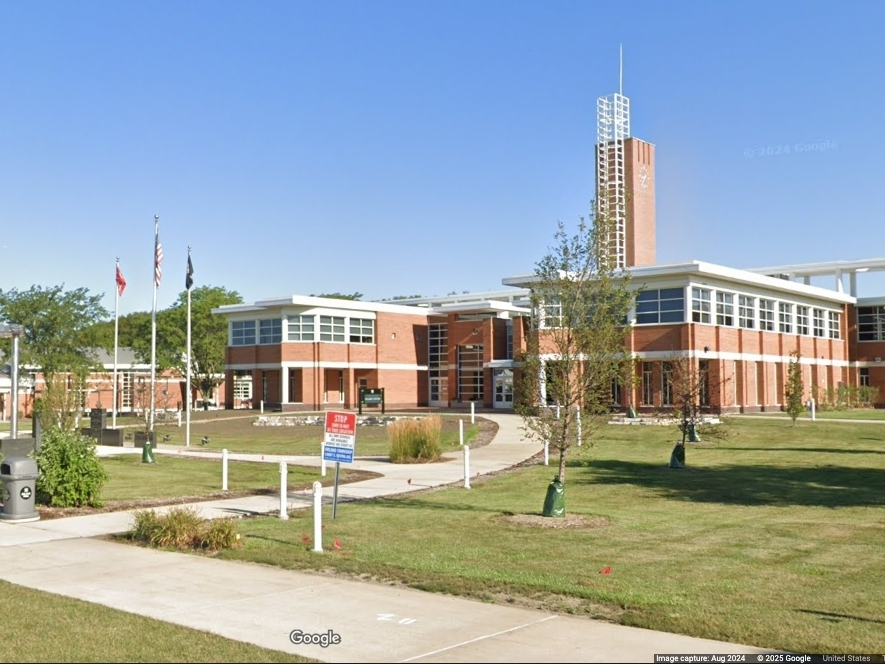
ORLAND PARK, IL — During his state of the village address on Tuesday, Orland Park Mayor Jim Dodge highlighted successes in his first year in office, touching on milestones in retail development, improved relationships within governing bodies and increased police staffing.
Dodge, who unseated former mayor Keith Pekau in April 2025, celebrated the town's roots while praising its progress, pointing to significant retail developments as key indicators of growth. From a pig farm on land that became Orland Square Mall, to a village that attracted e-commerce giant Amazon for a retail center at a key intersection, "we've obviously come a long way as a town," Dodge said.
"And we like to describe it as it's a great suburb on the way towards a much better status," Dodge said. "We have great potential.
Find out what's happening in Orland Parkfor free with the latest updates from Patch.
"... if you're running a town like Orland Park, you have to be cognizant of where you came from. And Orland Park has been on this retail glide path for a long time."
Speaking to a capacity crowd of just under 250, Dodge spoke of village leaders keeping a tight focus on balancing growth aspirations with respect for roots.
Find out what's happening in Orland Parkfor free with the latest updates from Patch.
"So I think it's a tale of two cities," Dodge said. "I'll steal that phrase. So it's our hometown. And we're very mindful as a board and a senior leadership team. This is where 60,000 people live, but it's also a pretty dominant retail center in Illinois. Right? So if you look at our hometown, we're very proud of it."
Dodge touted developments such as a Dick's Sporting Goods House of Sport moving into the former Sears space at Orland Square Mall, along with a Weber Grill restaurant concept.
He noted that the Village had decided to dissolve the Main Street Triangle TIF district four years ahead of its 2029 expiration.
"Why do we do this?" Dodge said, "Because that $1.6 million was going into a TIF district by ending it earlier. It ended the threat of litigation between the village and its school districts. I'm very pleased that we solved that problem, but it also put a $60 million property back on the tax rolls.
"So, that benefits (District) 230, it benefits (District) 135, it benefits the fire district and the township," Dodge said. "So, we're pleased that we were able to do this. And quite frankly, I'm looking forward to some of these new intergovernmental agreements. It just makes perfect sense to me because it's one taxpayer, one tax bill with a bunch of line items. There's no reason why we can't do more collaboration and cooperation with our other governments."
Dodge also stressed the importance of collaborative relationships with governmental bodies to achieve capital improvements. He highlighted initiatives aimed at public safety, infrastructure, and making Orland Park a sustainable community.
"That's a great way to run your town—is being cooperative and collaborative with the other units of government," Dodge said, speaking of moving early voting to the Orland Park Civic Center.
Watch the full State of the Village Address below.
Dodge praised his administration for working to cut an estimated $10 million in expenses through changes to the employee health insurance plan and reenvisioning plans for a roundabout at 153rd and Ravinia Avenue to support a relocated Costco fuel station.
Dodge tackled the conversation around Doogan Park and the discussion of pickleball courts that had been planned there by the previous administration. He said they heard residents' feedback and pivoted.
"Elections have consequences," Dodge said. "We didn't agree that you have that many pickleball courts in a neighborhood park. So, coming out of that debate, we listened to the people who wanted pickleball, and it wasn't just the orthopedic surgeons of America. It was residents who want to play pickleball, and we listened to the residents who were going to be impacted by the traffic and the noise.
"We wound up with a really good solution through the process of the dialogue to build more pickleball courts in places that are higher availability, like behind the sportsplex or at Centennial Park. So, I don't think any amount of noise coming off a pickleball court is going to drive noise complaints off 159th Street. So, we're very pleased that we could work through that."
"But the key focus point for the board coming out of '25 to set the stage for '26 was simple," Dodge said. "We're going to enhance public safety. That was number one. We're going to start aligning our resources with the community's desired service levels.
"... We hear it pretty quickly when there's something not right in a park or on a street, and we're going to keep trying to serve that. And the other thing we're doing, we're setting the stage for being much more analytical, much more data-driven, and taking advantage of technology as we go forward.
Dodge said maintaining the health of the retail environment in Orland Park is crucial to the town's success moving forward.
"... So the good news is we're retail dominant and we're healthy," Dodge said. "If there's bad news to that, you have to work every day to keep your retail environment healthy in that industry. It's very dynamic. You could even say volatile. And so that's what we work on every day."
With increased retail comes the need to keep shoppers safe, Dodge acknowledged.
"So we're very mindful that the shopping experience in Orland Park needs to be safe," he said. "We're mindful you want to get people in and out of your town because there's a convenience, and there's an ethos to trying to do this. So we lead the area and we're going to keep doing that."
To enhance public safety, the Village has increased police staffing and switched to 12-hour shifts.
"So, you're seeing more police officers because of the change with the 12-hour shifts," Dodge said. "We made a substantive strategic investment in our police department to expand the police force. You now have more officers on the shift."
The Village said last month the department has seen a jump in traffic stops since the change, and Dodge said officer feedback has been largely positive.
"We're hearing about better quality of life," Dodge said. "Who wouldn't want to have an anticipatable weekend off instead of working six days in a row with eight-hour shifts, which is one of the things that was happening with the current police department? We also changed the policy so that now there's more pathways to leadership for our police officers. We really do want the best people. We're working hard on recruiting them."
Dodge said focus is also on soliciting feedback from residents and incorporating that into decision-making.
"We wanted to mention about hearing from and then acting on citizen input," Dodge said. "So, one of the things we've done recently is we completely changed the advisory committee structure. ... So, we created a number of these committees for senior citizens, young families, veterans, cultural arts.
"We wanted to take advantage of the expertise in our town. We wanted to get more expertise input on everything from AI to heritage sites to the Veterans to America 250 committee. You want the expertise, you want the input, you want collaboration, and we're going to make sure that we listen to their ideas. Their ideas are going to factor into the plans and the strategies."
Dodge then spoke of what's ahead.
"So, what's next?" he said. "Focus on three big things in 2026. As you would expect from your unit of local government, it's local quality of life, public safety, roads and infrastructure, parks, programming, and then economic development.
" In 2026, what can we attract to Orland? What else can we do? What can we build? Engage and collaborate. We're going to keep doing that with our citizens, with businesses, other levels of government, and notably, we're going to push more for better engagement with nonprofits and entities like the Chamber of Commerce. Makes sense for them and makes sense for us."
With cost-savings made and aiming to better serve the community, administration invested in employees, hiring 25 full-time and 40 part-time positions.
"We are going to drive up our quality and our speed of serving our customers, our residents," Dodge said.
With about 800 acres—66 parks—in Orland Park, Dodge said he's proud of officials' work to ensure that with buildings, developers brought green and open space for residents.
"We've had consultants come through the village over time and say, 'you've got too many parks,'" Dodge said, "'Yes, we don't.' Yes, we don't. Because it's a quality of life."
A schedule of community events aims to bolster local culture, including concerts and a Memorial Day barbecue, Dodge explained. Still in feasibility studies, there are plans to develop a performing arts center as a multi-use facility. They're also exploring initiatives to attract young families and professionals, including forming a Young Families Advisory Board to align developments with modern lifestyle needs.
Officials and residents will work to continually define the town's identity, Dodge said.
"What do we want to be when we grow up?" he posed. "Right? We're 134 years old as a town, but we still have a lot of room to grow, a lot of things we could do."
Get more local news delivered straight to your inbox. Sign up for free Patch newsletters and alerts.