Health & Fitness
Flint to Fossils; Flood debris turns into a teachable history lesson on Illinois
An afternoon with the kids on the banks of the Fox River turns into a teachable history lesson on life in Illinois over the last 3 million years.



Whether it is my own family history that we have been able to trace back over the centuries, custom framing documents from the last 400 years or so, or walking the banks of our little part of the Fox River right here in Oswego to discover evidence of life from over 3 million years ago, history, in one way or another, has had a special place in my heart since my early years.
The flood of this last April did devastating damage to a beautiful part of our city. It will take a lot of money and time to restore Hudson Crossing Park back to the beautiful playground many of us have enjoyed. But in the wake of such devastation, within the debris left piled high by the force of the water, small reminders of life long since forgotten can be found.
Out of pure curiosity, I took my daughter and son, 17 and 11, down to the park to show them the damage from the floodwaters and what was left in the wake of the storm. And since all three of us are armature rock hounds, we couldn’t help but start looking over the pile of rocks that once lined the bottom of the Fox River and Waubonsie Creek. It wasn’t long before we were finding flint, feldspar, quartzite and other rocks we have yet to identify.
Find out what's happening in Oswegofor free with the latest updates from Patch.
As we hunted for the perfect specimen, I couldn’t help to take the opportunity to use this as a teachable moment. Long ago, when I was my son’s age, I had the opportunity to take a weeklong trip to archeology camp in Kampsville, Illinois. What I learned came, pardon the expression, flooding back and was as fresh as it was all those years ago. I showed my kids the simple but time consuming way our native brothers and sisters used flint to make tools for their everyday life. From the very debris we were standing on came the makings for arrowheads, spears and knives for the tribes that called Illinois their home.
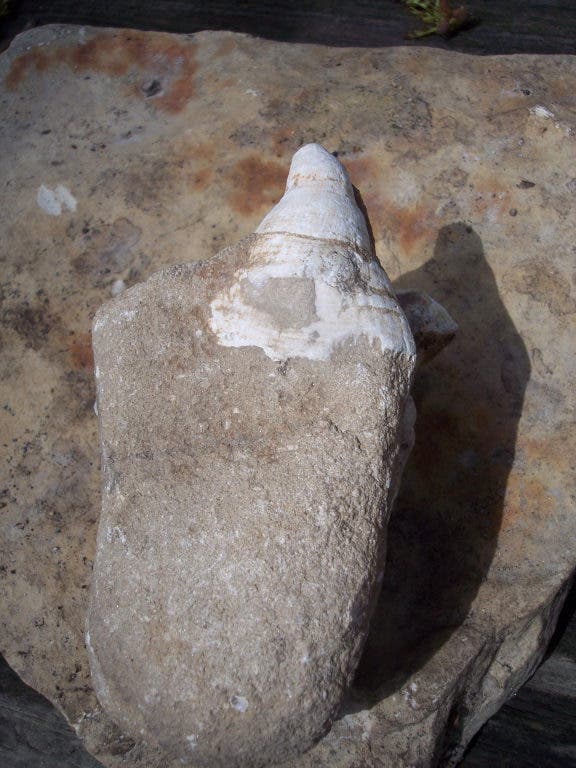
Another teachable moment came when I found the first of many fossils to turn up in the debris piles. The Illinois Basin has seen its share of environmental changes over the last several million years, from being hundreds of feet under water to being frozen under glaciers. Now, the evidence of such changes lay at our feet. Careful hunting produced some beautiful examples of life from a time long before man ever set foot in what we now know as Oswego.
Find out what's happening in Oswegofor free with the latest updates from Patch.
Small fossils of shells and plant life are now littered among the debris brought up to us by the Fox River and left here millions of years ago by massive glaciers. Who knows the travels some of this small rocks how gone through to end up on a pile that we were now standing on, but for my kids to be able to hold these small treasures is priceless. To be able to hold history in your hands is an experience I believe every child should have.
The coup de gras of the day was when, quite by accident, I happen to look down and saw something black in the midst of the lightly colored rocks. As I inspected it, I occurred to me that what I was holding was a fossilized tooth of a herbivore, (plant eating animal for those non science types). My excitement matched that of my kids, maybe even more giddy than them. I may be in my 40's, but this one find made me a kid again. I was now holding something I had always dreamed of finding, something more than just small fossils of shells and plants. It wasn’t from some long since extinct dinosaur, now that would have sent me into orbit with excitement, but it was from an animal that roamed the plains of North American for five to ten thousand years. This was the molar from a small Bison. Unfortunately, herds of wild bison in Illinois were eradicated at the turn of the 19th century. So this tooth was from a bison that lived and died at the very least 200 to 300 years ago.
In the wake of the damage done by the violent forces of nature, there often times small silver linings that can be found. These treasures and memories from a spontaneous afternoon with my kids will last more than a lifetime. Some of these fossils have already survived for hundreds of milions of years. When I am long gone, the generations that follow will be able to see, touch and enjoy these specimens from the past. What some see only as rocks, my kids and I now see as part of our family history.