Community Corner
Delta Aquarids Peak This Week In Illinois
Know when and where to watch in Chicagoland, and what kind of weather you can expect.


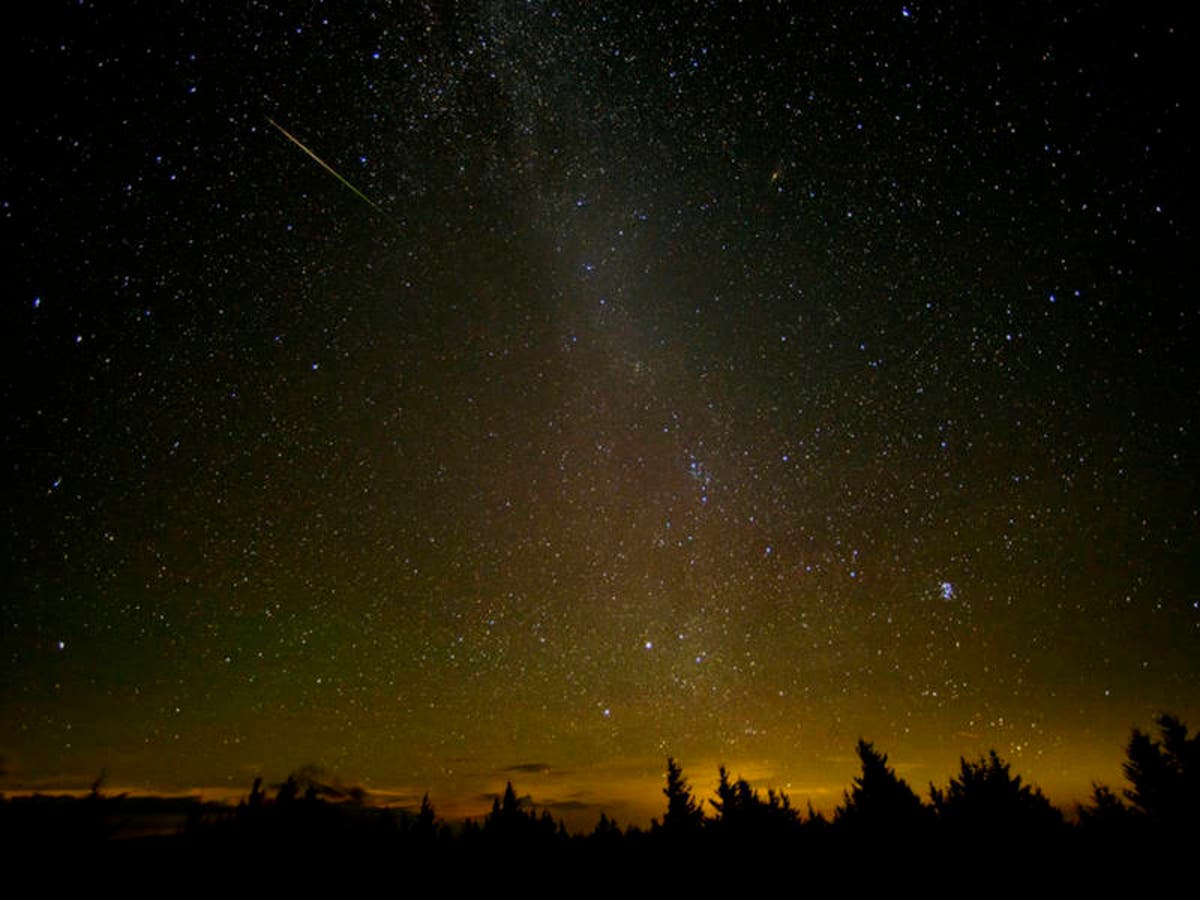
ACROSS ILLINOIS — For many of us, the summer meteor showers — the Delta Aquarids peak this week and the glorious Perseids are just getting started — are as anticipated as some of the major holidays. For us, there’s nothing like sitting outside on a warm summer night and watching fireballs streak across the sky. But whether you’ll be able to see the cosmic shows in Illinois depends on the weather forecast.
Think of the Delta Aquarids, which run July 12-Aug. 23 and peak July 27-28, as the dress rehearsal for the more reliable Perseids. That typically prolific meteor shower runs July 17-Aug. 24, peaking overnight on Aug. 12-13.
What that means is that you may see meteors any time you look up in the night sky over Illinois over the next few weeks. Active Junky recommends driving an hour east from the Windy City, and there you’ll find the Indiana Dunes State Park. Another option according to the website is driving an hour west to Silver Springs State Park, as both spots are great to escape light pollution and watch Perseid’s show. Cruising out on Lake Michigan will also let you sail past city lights.
Find out what's happening in Oswegofor free with the latest updates from Patch.
Mars And Earth At Opposition: How To See It In Illinois
During the peak dates for the Delta Aquarids, Friday night should be promising as partly cloudy skies give way to clear visibility and a low chance of rain. Saturday will also be mostly cloudy during the day, potentially clearing by night.
Find out what's happening in Oswegofor free with the latest updates from Patch.
For those bound and determined to witness a spectacular show, and are willing to drive for it, a six- to seven-hour drive from Chicago takes you to a certified dark sky park. The Headlands International Dark Sky Park, located in Mackinaw City, Michigan, is admission free and nearly absent of light pollution
(Get Patched In: Subscribe to free daily email, news alerts, Facebook fun and more from Patch. Also, download the free Patch iPhone app or free Patch Android app.)
The Delta Aquarid meteor shower, produced by debris left behind by the comets Marsden and Kracht, is an average show, producing about 20 meteors an hour at its peak. There’s a bit of bad news — a nearly full moon at the peak will blot out the dimmest of the shooting stars — but there’s some good news, too: Meteors from the slow-moving shower will still be flying when the Perseid meteor shower begins, so you should be able to see meteors flying from opposite directions.
The Perseids, which are typically rich in fireballs that create long, dramatic streaks in the sky, promise to be worth the wait this year. At the shower’s peak, a thin sliver will be all that is visible of a crescent moon and meteors should fly at a rate of 60 to up to 100 hour.
In “outburst” years, such as 2016, the intensity can reach 200 meteors an hour.
NASA meteor expert Bill Cooke doesn’t expect an outburst this year, but said the Perseids will still be the best meteor shower of 2018.
“This year the moon will be near new moon, it will be a crescent, which means it will set before the Perseid show gets underway after midnight,” Cooke told Space.com. “The moon is very favorable for the Perseids this year, and that'll make the Perseids probably the best shower of 2018 for people who want to go out and view it.”
The historically bright Perseids are produced by the comet Swift-Tuttle, discovered in 1862. The meteors fall between the constellations Perseus and Cassiopeia, but just look up and you should be able to see them anywhere in the sky.
With both meteor showers, the best viewing times are after midnight toward the pre-dawn hours, but you might be able to see a few as soon as it’s dark. Dark skies away from light pollution offer the best viewing conditions, but there are some good places to see meteors in big cities, too.
Here are more tips for meteor watching from NASA:
- Take along something comfortable to sit or lie down on, such as a reclining chair or a yoga mat so you can see most of the sky.
- Be patient. Under ideal conditions, you should be able to see one meteor within half an hour or so.
- Leave the binoculars and telescopes at home. They’ll rob you of the best views. Meteors are stunning without them, and using binoculars or telescopes will limit the amount of sky you’re able to see and increase the chances you’ll see nothing but dark skies.
- Avoid looking at your cellphone or anything else that produces light. If you need to see something, use a red light. Some flashlights have interchangeable filters; if yours doesn’t, you can always paint the clear filter with red fingernail polish.
Photo: NASA / Bill Ingalls
Get more local news delivered straight to your inbox. Sign up for free Patch newsletters and alerts.