Neighbor News
Yappy Meowlidays from Harper College Continuing Education
12 Tips to Keep Your Pets Safe and Happy this Holiday Season

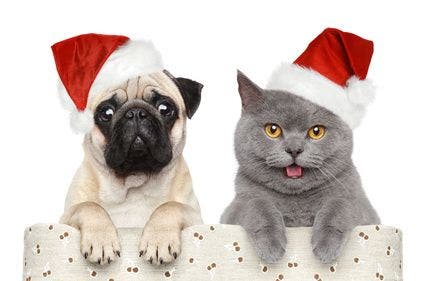

Tis the season to be jolly, falalalala lalalala
But keep the pets away from holly falalalala lalalala
Keep your furry friends happy and healthy throughout this festive season with these twelve tips:
Find out what's happening in Palatinefor free with the latest updates from Patch.
- Gift wrap, ribbon and tinsel can be a source of interest for your pet. Ingesting them can cause an intestinal foreign body that may require surgery. MeOW!
- Raisins and grapes are good in fruitcake and gift baskets; however these can cause kidney failure in dogs, cats and potentially ferrets.
- Holiday plants, such as cyclamen, holly, mistletoe and poinsettia, when eaten even in small quantities can lead to excessive drooling and digestive upset. Larger quantities can lead to heart rate and rhythm problems. Donate these plants to a hospital or nursing home in your area and bring holiday cheer to somebody’s day.
- Lillies are a very real concern for cats. True lilies cause kidney failure in cats and aren’t worth the risk of having them in your home. Staying clear of these plants will keep your kitties purrfectly safe.
- The glass ornaments and lights on your holiday tree can be a fascination for your whole furry family. Broken glass, swallowed ornaments, and the ornament hooks can all get hooked in your cat or dog’s digestive tract. Broken glass isn’t fun for their delicate paws or barefoot feet. Your pet can bite into a stand of lights and cause a burn in their mouth, seizures and a dangerous build-up of fluid in their lungs.
- Batteries not included may not be so bad… alkaline batteries can cause burns, when chewed and an intestinal obstruction if swallowed whole. Small button or disc batteries can easily cause more severe, potentially fatal burns in a cat’s or dog’s esophagus because they are not as easily swallowed.
- Chocolate – the holidays bring an abundance of sweet treats and different types of chocolate have varying levels of toxicity to your pets. It’s best to keep this treat to yourself!
- When guests visit during the holiday season, enlist them in keeping your pets safe. Medication, sugar free gum and feeding your pet human food can all lead to a trip to the animal emergency clinic. Nobody wants to spend their holidays in the hospital!
- Ice-melting chemicals can be irritating to cold paws. After each walk, wipe your pet’s feet (check between the toes) and stomach to remove ice and salt. Protective paw creams such as Musher’s Secret or boots can protect paw pads giving them a brrrreak from the stinging cold.
- Antifreeze has a sweet smell and taste that makes it attractive to all animals. By investing in products that contain propylene glycol rather than ethylene glycol you can avoid this toxic-to-animals chemical and still keep your sleigh running through the winter months.
- Cars can be attractive to animals during the winter, especially outdoor cats that love to climb up under the hood and curl up on the warm motor. Accidents and serious injuries can be avoided by tapping on your car’s hood before starting the vehicle.
- Leaving your pets for extended periods of time outside in the cold is now a crime. Leaving the family pet outside in extreme cold (or hot) weather could result in up to a year in jail and a hefty fine in the state of Illinois. If it’s too cold for you, it’s too cold for them!
This is a guest post by Deanne Pawlisch, Harper College CE Instructional Design & Program Specialist and CE Instructor. Pawlisch teaches the Introduction to Veterinary Assistant course at Harper CE, bringing her years of experience to the classroom. Many of the scenarios she provides above are cases she helped treat in the veterinary ER over the holidays; emergencies that could have been avoided with awareness and precaution.
Want to learn more about keeping your pets safe? Enroll in the How to Save Your Pet’s Life course at Harper CE this spring. Click here for details.
Find out what's happening in Palatinefor free with the latest updates from Patch.
Want to turn your passion for animals into a career? Harper CE offers Veterinary Assistant courses and a digital badge. Click here for program details. Harper College is proud to be one of a handful of schools approved by The National Association of Veterinary Technicians in America (NAVTA)