Neighbor News
Challenges of Being An Older Caregiver Can Take A Serious Toll
Pathlights helps fill gaps for older caregivers
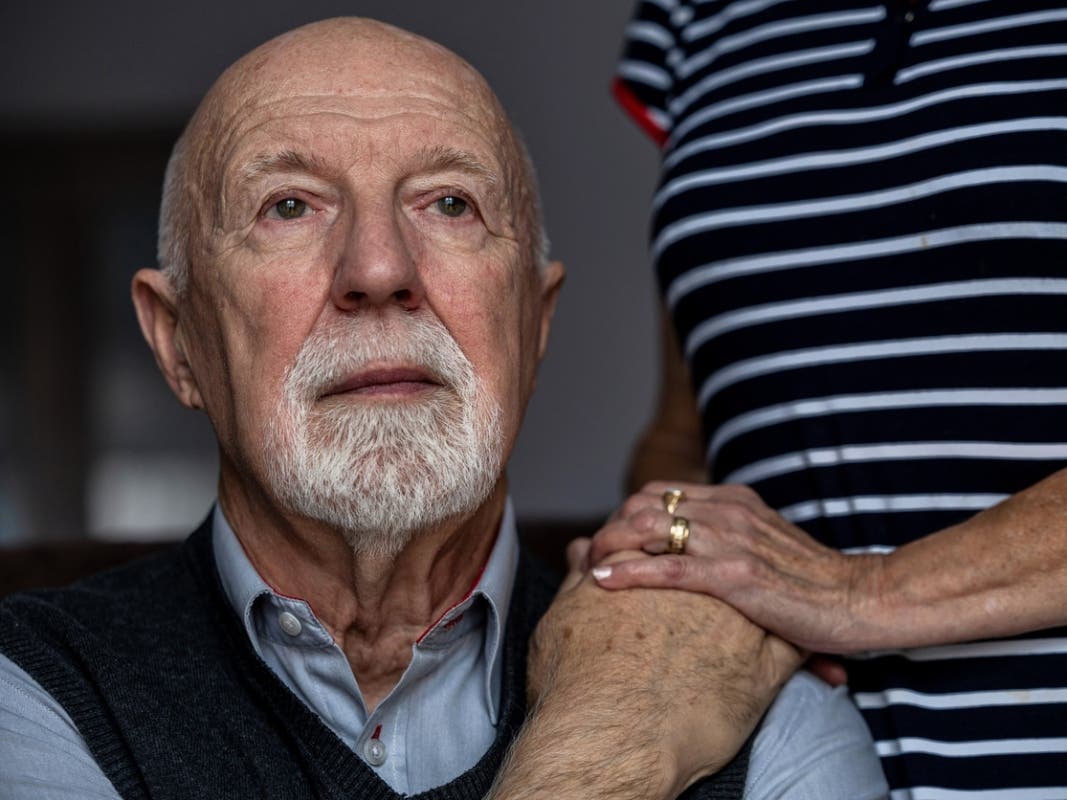
Palos Heights, IL – Typically, when a medical crisis happens to an older person, the healthy spouse goes into overdrive. For the duration of the hospitalization and recovery, the spouse takes care of all home chores and of the loved one. It’s usually a whirlwind of psychologically and physically exhausting activity and can include visiting and advocating for the loved one every day, arranging appointments and managing medications, providing meals, running errands, doing laundry, paying bills, all while trying to get adequate sleep and exercise.
When the crisis has passed, a huge sigh of relief is released and life may return to a new, regular routine.
For Rita Schaafsma, age 73, that whirlwind began 10 years ago and has only gotten more profound. Her husband Philip was diagnosed with frontal temporal dementia when he was 64. “For the first five years, we did okay, but because he needed 24/7 care, I shut down my business and retired five years ago,” says Schaafsma. “It’s been harder and harder. He’s gone through a lot of changes, and for the last year and a half, he doesn’t speak, so he’s really just home with me now.”
Find out what's happening in Palosfor free with the latest updates from Patch.
Taking care of Phil, now 74, is just one part of the whirlwind, though. Schaafsma’s mother Annette Kamp experienced a fall about 4 years ago and has been in a care facility ever since. After Schaafsma has helped Phil walk to and use the bathroom, given him a shower, administered his morning medications and provided personal care, every weekday at 10 am, a paid caregiver arrives to care for Phil. That’s when Schaafsma leaves to visit Kamp.
Schaafsma helps her mom to the bathroom, helps with personal care to avoid sores and infections, and assists her while Annette eats her lunch. She stays with Annette every afternoon, heading home to relieve Phil’s caregiver at 3 pm. Rita then spends the afternoon and evening caring for Phil, using his non verbal clues to decipher when he’s hungry, when he needs to use the bathroom and when he’s tired.
Find out what's happening in Palosfor free with the latest updates from Patch.
On the weekends, Schaafsma goes it virtually alone, except for Sunday mornings when her son visits so she can go to church.
While Schaafsma’s life as a caregiver is extraordinary, it’s not uncommon. 11% of people over the age of 64 experience memory loss, whether it’s a form of dementia or Alzheimer’s. Over 33% of people 85 and older have cognitive decline.
Over 60% of unpaid caregivers for these older adults are their spouses or partners – and more than 30% are over the age of 65 themselves.
Schaafsma feels fortunate in one respect. “I’m a young 73. I can still get him out of a chair, take care of him, get him into the shower and get him into bed. We’re surviving.”
Social isolation is a real problem for Schaafsma. “We don’t see a lot of friends anymore. It’s a lonely road. There are many, many, many nights when we are all by ourselves. When I visit my mom, I can talk to a lot of the CNAs and nurses and they tell me to hang in there, but also to take care of myself.”
About 75% of dementia-related caregivers say they are very concerned about maintaining their own health, and Schaafsma feels this. “I need to make sure that I get up to do some exercising – I should do more walking than I do. I get a deterioration of the muscles in my legs from sitting a lot, so I need to be able to get out and walk, or just do something physical for myself.”
Part of Schaafsma’s self-care routine has been provided by Pathlights in Palos Heights. She has been able to use Pathlights’ Respite care to help her participate in a bowling league with her siblings each Wednesday and enable her to take a break to visit with her children and adult grandchildren.
Pathlights has extensive supports for caregivers. Besides Respite care, qualified older adults can receive home delivered meals, relieving the burden of meal preparation, and other in-home services. Pathlights also helps tap caregivers into state and federal government programs that can help with additional care in the home. They host a variety of support groups, both in-person and virtual. Pathlights also provides education and stress relief programs to support caregivers.
Schaafsma also hosts a support group in her home. “We started probably 5-6 years ago. Most of them had loved ones with Alzheimer’s and most of them have now passed. We all get along so well and we’ve become friends and we share something. They still come to meetings and a few of us still have spouses that are living. Even when this is over, they need the support and we need to not be alone. We talk about the before and then the after and we learn a lot from each other.”
Her siblings gather in her home on Saturday evenings as often as possible, sharing pizza.
While 45% of caregivers find the experience very rewarding, nearly 60% say it’s also high or very high in emotional stress. Caregivers are significantly more likely to experience anxiety and depression. Schaafsma says, “I have to learn to take time for myself. It’s probably not the best thing that I go to my mom’s every day. I’m not really doing anything recreational – I’m 24/7 dementia and it really does wear hard on you.”
“My family is wonderful and I know they are there any time I need them, but I feel like everyone has their own issues and I don’t want to burden anyone else. But I’m so “dementia-ed out” sometimes,” Schaafsma says.
Caregiver specialists at Pathlights perform quarterly assessments to gauge caregivers’ risk of depression, burnout, and offers a general check-in on how the caregiver is doing overall.
Schaafsma says, “Pathlights makes me aware that there is somebody out there that does care if I’m being taken care of. Everybody’s very good with taking care of my husband and that’s amazing, but it’s good to know that there’s somebody who will actually ask me how I am mentally and how I feel about this journey.”