Politics & Government
Health Care Bill: Chronic Condition Has Parents Worried About Daughter’s Future
Three-year-old Nora Reardon was recently diagnosed with juvenile idiopathic arthritis, formerly known as juvenile rheumatoid arthritis.



PEORIA, IL — Nora Reardon is just 3 years old, and already she’s seen more doctors and undergone more tests than many adults. In December, the toddler became ill, with frequent fevers and complaints of neck pain. Dozens of tests later, her parents finally got a diagnosis — but it’s left them worried about her future, uncertain what the GOP-backed health care plan could mean for her ability to get insurance as she gets older.
Dad Phil Reardon said he and wife Katlin first realized something was wrong last winter. Despite numerous doctor’s visits and tests — little Nora was even tested for meningitis, but the results came back negative — the 3-year-old was still sick.
“She was barely eating, she was also anemic,” Phil Reardon said, adding that Nora needed a blood transfusion at one point. “She would lay on the couch every day in front of the fire. She was also limping.”
Find out what's happening in Peoriafor free with the latest updates from Patch.
At the time, Phil Reardon had a good job at a small company making a decent salary, but the most affordable insurance option for their children was Medicaid. The family paid a small monthly premium based on their income. (Get Patch real-time email alerts for the latest Peoria news. And iPhone users: Check out Patch's new app.)
“I’m not your typical Medicaid recipient,” he said. “It was the only thing we could afford. I consider myself a productive member of society. I think it’s unfortunate that your company’s size can dictate the level of care you can afford.”
Find out what's happening in Peoriafor free with the latest updates from Patch.
Without the coverage, he said he doesn’t know how the family would have paid for all the tests, scans and hospital stays. “I don’t know how we could have afforded this,” he said.
The Reardons got a referral to a doctor who accepted Medicaid but found out they would need to wait several months before Nora could be seen. “(The doctor) said, ‘This child needs to be seen today,'” Phil said. “The only way to do that with Medicaid is to come in through the ER,” so that's what the family did.
Nora’s doctor suspected the toddler was suffering from juvenile idiopathic arthritis (JIA), formerly known as juvenile rheumatoid arthritis. “First she needed to make sure it wasn’t leukemia,” Phil Reardon said. Once that was ruled out, Nora began treatment for systemic JIA.
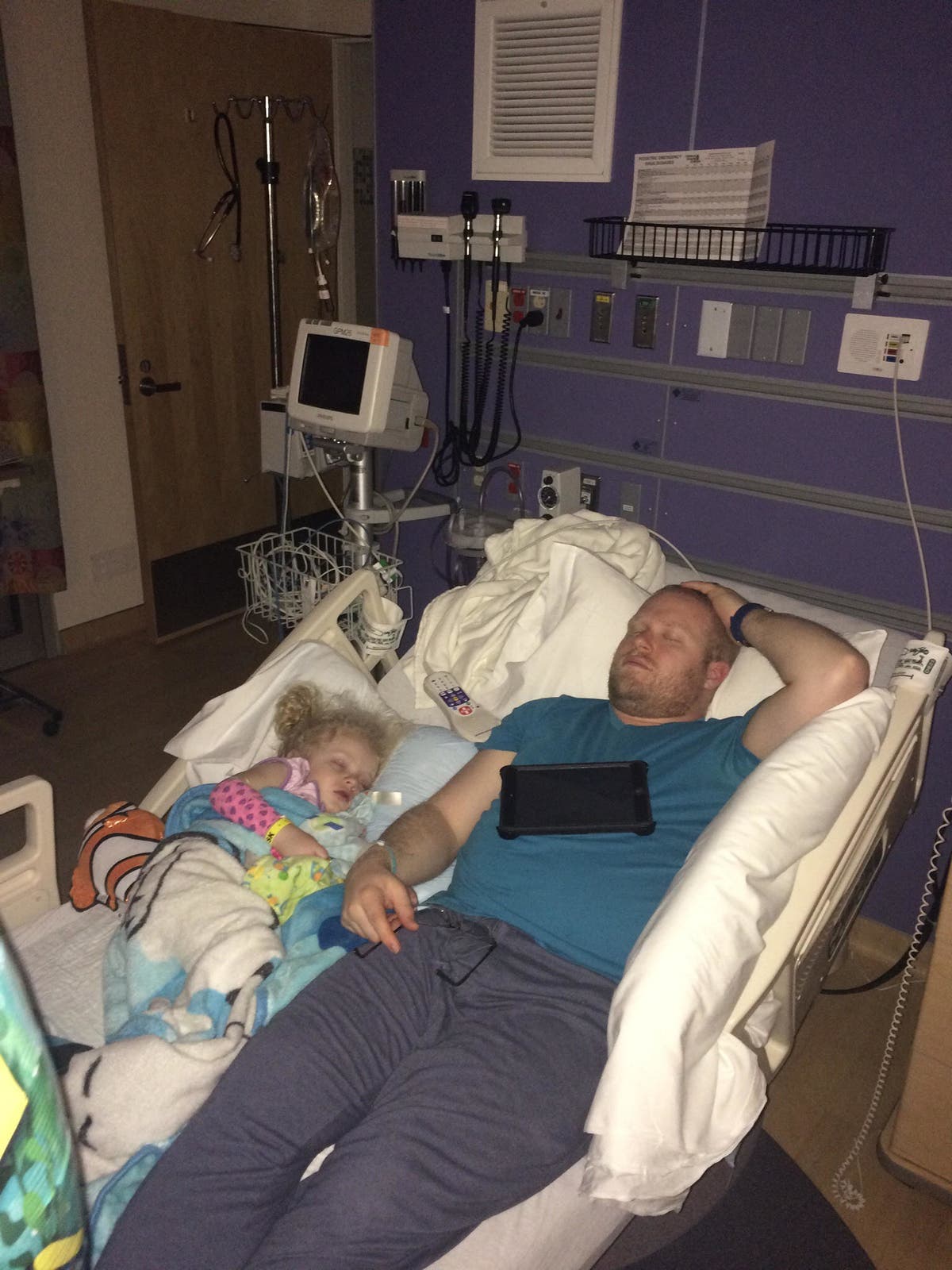
“It’s not that different from rheumatoid arthritis,” he said. “You have the joint swelling, you have the pain.” In little Nora’s case, JIA affects more than 50 joints in her body, most severely her hips, knees, ankles and wrists.
“The doctor said, ‘I have not seen hips this bad at this age, ever,’” he said. The illness could also affect Nora’s liver and heart, so she must be closely monitored.
The family is still working with doctors on solidifying a treatment plan for Nora. So far, she’s been treated with high doses of steroids to control the inflammation, daily injections of a biologic treatment and weekly injections of a drug known as methotrexate, commonly used to treat cancer or severe autoimmune diseases.
With treatment, Nora is doing better. “She’s OK,” Phil Reardon said. “Yesterday she played outside all day.” Other days, the toddler still battles pain and need to be carried, he said.
“There are people who make snide comments, ‘She’s old enough to walk,’” he said, adding that JIA is an "invisible" illness — you can't tell Nora is sick by looking at her.
Uncertainty over Nora’s future — the treatment she’ll need over time and whether her preexisting condition will prevent her from obtaining insurance — is a big worry for her parents.
“When I heard the current health care proposal, it’s really terrifying potentially what it could mean for her,” Phil Reardon said.
Last week, Senate Majority Leader Mitch McConnell, a Republican from Kentucky, delayed a vote on the GOP health care plan until after the Fourth of July recess in order to give lawmakers time to work on a compromise to replace the Affordable Care Act (ACA). An amendment to the House version of the bill would allow states to seek waivers that could potentially affect those with preexisting conditions — currently protected under the ACA.
“If my daughter were to apply for insurance, you have this expensive preexisting condition; they could say, ‘We’re not going to cover it,’” Phil Reardon said. “I know people knock ObamaCare, and it’s not perfect, but it’s got a lot of protections.”
Since Nora’s diagnosis, Phil said he’s changed jobs and is now working for a larger company with more affordable insurance options. The family no longer relies on Medicaid.
Both the House and Senate versions of the GOP health care bill propose cuts to Medicaid. Both versions of the bill would result in more than $700 billion in Medicaid cuts, according to the nonpartisan Congressional Budget Office. The CBO also estimates the proposals would add 22 million people to rolls of the uninsured by 2026.
“Medicaid got her diagnosed, treated, and on a path to management that we could afford,” Phil Reardon said. “The preexisting condition protections of the ACA guarantee that she won't be denied coverage for the rest of her life.”

Top photo: Nora Reardon, 3, with parents Phil and Katlin Reardon. Photos courtesy of Reardon family
Get more local news delivered straight to your inbox. Sign up for free Patch newsletters and alerts.