Politics & Government
Shorewood Police Mum About Only Murder In Department's History
After denying a freedom of information request, the Shorewood police must answer to Attorney General Lisa Madigan about why they are refusing the public its right to know.

The only murder in the history of Shorewood remains unsolved and the police won't say why they can't unravel the mystery.
Not only that, the department is refusing to release any details in the 24-year-old case, completely blacking out five pages of a nine-page report turned over in response to a request made under the Illinois Freedom of Information Act.
Acting Police Chief Aaron Klima said the information redacted is a five-page list of confidential informants. He said the police do not want Patch talking with any of the people the police interviewed. He also said the reason more information wasn't released was that the case did not go anywhere.
Find out what's happening in Shorewoodfor free with the latest updates from Patch.
"There really wasn't a lot of movement with it," Klima explained.
The lack of movement in the last quarter century followed a dog unearthing a human skull in 1987.
Find out what's happening in Shorewoodfor free with the latest updates from Patch.
The skull belonged to David Wolfson of Chicago. The dog dragged the skull back to its kennel at a nearby body shop. When the body shop employees spotted the skull they called the police, who traced it back to a shallow grave on the northwest Interstate 55 Frontage Road.
The police will say little more about the case and — despite a written request citing state law — have stood firm in refusing to release police reports on the Wolfson investigation. Now they are going to have to defend their position to Attorney General Lisa Madigan.
Before he retired on July 31, Chief Bob Puleo told Patch this murder was the one case he wanted to solve before leaving the department. As a goodwill gesture, Patch offered to revisit the case.
When Puleo's memory was sketchy, Patch asked for the police report and all other relevant public documents.
The Shorewood police claim that only parts of four pages of the 24-year case file qualified as public information. The other five pages of the original police report were completely redacted.
None of the other requested documents were provided. Patch is appealing the denial to the attorney general's office.
The Freedom of Information Act requires the public body — in this case, the police — to cite specific exemptions when omitting information that was requested.
The police cited confidential sources. The police also maintain that the Wolfson case is an ongoing criminal investigation, which allows them to avoid releasing information.
The Shorewood police also claim to have employed unique, special investigative techniques during the case that, if disclosed, would be detrimental to the department.
Also, Klima said the police denied releasing most of the information on the advice of village attorney David Silverman.
"When (Silverman and I) spoke he stated he would be willing to speak with you," Klima wrote in an email to Patch.
Silverman, however, declined to comment on his discussion with Klima or others in the department about this request even though Klima directed Patch to Silverman.
"I am not going to give you quotes about advice I give to clients," Silverman said.
Coincidentally, Silverman, a former Shorewood police officer, was the evidence technician who processed the Wolfson crime scene.
Silverman said he never read the requested documents and was unaware of which exceptions the department cited. He made the sweeping statement that he could not imagine a circumstance where the police would be willing to provide any of the names of the people they interviewed if the investigation were still open.
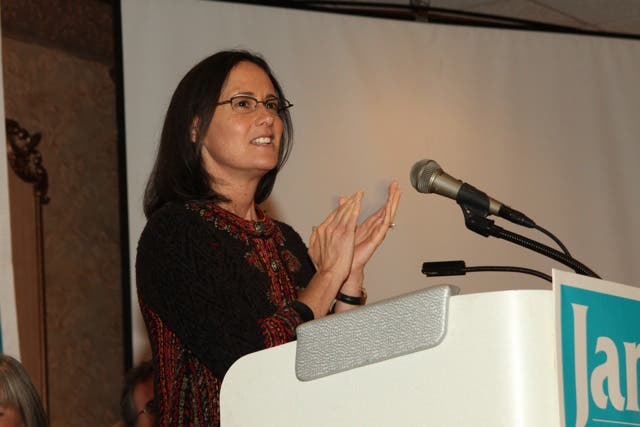
This contradicts the spirit of the act, according to Madigan. The Freedom of Information Act is a pro-disclosure law, according to Madigan's cover letter in A Guide To The Freedom Of Information Act. Any exceptions should be limited, as the general rule dictates that people have the right to know, the guide explained.
Further, the burden is on the public body to prove that all of the information withheld meets the specific exemptions cited, the guide said.
There was one other murder case in Shorewood's history. In 2000, Will County Treasurer Jack Weber was severely beaten by his stepson, Brent Saltzman, and later died. The Will County Sheriff's Department took the lead on that investigation with the Shorewood police assisting.
Saltzman is serving a 79-year prison sentence in Dixon Correctional Center.
Get more local news delivered straight to your inbox. Sign up for free Patch newsletters and alerts.