Schools
Eye Project Sets Student’s Sights on Research Career
Niles North junior in STEM class to present findings at ophthalmology conference in Florida.
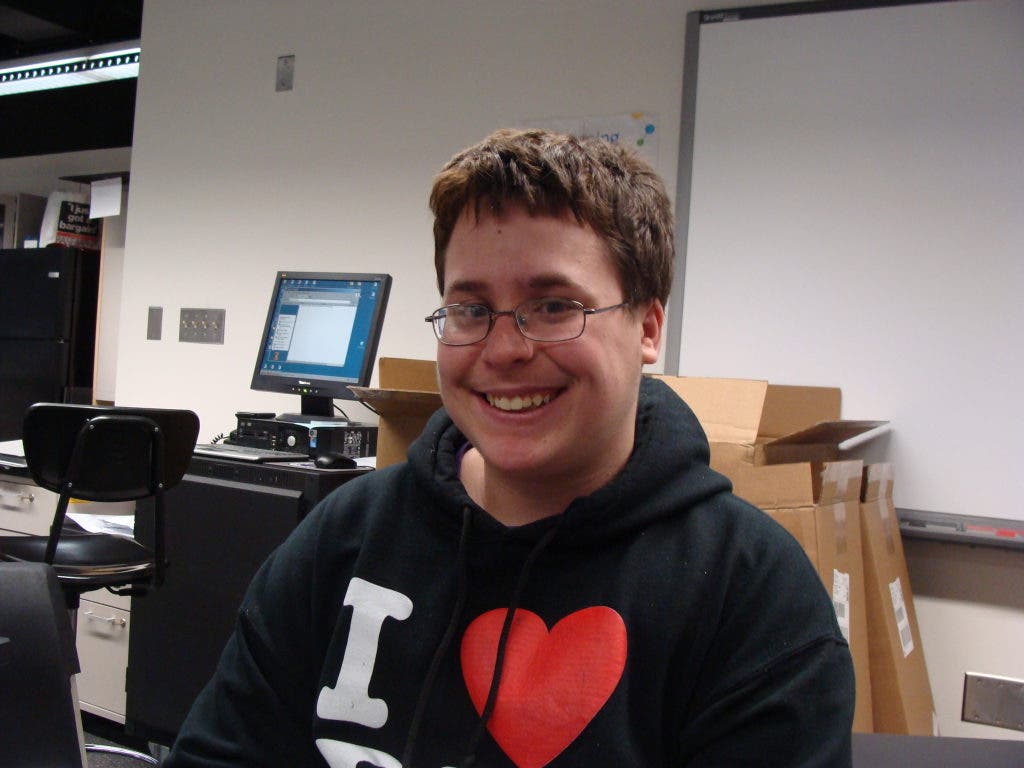


Jeffrey Gaynes likely came by his interest in ophthalmalogical research at home.
His father, Bruce, is the director of clinical research in the department of ophthalmology at Loyola University’s Stritch School of Medicine.
The project that Jeffrey Gaynes has been working on for a year and a half had its genesis in a question his father posed: Why is there a correlation between certain complications of cataract surgery and the use of drugs to treat an enlarged prostate gland, especially Flomax?
Find out what's happening in Skokiefor free with the latest updates from Patch.
The 16-year-old, a junior at Niles North High School, along with Jeffrey Borgia of Rush University Medical Center hypothesized that the drugs were binding to melanin in patients’ eyes. They then designed a series of experiments to find out if their theory was right.
Working with synthetic eyes and cow eyes, they have found that the drugs do indeed bind to the melanin in the eye, Gaynes said.
Find out what's happening in Skokiefor free with the latest updates from Patch.
Gaynes is a student in Jacklyn Naughton’s STEM Inquiry and Research class, which gives him an opportunity to work on his project every day during school. While the actual research is done at Rush or the University of Illinois at Chicago, Gaynes uses his time in the lab at Niles North to write his papers and prepare grant proposals and presentations.
He has learned, the teen said, that science is three-quarters writing grant proposals, presentations and papers and about one-quarter research.
Later this month, Gaynes will present his project during a science fair and the Junior Science and Humanities Symposium at Loyola University. In May, he will have a presentation at the American Association for Research in Vision and Ophthalmology in Fort Lauderdale, FL. The ultimate goal is to have the research published, he said.
The other goal is for the project to help him get into a good college–he’s thinking about Washington University in St. Louis--where he intends to major in biochemistry on his way to a career in research.
“I consider myself an average student,” said Gaynes, who allows he has a couple of classes that are not advanced placement. “This is not a select group of kids.”
That’s the beauty of the STEM (Science, Technology, Engineering and Mathematics) Inquiry and Research Class, he said. Those in the course do not have to be academic stars only an interest in finding something out and the perseverance to pursue it, he said.
Naughton started a club for students who wanted to do research shortly after arriving at the school 22 years ago, and helped develop the year-old class that Gaynes now takes. Niles West High School also offers a STEM Inquiry and Research class.
At the beginning of the class, students work through a series of modules to help them figure out what to research and how to design their experiments, Naughton said. Then she works to link them with scientists who can help, usually by e-mail, but sometimes in person. Students are allowed to leave campus early to work on projects at a university's lab, she said.
The students enter their projects in science fairs and other exhibitions because such competitions offer the opportunity to present their work to an audience of actual scientists.
“What more authentic assessment can you ask for?” Naughton said.
Even the information boards the students create are similar to the poster presentations at scientific meetings, she said.
Naughton acknowledged the role of a traditional teacher was not for her, imparting the necessary information to young minds.
“I learn a lot,” she said. “And if there’s something they don’t understand and I don’t understand, we find out together.”