Schools
Chicago Blackhawks Raise Concussion Awareness w/ Skokie Teens
Awareness of head injuries' long-term effects has been heightened this year, and the Chicago Blackhawks are adding to the educational process with their free program.

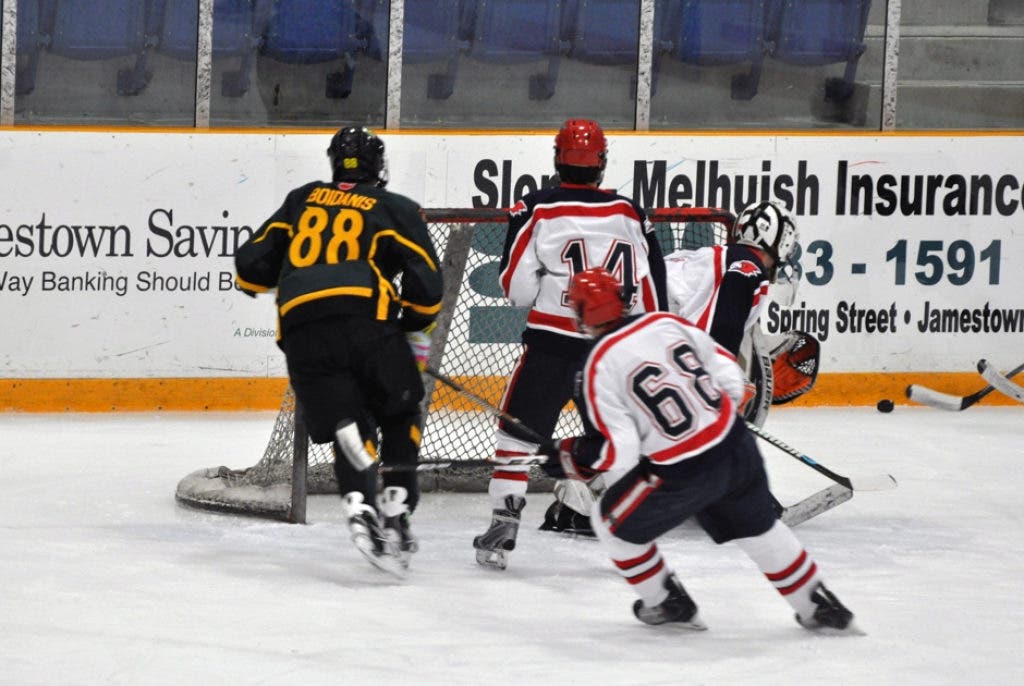

Amid a year of heightened awareness over head injuries’ long-term effects, area youth hockey coaches are heartily endorsing a free concussion-testing program sponsored by the Chicago Blackhawks.
The coaches are recommending their players go through with the tests, which measure cognitive skills and reaction time as “baseline” information for players ages 13 to 18 to use for comparison if the players display concussion symptoms while competing on the ice.
The tests are being conducted through Feb. 1 by the Midwest Center for Concussion Care at Athletico training and physical therapy clinics throughout the Chicago area. facilities are in Skokie and on the Niles-Chicago border at 6000 W. Touhy Ave.
Find out what's happening in Skokiefor free with the latest updates from Patch.
“Concussion testing is something I looked at last year with the publicity over [head injuries in hockey and football],” said Skokie resident Ben Bleadon, present of the Nighthawks hockey club, which is comprised of players from and Ida Crown Jewish Academy.
“There were several companies that were doing testing. It probably was an $800 expense to the team. Then it came out with the Blackhawks underwriting it. I thought it was great.”
Find out what's happening in Skokiefor free with the latest updates from Patch.
Glenbrook North’s hockey team opted to have the baseline testing done with the school’s trainer at $25 per player. Glenbrook South, however, is now on board with the Blackhawks’ program, which doesn’t cost the school anything.
Final participation up to parents
Bleadon’s team is based at Skokie’s Skatium rink, as are the Skokie Flyers team, part of the Skokie Amateur Hockey Association.
“Absolutely, I believe we certainly will (participate),” said association president Dan Binder. “We always tried to protect players to the greatest degree possible. This will give us another tool. We play a rough sport. We really have not looked into it. But we’re glad they’ve taken the initiative.
“We would highly recommend our entire teams participate, but given the nature of any health exam, unless it’s a mandatory exam, you got to leave it up to the parents. We would hope they participate,” Binder noted.
Flyers Midget (age 15 to 18) coach Mike Tompkins, who suffered three concussions as an amateur player in Canada, called the program “fantastic. … It’s great the Hawks are involved. It should have been done a long time ago. It’s long overdue.”
The Blackhawks’ program kicked off with an Oct. 27 clinic conducted by Elizabeth Pieroth, a neuropsychologist who runs the Midwest Center for Concussion Care. The center, based in Oak Brook, also has an office at Lutheran General Hospital where Pieroth’s business partner, Shaun O’Leary, is a neurosurgeon. Athletico also has an Oak Brook office where 10 players can be tested at one time. Bleadon is considering taking the entire Nighthawks team in for the test.
Pieroth modeled the testing formula after a cooperative program by the Pittsburgh Penguins and the University of Pittsburgh. The Blackhawks were an easy sell, especially at a time when the concussion issue came under scrutiny this year after revelations of long-term brain damage to football players and lingering after-effects of head trauma to hockey starts like the Penguins’ Sidney Crosby. Pieroth also advises the Blackhawks on their own concussion incidents.
Test looks at memory and reaction times
“We assess what pre-morbid functioning levels are so if they do get concussed, you re-evaluate them,” Pieroth said. “We compare post-injury testing to [pre-injury] baseline testing to see if there’s indication of impairment coming from injuries.
“The test looks at memory, verbal and visual stimuli; attention and information-processing speed; the idea of taking information in, making a decision and responding to it, which is really key in sports that are fast-moving like hockey. We look at pure reaction time, which is motor (skills).”
The test can be administered to athletes as young as 12, but Pieroth opted to start at 13, the minimum age for “bantam” play in youth hockey. High-school players perform at the “midget” level. A baseline test for younger players in the experimental, or “beta” stage, Pieroth said.
“My limited familiarity with brains of [younger] kids’ suggests it’s a tough task, so more power to that,” Binder said.