Crime & Safety
Skokie Man Sentenced In $7 Million Ponzi Scheme Targeting Assyrian Churches
An "unparalleled and incorrigible scam artist," Albert Rossini made off with more than $2.5 million of his victims' money, prosecutors said.


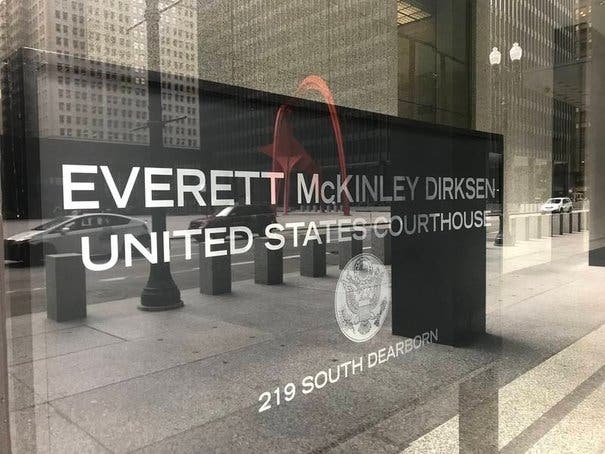
CHICAGO — A Skokie man found guilty of defrauding investors out of millions of dollars in a Ponzi scheme that targeted local Assyrian churches has been sentenced to 11 years in federal prison.
Albert Rossini, 73, is the owner of Devon Street Investments, a Lincolnwood-based business that collected more than $7 million from two churches and more than two dozen people in 2011 and 2012, according to court records. Rossini took the case to trial, and a jury convicted him in 2018 of 14 counts of mail and wire fraud.
Rossini, along with convicted co-defendants Babajan Khoshabe, of Chicago, and his son, Anthony Khoshabe, of Skokie, solicited investors, promising their money would be used to buy up mortgages of Chicago-area apartment buildings at or near foreclosure, according to evidence presented at trial.
Find out what's happening in Skokiefor free with the latest updates from Patch.
"The entire pitch was a fabrication. Defendant gave the victims fake documents about buildings to which neither he nor his co-defendants nor the victims had any claim," according to Assistant United States Attorney John Mitchell.
For several months, the investors received monthly payments that they were told represented "rent" payments, prosecutors said. By November 2012, the payments had stopped with no satisfactory explanation, Mitchell said in a sentencing memo.
Find out what's happening in Skokiefor free with the latest updates from Patch.
"There were no buildings and there were no tenants; defendant was instead operating a Ponzi scheme, using the investors’ own money to pay those fictitious rent payments. Defendant’s 'rent' payments gave the victims confidence that their investments were real, and encouraged the victims to invest more money and recruit their friends and family to do the same," he said.
"After the defendant determined that he had milked the victims dry, he and his co-schemers stopped paying the fictitious 'rent' payments and concocted a web of lies—and even a fake lawsuit filed in the Circuit Court of Cook County—to string along the victims and deter them from reporting the fraud scheme to the FBI."
County records revealed that Rossini had no interest in any of the 57 mortgages for which he was collecting money. However, when investors began to complain about the payments stopping, he eventually bought six of them, though not through foreclosure, according to the memo.
Prosecutors said eight of the 10 people who lost money in the scheme and testified at Rossini's trial said they never received any titles, while the two that did only got titles for three of the 20 properties for which they had paid.
"Although investors received back approximately $2.5 million in 'rent' payments, there was no rental income coming into any of the relevant accounts, and all of the money paid to investors was actually just their own funds being paid back to them," Mitchell said. "At the same time that the investors lost approximately $5 million, the defendant made at least $2.55 million."
Rossini is an "unparalleled and incorrigible scam artist" who has taken part in a "continuous string of fraud schemes since the 1980s," which have led to several state felony convictions and three federal fraud convictions, Mitchell said.
After a jury found him guilty and Lee rejected several of his post-conviction motions, Rossini began representing himself earlier this year.
In a pair of sentencing memos, he continued to deny responsibility, placing the blame on Chicago attorney Thomas Murphy, who admitted his role in the scheme, pleaded guilty and testified against Rossini.
Murphy testified that he prepared a document called a "Guaranty Agreement" (sic) that asserted Rossini had the rights to the properties for which he was collecting money, according to the government's memo. Rossini's attorney also testified that his client filed a sham lawsuit against him, telling Murphy that it was designed to placate complaining investors.
Rossini said in his memo that he had "true remorse and concern" for the plight of the scheme's victims.
"It is true that Defendant Rossini does not believe he is culpable," Rossini said, referring to himself in the third person in a memo filed from the Metropolitan Correctional Center in Chicago. "He has not sought to reframe the charges, rather he denies the charges."
Rossini said he has been jailed long enough, citing an illness in the family and his advanced age.
Prosecutors said federal sentencing guidelines call for a sentence of between 17 ½ and nearly 22 years in prison.
Both Khoshabes and Murphy are awaiting sentencing.
According to prosecutors, Rossini and the elder Khoshabe targeted Assyrian churches and their congregations, including getting a priest at a Northwest Side church to be an anchor investor for the scheme.
"The plan worked, and [the priest's] investment encouraged other members of the Assyrian church community to invest," Mitchell said. "[Rossini's] premeditated decision to prey on the members of the close-knit Assyrian Church community is an aggravating circumstance that makes this fraud scheme appalling and weighs in favor of a Guidelines sentence."
Following Tuesday's sentencing hearing, U.S. District Judge John Lee denied a motion from Rossini seeking compassionate release due to his age and the risk of COVID-19.
The judge cited a July ruling from the 7th Circuit Court of Appeals that found the risk posed by the coronavirus is not an extraordinary and compelling reason for immediate release unless prisoners can show they are "unable to receive or benefit from a vaccine."
In that case, USA vs. Brian Broadfield, the prisoner said he had been offered a vaccine but declined it, fearing an allergic reaction despite never having had one with other vaccines.
"The federal judiciary need not accept a prisoner’s self-diagnosed skepticism about the COVID-19 vaccines as an adequate explanation for remaining unvaccinated, when the responsible agencies all deem vaccination safe and effective," the judges wrote.
Lee said that Rossini, who has been detained for 50 months, has not shown the vaccine is ineffective for him.
"[Rossini] received the Moderna vaccine and has offered no medical evidence that, in his specific case, its efficacy is so reduced as to make him unable to benefit from the vaccine," Lee ordered.
Get more local news delivered straight to your inbox. Sign up for free Patch newsletters and alerts.