Obituaries
Skokie Obituary: Syed Abdul Majid, 84
The Truman College professor co-founded the Muslim Community Center in Chicago in 1969.

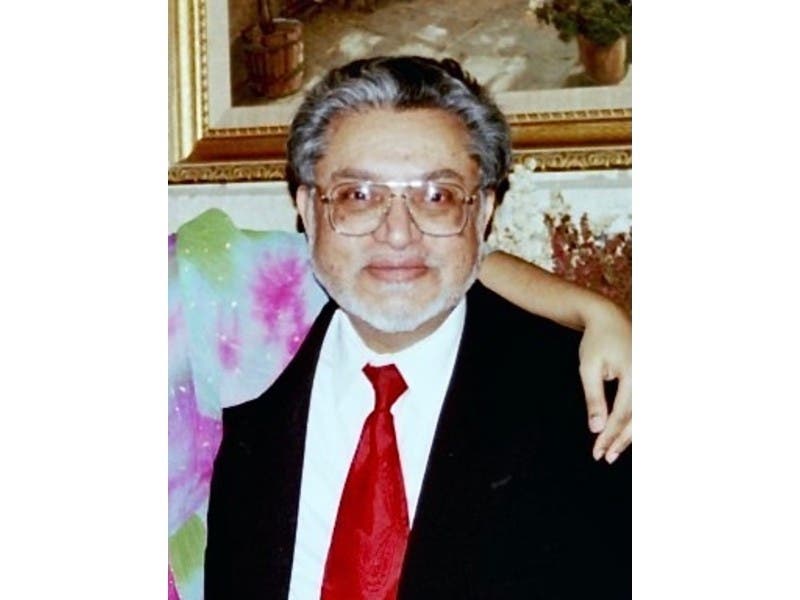
Syed Abdul Majid, pioneer and pillar of the South Asian Muslim community in the Chicago area, passed away Feb 2, 2021, at the age of 84.
Syed Majid was born in a small village outside of Hyderabad, India, the eldest son of 15 children. His father was a surgeon who provided medical services to remote villages and while he wanted his son to follow in his footsteps, Majid (as he was called because Syed is the family name) was more mathematically inclined. Instead, he received top marks in mathematics and mechanical engineering as an undergraduate at Osmania University in Hyderabad. He showed such promise that he was accepted to study for an advanced degree at Bradley University in Peoria Illinois in 1960 – five years before the U.S. officially began welcoming immigrants from non-European countries.
In 1964, Majid returned for a short visit to India to get married. His bride, Ayesha Sayeed, was chosen by his parents, as was the common custom at that time. He trusted in his parents’ decision and the couple did not meet until the day of their wedding. Because Majid valued education so highly, he encouraged his young wife to finish her schooling. He supported her while she finished high school, earned a college degree, and went on to pursue a career that she loved as an elementary school teacher. Majid always supported women’s rights – a fact much appreciated by his three daughters.
Find out what's happening in Skokiefor free with the latest updates from Patch.
Majid got into computers at the dawn of an emerging industry. He worked at Bell & Howell before joining Westinghouse, where he worked for many years. He eventually joined the faculty of Truman College, part of the City Colleges of Chicago system, to teach computer programming. He initially taught such ancient languages as Cobol, Fortran, and C++ before moving on with the times to Java and HTML.
As a professor at Truman College, Majid encouraged and inspired many students – including large numbers who were immigrants like himself and looking for ways to gain skills, job opportunities, and the chance to join the American middle class. Many of these students were working their way through school, and Majid would occasionally be recognized by a waiter at a restaurant. On one evening, Majid and his family were waiting for a table at Reza’s in Andersonville. They were told it would be a long wait. A waiter overhearing the host take down names perked up. “Professor Majid who teaches at Truman College?” To his embarrassment, Majid and his family were pulled to the front of the line like VIP’s – an honor Majid would have humbly refused if his hungry family had not overruled him.
Find out what's happening in Skokiefor free with the latest updates from Patch.
In addition to his main employers, Majid frequently took on extra work, at one point working three jobs. He needed the extra money to put his wife through college, to support his three daughters, and to help many of his brothers, sisters, and in-laws get on their feet when they first came to this country.
As one of the first South Asian Muslims to arrive in Chicago, Majid, with his wife Ayesha, helped to build a thriving community. He was a founding father of the Muslim Community Center in Chicago in 1969, and had at times served as MCC’s President, Treasurer as well as taught at the Sunday school for many years. In the 90s, he was instrumental in establishing a second mosque and an Islamic school in Morton Grove, serving as its first principal. To quote the current president of MCC, Kamran Hussain, “…he may be most remembered for his service to the MCC's Full-Time School (MCC Academy) … Many of the school's current services exist because of him and his team's efforts, and the school's ensuing progress and success can be traced to the seeds he planted.”
Majid was a deeply devout Muslim who steadfastly followed each of the Five Pillars of Islam. He prayed five times a day, whether at work, at home, and even on long cross-country drives, despite the dispensation for travelers. On family trips he would stop at prayer times, laying down his prayer mat in a field or the parking lot of a gas station. He believed that God is everywhere. Majid’s faith was a humble faith. He believed in doing good works for their own sake and in setting a good example. He donated generously and quietly. He respected all faiths and believed in building bridges between communities. He hosted interfaith exchange programs, and organized forums and panels to help the immigrant Muslim community gain a deeper understanding of their own religion in the context of their new country.
Majid’s social and political convictions were based on his understanding of ethics, integrity and justice. Majid was “woke” long before the term was invented. He taught his daughters that Elvis Presley became rich and famous based on music created by Black people. He read Alex Haley's Roots before it was a mini-series, and he admired Malcolm X. In the 1980s, Majid was so excited by the idea of Chicago electing its first Black mayor that he organized many fundraising events in the Muslim community for Harold Washington. He worked nights and weekends to promote Washington’s candidacy, both as a way to encourage the South Asian Muslim community to get involved politics, and in the hope that everyone in Chicago would benefit from a mayor who would fight for the rights of the poor and disenfranchised – no matter their color or creed.
Despite his hectic life as a husband, father, devout Muslim, community leader, and supporter of his extended family, Majid also found time to be a voracious and passionate reader. He was never without a book. He was also a legendary multi-tasker – again, before that term was invented. It was not unusual to find him on a Saturday afternoon simultaneously reading a book, browsing a copy of the India Times, and watching golf or tennis on TV while also grading papers or doing his taxes. His taste in books was broad and endearing, ranging from works on history and economics to fiction by authors as eclectic as George Eliot, Pat Conroy, and Louis L’Amour.
At the age of 46 Majid somehow found time to complete a Chicago marathon – his first and only - often taking his children to the running track to “coach” and keep track of his time and progress. He also had a love of sailing, at one point getting his sailing permit in the event his busy schedule allowed some free time to sail Lake Michigan.
Majid was a man of few words. In spite of this he spoke up when needed, especially to make passionate arguments about the rights of the oppressed; was also capable of provoking laughter with sharp, dry comments, often funnier because they were unexpected; and loved responding to a question or making a point by quoting lines of Urdu poetry, an art form that he deeply loved.
Majid is survived by his wife of 56 years, Ayesha; 3 daughters, Hajira Perveen (Mark), Samina (Eric), Farhana; and four grandchildren: Adam, Zayd, Laeth and Soraya.
In order to comply with Covid safety guidelines, a small prayer service and funeral were held on February 3rd. A celebration of his life/memorial service will be held at a later date. In lieu of flowers, contributions may be made in his honor to an educational scholarship set up in his name to the MCC Academy, 8601 N. Menard Avenue, Morton Grove, IL 60053 or online at mccacademy.org (for either write in memo for the Syed Majid Scholarship Fund) or to the Greater Chicago Food Depository at https://www.chicagosfoodbank.org.
This obituary was produced by the Majid family. The views expressed here are the author's own.