Obituaries
Veteran Deputy Dies Of Coronavirus Amid Leukemia Treatment
Rich O'Brien, the second sheriff's office employee to die of COVID-19, was cleared to work before contracting coronavirus.


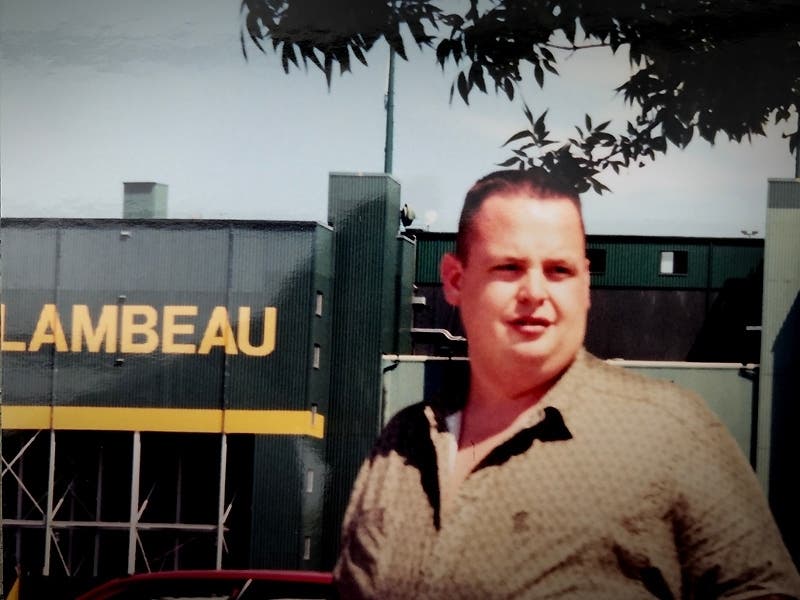
CHICAGO — A 25-year deputy at the Cook County Sheriff's Office died Sunday from complications of COVID-19. His family believes he contracted the virus while working out of the Skokie Courthouse, and the sheriff's office considers his death to be in the line of duty.
Richard O'Brien, 53, a resident of Burlington, Wisconsin, made the hourlong commute south to Skokie for most of his quarter-century career in law enforcement. Before that, the Twin Lakes native worked as a trucker, according to his brother-in-law, Jeff Stewart.
"It's just not fair," Stewart said Monday. "Had COVID-19 not been around, Rich would be here. He would have been here today to celebrate his daughter's 22nd birthday." Instead, O'Brien's daughter's birthday was marked last weekend with a video call and songs to his hospital room, where he lay unconscious after nearly three weeks on a ventilator.
Find out what's happening in Skokiefor free with the latest updates from Patch.
O'Brien's most recent assignment with the sheriff's office was with the civil process division, where he would serve paperwork on behalf of the sheriff's office — a job that requires close contact with the public.
"He would go out and hand warrants, and he would basically sometimes deal with the most dangerous of dangerous people," Stewart said. "He would take on any job."
Find out what's happening in Skokiefor free with the latest updates from Patch.
Late last year, O'Brien was diagnosed with an irregular heartbeat, and subsequent tests turned up a low white blood cell count, his brother-in-law recalled. Doctors conducted more tests and discovered O'Brien had a common form of leukemia.
"He was known by his colleagues as a highly motivated and dedicated professional. Over the course of his career, he earned the respect of his peers and supervisors for always asking to be assigned to the front line and for going the extra mile," according to a statement from the sheriff's office. "It was no surprise to those who knew him that he continued to work even after he was confronted with significant health issues, including a diagnosis of leukemia in January."
O'Brien elected to undergo chemotherapy, and the first round of treatment began in late February, his brother-in-law said.
"He was tired that first weekend, and he was still going to work because his oncologist told him, 'Oh, don't worry about the virus, you're strong enough, your body will handle this fine. Don't worry,'" Stewart said.
After undergoing a second round of chemotherapy in the last week of March, O'Brien began to feel ill, according to his brother-in-law. On April 4, his wife, Cindi, took him to Northwestern Medicine McHenry Hospital. She was not allowed to enter.
It would be the last time she would see him awake and in person. The next day, O'Brien tested positive for COVID-19, the disease caused by the new coronavirus. His wife received a text message April 7, the day he was placed on a ventilator.
"'You are the love of my life,' and that was it. And then later that night they decided that he needed to go on a vent because the pneumonia had developed in the lungs and he could barely breathe," Stewart said. "He called the house right before he went on the vent, and in a very muffled voice, he said, 'I love you and I'll be back home.' And that was the last time my sister ever talked to him while he was awake."
For the first 10 days or so, the nurses and doctors treating O'Brien seemed optimistic about his chances of recovery, according to his brother-in-law. At one point, O'Brien was taken off the ventilator for about 30 minutes, but his blood pressure spiked and he had to be intubated again.
"Right after that was when they started to notice infections, and from there, one day after another, it went from always being positive, like 'Hey we're going to have him walking home,' to 'OK, now he has this thing called D.I.C. [disseminated intravascular coagulation, a rare blood clotting condition]," Stewart said, recalling some of the complications O'Brien faced in the hospital. "Basically, the good news stopped. Every day there was new issues. Whether it was his kidneys or his blood platelets or the blood gas levels. You name it — what could go wrong went wrong."
According to a study of COVID-19 patients placed on ventilators at New York City-area hospitals, nearly 90 percent of those placed on the devices have died, compared to about 80 percent of those who needed ventilators before the pandemic. In Illinois, there were 763 COVID-19 patients on ventilators as of Monday, according to the Illinois Department of Public Health.
On April 23, O'Brien's blood pressure dropped, and hospital staff contacted his family to notify them of his worsening condition. His wife and three children were allowed to visit him for about 10 minutes while wearing full protective gear, Stewart said.
"He was so strong. He was not ready to go then," he said. "He still fought for another almost 10 days, until Sunday morning they called at 1 a.m., my sister went down there, they allowed her up to see him — and within about 5 minutes of her being up in the room he passed away at about 3 a.m. on Sunday morning."
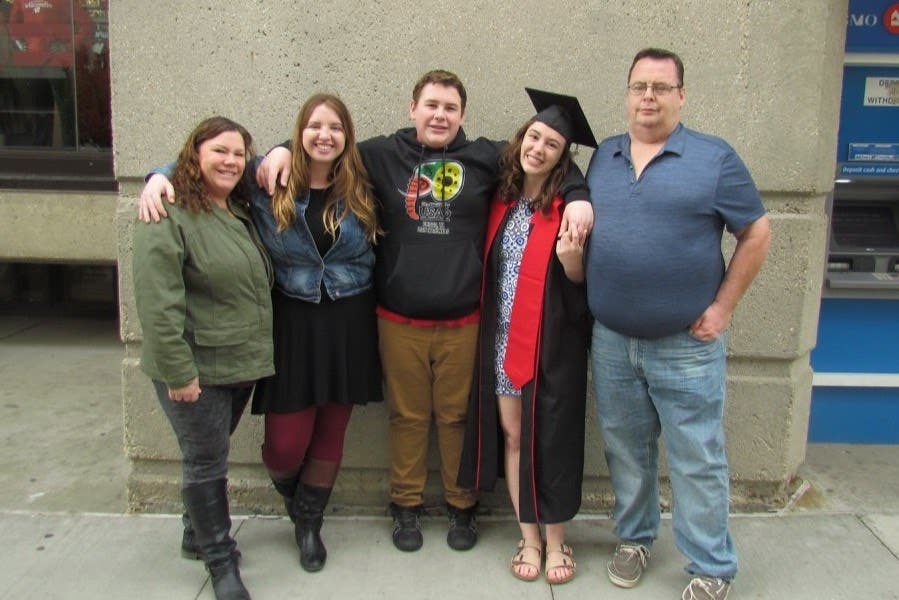
O'Brien lived for his family, his wife's brother recalled. The family would travel up to a seasonal campground in Pardeeville nearly every weekend during the summer over about the past dozen years.
"He did everything he could for his kids. Sometimes probably too much — and his wife," Stewart said. "He just wanted them to be happy."
An online fundraiser established on behalf of the family to help cover the cost of groceries, bills and other expenses had received donations from more than 175 people as of Monday.
The sheriff's office said deputies such as O'Brien are unsung heroes of the pandemic, demonstrating bravery by keeping the public and their colleagues safe from the coronavirus.
"Deputy O'Brien was devoted to his family and loved spending quality time with them. He lived his life with a positive attitude, even during the most challenging times," it said in a statement.
O'Brien is the second sheriff's office employee to die from COVID-19, according to the sheriff's office. Last month, 47-year-old Correctional Officer Sheila Rivera died after testing positive for the new coronavirus.
Among all sheriff's office staff, 382 have tested positive as of Monday. Of those, 143 were still positive and 237 had returned to work, according to a sheriff's office spokesperson.
"Rich was the kind of guy who would do anything for you. If anyone in the family called and said, 'Hey, our hot water heater is out,' or 'Our air conditioner is out,' whether he knew how to fix it or not, he would stop what he was doing and — bam — he was there and he was doing it," Stewart said. "You know when you need that truck to move something? He was that guy who had the truck, except he didn't have a truck."
Over the past month, Stewart said he'd heard the story countless times about how O'Brien's children called him "Superman."
"Rich used to say, 'Nothing can hurt me. The only thing that can hurt me is kryptonite, and there ain't no kryptonite here because I'm Superman.'"
Get more local news delivered straight to your inbox. Sign up for free Patch newsletters and alerts.