Politics & Government
Westfield Old Orchard Declared 'Blighted' As Sales Taxes Hiked 1%
The Skokie Village Board approved a public-private partnership establishing a new tax to pay for the mall landlord's redevelopment plans.


SKOKIE, IL — Trustees hiked sales taxes at Old Orchard mall as of a part of a public-private partnership aimed at revitalizing the shopping center.
The village board on Monday voted to make a finding that the mall was a "blighted area," determining the shopping center has been without redevelopment since 2007 and "would not reasonably be anticipated to be developed or redeveloped without the adoption of the plan."
Village officials said the creation of a new business district at the mall with an associated 1 percent tax will save taxpayers from having to foot more of the bill if Skokie's largest tax generator is allowed to deteriorate.
Find out what's happening in Skokiefor free with the latest updates from Patch.
"We can avert that problem by doing our job. And our job is to face the facts, take action, might not be the most popular, but five years from now, 10 years from now, like in 92-93, we'll look back and say, 'Skokie made the investment. They made the tough decision, and the benefit has reaped to the municipality in property tax as well as sales tax,'" Mayor George Van Dusen said. "At 1 percent, it's not a huge percentage, and if, at some point, Westfield and the village agree that we can reduce it, we can. We can mutually agree to reduce it."
Van Dusen said high property taxes mean the mall's current owner, Unibail-Rodamco-Westfield, "cannot" redevelop the mall itself.
Find out what's happening in Skokiefor free with the latest updates from Patch.
The mayor said creating the business district and allocating its Business Development and Redevelopment Tax to reimbursing Westfield for its redevelopment costs was needed to shore up confidence and fill vacancies at the mall. According to village staff, about 21 percent of storefronts at the mall were vacant as of last month.
"If we do not send to the business community a strong message that the shopping center is going to be redeveloped, we're not only going to have trouble retaining the businesses that we have, but we're going to have trouble attracting new businesses," Van Dusen said before Monday's vote. "Businesses want to know that when they come to Old Orchard, or any shopping center, that there is a long term plan to be sustainable."
About 38 percent of the mall's revenue currently goes to taxes, the largest share of which are allocated to school districts. Mall and village officials say that is the highest tax rate anywhere in the multinational mall landlord's global portfolio.
Old Orchard General Manager Serge Khalimsky said Westfield's estimated $100 million redevelopment plan would not be feasible without the business district.
"We've really collaborated very closely with Skokie and with our consultants ... to land at a sensible level of sales tax relative to the size of investment that we are contemplating together," Khalimsky told trustees.

"Prior to COVID, we were right around $500 million in sales. We are looking to double that figure, in essence, really double the sales tax base for the community, which is a great thing," the mall's general manager added. "This initial investment doesn't really take away from that at all. It should increase in value over time."
Village attorney Michael Lorge said village staff have been assured that Westfield will step up to advance the cost of the redevelopment in exchange for the guarantee that qualified expenses will be reimbursed with future sales tax revenue.
"It will be a number of years, probably well after the majority of the work is done, before that 1 percent returns to them the investment they're making in the mall," Lorge said. "And that's where we really get the sense of true partnership where we should be proud to actually participate in."
Critics of the proposal, which passed by a 6-1 vote with Trustee James Johnson voting "no," objected to passing the mall landlord's costs onto consumers and described it as "corporate welfare."
But backers of the new business district noted that four out of five shoppers at Old Orchard — who will now be facing sales tax rates of 11.25 percent at stores and 13.25 percent at restaurants — come from outside the village.
"So 80 percent of all of this will be paid by somebody who I don't know?" Trustee Ralph Klein asked during Monday's village board meeting.
"Technically, yes," Khalimsky replied.
"OK, so then we ask ourselves what is best for Skokie: When somebody else pays the freight or when we have to ask our constituents to pay the freight? ... We have to worry more about Skokie residents than we do about people who are outside," Klein said. "That's my take."
Several residents spoke in opposition to the new taxing district during the portion of the meeting reserved for public comment.
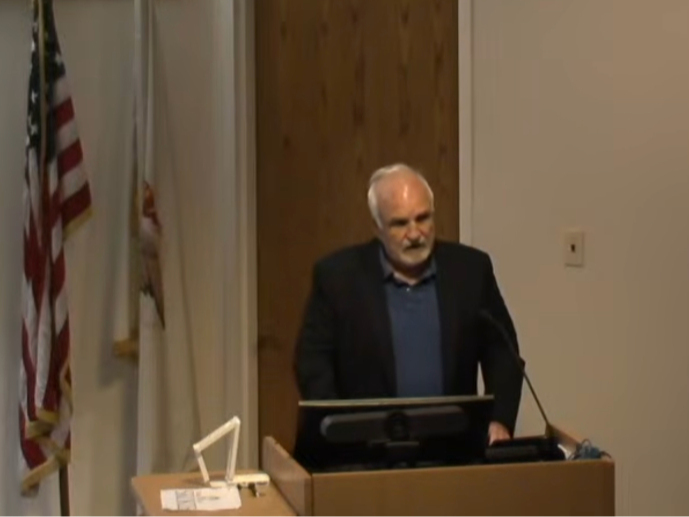
Terry Socol, longtime owner of a small business based in Skokie and a first-time speaker before the village board, said the creation of the Old Orchard business district really bothered him.
"As small businesses, we have to pay for fixing up our own businesses, why should it be on the residents of Skokie to fix up the mall? If Westfield really believes in the mall, and they own over 24 malls across the nation, they should be paying for it themselves. Not the residents, not the shoppers there. One of the reasons that people probably aren't shopping at the mall is because of the high sales tax," Socol said.
"A lot of us that shop there aren't wealthy," he added. "And having the highest sales tax, over 11 percent, is outrageous. It really is."
Chaya Moscowitz, a Skokie resident who said her family has been in the village for more than 50 years, echoed his remarks and said she would start shopping elsewhere rather than support "corporate welfare" for multinational mall landlord Westfield.
"It is ridiculous to me that we want to put this on consumers, on residents of Illinois or other places, to fund something that the business should be doing themselves," Moscowitz said. "Malls are a failing business model in general. It really makes me upset that we are even considering something like this that the business should be handling themselves."
Related:
Get more local news delivered straight to your inbox. Sign up for free Patch newsletters and alerts.