Health & Fitness
On Goose Island and Chicagoland's Craft Beer Scene
"Chicagoland became a no-man's-land, as Bud and Miller fired salvo after salvo at each other and, as a consequence, drowned the market in fizzy yellow lager ... That is, until Goose Island."
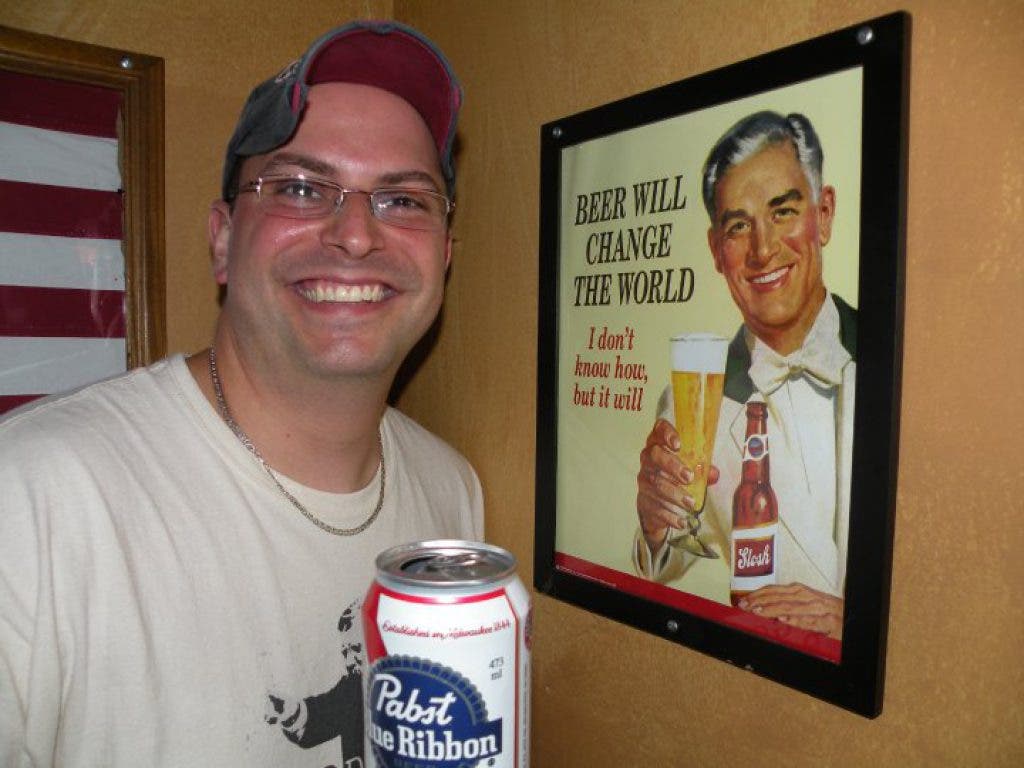
The news that Goose Island Beer Company, easily Chicagoland's most well-known craft brewery, was to be sold to Anheuser-Busch, which, in turn, is owned by world beer megacorp InBev, hit like a thunderbolt.
The development came as a shock to many of my friends, and was a topic of a spirited conversation for a few days. On the one hand, Goose Island's decision to sell itself to the world's largest brewing conglomerate—especially one known for putting profitability well ahead of other such considerations as tradition and taste—doesn't sit well with craft beer enthusiasts.
But on the other, the runaway popularity of their beers, especially their 312 Urban Wheat Ale, meant that their market had outgrown their ability to reliably service it. Sometimes there is such a thing as too much success.
Find out what's happening in St. Charlesfor free with the latest updates from Patch.
And what of this unwelcome foray by Big Beer into Chicago's craft beer scene? Was Anheuser-Busch feeling the pinch from an up-and-coming giant and decided to take out a competitor? Did InBev suddenly "find religion" and decided that if it couldn't beat 'em, it would join 'em?
Any way you decided to look at it, we were all left feeling that we didn't know what this meant for Chicagoland's still-infantile craft beer scene.
Find out what's happening in St. Charlesfor free with the latest updates from Patch.
I've had a few weeks to think about it, and since I'm a historian by trade, I tend to take a verbose, long-term view of such developments that interest me. As a city and a region populated and built by wave upon wave of newcomers from here and abroad, Chicago once had a vibrant beer culture. That is, until the Germanophobia of the First World War, draconian immigration restrictions and Prohibition afterward, and the Great Depression and the Second World War all put an end to that.
When the dust settled, two brewing colossi—the aforementioned Anheuser-Busch out of St. Louis, and Miller from Milwaukee—stared each other down, and the thirsty Chicago market became one of their primary battlegrounds.
Chicago remains one of Big Beer's primary markets. When I visited Miller's megabrewery in Milwaukee last year, I saw their titanic warehouse filled with beer headed, primarily, to the Chicago metropolitan area. Some half a million cases a week. I can only assume that Anheuser-Busch generates a similar amount for the Chicago market. One million cases of beer a week. We certainly are thirsty!
This beer, and that from Budweiser, profitably produced, inexpensively priced, and poured in large quantities onto the Chicago market, squelched for decades what minuscule market existed for local beer. Tastes had changed, as had the dynamics of the brewing industry. Whatever regional breweries that used to dot Chicago neighborhoods were a distant memory. By the late 1980s, Chicagoland became a no-man's-land, as Bud and Miller fired salvo after salvo at each other and, as a consequence, drowned the market in fizzy yellow lager.
That is, until Goose Island.
There had been other non-starters, put out of business, at least in part, no doubt, due to fierce competition by Bud and Miller. But somehow Goose Island hung on, and was able to create a small niche for itself and for locally-produced craft brewing amidst the sea of macrobeer that the Chicago market had become. They were pioneers into a land that, for generations, nobody had successfully trod.
At present, by my rough calculation, there are about ten brewpubs and microbreweries in Chicago alone, and at least a dozen more in northeastern Illinois and northwestern Indiana. One specializes in nothing but making German-style lagers of all types. Another started out as a homebrew shop. I just recently found out that another operation, the New Chicago Brewing Company, will make West Coast-style beers in an old converted warehouse in the Back O' the Yards neighborhood, and purports to be socially-conscious as well as environmentally-neutral: exactly the kind of brewery one would expect in San Diego, Seattle or Madison, or, really, anywhere but a city such as Chicago drenched, as it is, in American-style light lager.
Every single one of these new Chicagoland craft breweries has something different to offer the market, evidence that something has changed, and that craft beer of all types is thriving even in one of the least hospitable American markets for microbrewing I can imagine.
To be fair, Old Style and Bud Light and the like are still the go-to beers for millions, and that's fine. I'm no beer snob. I think there are appropriate times and places for all kinds of beer. Moreover, craft beer isn't for everyone.
But as to whether or not Goose Island's purchase by Anheuser-Busch represents a win for Big Beer over microbrewing in Chicago—whether or not this development has damaged, possibly irrevocably, Chicago's craft beer scene—I say: hardly. Craft beer isn't going anywhere. Try as they might, the big brewers cannot buy their way into legitimacy any more than the local brewpub can reasonably hope to compete, on their terms, with Big Beer. They are two separate worlds. The former will always be dominated by the age-old fight between Bud and Miller. The latter was formed and continues to be formed through the heroic efforts of craft brewers like Goose Island. Whether or not they are still around in a month or a year or a decade to continue that effort hardly matters anymore: there are many more ready to pick up the standard and carry on.
And that, by any reasonable calculation, is a good thing.