Health & Fitness
Asbestos Found Throughout Tinley Park Mental Health Center Site
There was too much asbestos for inspectors to enter many of the buildings on the site of the former Tinley Park Mental Health Center.



TINLEY PARK, IL — A recent inspection of the Mental Health Center property in Tinley Park revealed numerous environmental concerns, prompting a village trustee to seek immediate attention from the state of Illinois to clean up the nearly 300-acre state-owned property to the northwest of 183rd Street and Harlem Avenue.
There was too much asbestos and black mold for inspectors to enter many of the buildings on the site, which Tinley Park Trustee Michael Glotz referred to as "280 acres of contamination" in a letter he wrote this week to Illinois Gov. J.B. Pritzker and other state officials and agencies.
The team of six inspectors couldn't enter the Oak Hall, Willow Hall or Hickory Hall buildings on site due to the high level of asbestos and Sycamore Hall, Mimosa Hall and most buildings at the Howe Development Center due to the amount of black mold found during the two-day Illinois Environmental Protection Agency/Illinois Department of Public Health inspection on Dec. 17 and 18, 2019.
Find out what's happening in Tinley Parkfor free with the latest updates from Patch.
The Spruce Hall-Medical Center had both asbestos and black mold preventing the team of inspectors from entering, according to the inspection report.
Illinois' Department of Central Management Services is the state agency that oversees the property. They issued a statement Friday indicating they take "all health and safety concerns very seriously," noting a lock-down policy has been in effect at the site since one month before the inspection.
Find out what's happening in Tinley Parkfor free with the latest updates from Patch.
“Only CMS staff or CMS-approved visitors are allowed on the property with personal protective equipment," their statement read. "The department contracts with a security company to patrol the property. "
During the inspection, one of the inspectors did use a respirator to enter a few of the structures on his own, finding numerous containers marked as having various chemicals inside.
But the engineering and storage building is one of the few with asbestos and black mold levels low enough for the entire team of inspectors to enter. The building contained some small containers of automotive fluids and some compressed gas cylinders marked "Carbon Dioxide" and "Helium," the report states.
Also, a tank containing diesel fuel was found inside Pine Hall — another of the buildings the team was able to enter.
In a tunnel between Oak Hall and Maple Hall, inspectors found "rolled up comforters and other bedding," suggesting it has been used as a shelter by homeless people.
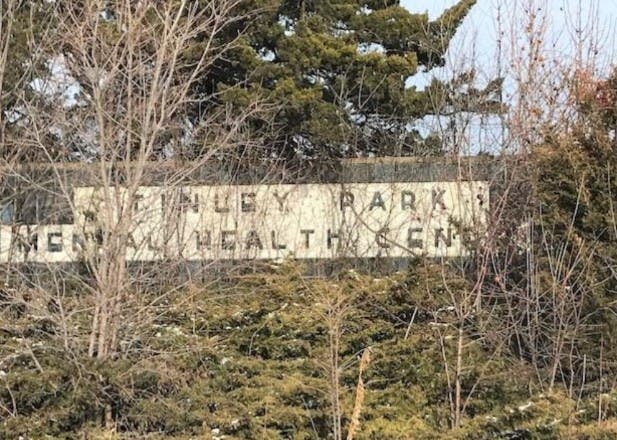
Among the "areas of concern" identified by the IEPA include the presence of oil drums, underground and above-ground storage tanks and "asbestos-containing material" in every building on the site.
The asbestos material was most extensive on the site's power plant, according to an observation from inspector Peter Brusky of the IEPA Bureau of Air.
"Any material that is not bare stone, glass, metal or untreated lumber should be considered suspect (asbestos) until proven otherwise by a licensed inspector," Brusky wrote in his observation.
Asbestos was found in the power plant on "insulation on various ducts, manifolds, and pipes (including encased); surface coatings/paint; gaskets/packing/sealants; panels and enclosures around generating equipment."
"There were also many below grade sections of buildings and tunnels running under large sections of the property," Brusky wrote. "These areas are nearly all submerged due to lack of running pumps and looting of rooftop drain system copper. These tunnels contain the various utility lines that connect the buildings including steam, water and electrical lines, most if not all of which would be expected to be insulated with suspect (asbestos)."
CMS says it is working closely with the IEPA to "assess the conditions on-site and properly address any findings.”
In his letter to Pritzker, Glotz said the results of the inspection report "create an immediate concern for the health, safety and welfare of the village and its residents."
U.S. Congressman Bobby Rush, whose 1st District includes the Mental Health Center site, agreed in a letter he wrote Friday to the United States Environmental Protection Agency on the issue.
"When this contamination occurs in areas that may one day house seniors, children, or other vulnerable populations, its cleanup should be an immediate priority," Rush wrote, adding that he's "extremely disappointed" in the Illinois EPA's recent evaluation that followed the December inspection.
"Despite knowing the concerns that have been expressed by community members, the IEPA evaluation team did not undertake proper precautions, and were, therefore, unable to conduct a through and legitimate evaluation," he said, urging a "strong and immediate" response from the U.S. EPA.
The village of Tinley Park has tried since 2012 when the Mental Health Center was closed to address the environmental concerns, Glotz said, with hopes to soon "revitalize the property into productive use."
A plan in 2019 for the state of Illinois to sell the property to the village, who would then sell it to a group that would clean it up and construct a horsetrack and casino went awry. Those plans were nixed in October when Pritzker's administration team informed the village they opted not to sell the property at the time.
Glotz said in his letter the village wants to schedule a meeting with state and local officials present "to discuss cooperative efforts to clean up the 280 acres of contamination that exist at the Tinley Park Mental Health Center."
Get more local news delivered straight to your inbox. Sign up for free Patch newsletters and alerts.