Community Corner
Hillcrest Ecology Club Plants Trees with Morton Arboretum
Hillcrest Ecology Club hopes to leave its legacy by planting trees around the school


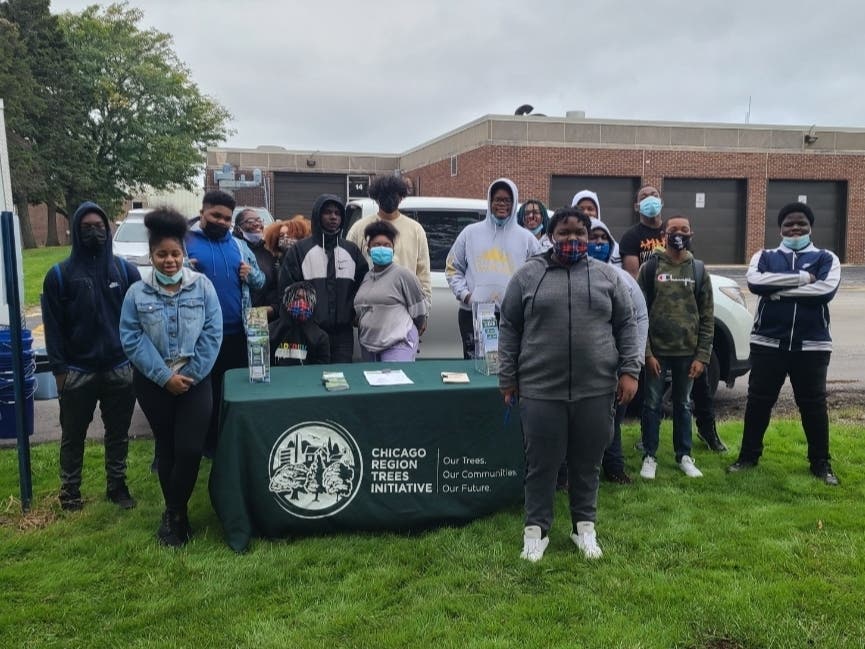


Despite the cold temperature and rainy day on October 21st, Hillcrest High School Ecology Club Members were outside with eager and smiling faces as they met with staff members from the Chicago Region Trees Initiative, part of the Morton Arboretum.
Ecology Club Members would spend the rest of their morning and early afternoon planting 15 trees around their school with the hope to leave their legacy behind. As the students grow older and eventually leave Hillcrest, they will always be able to drive by the school and see the trees that they once planted as a student.
This is the second time Hillcrest High School has partnered with the Chicago Region Trees Initiative to plant trees around the school. In 2019, before the COVID-19 pandemic, students also planted 15 trees.
Find out what's happening in Tinley Parkfor free with the latest updates from Patch.
This year, many of those same Ecology Members returned and were amazed to see how big some of the trees from 2019 had already grown.
Students also learned that they can keep track of their trees digitally through the Canopy Counts Program. Students and/or community members can download an app to explore trees in the region, add trees and share updates as they grow, and learn about the trees and their many benefits.
Find out what's happening in Tinley Parkfor free with the latest updates from Patch.
.jpg)
While planting, students learned that trees can do a lot more than simply add an extra aesthetic to the campus. In fact, the Morton Arboretum says trees benefit and add value to the entire community:
- Trees increase property values. Homes in neighborhoods with mature trees sell for 3.2-10 percent more than in neighborhoods without trees
- Trees are good for business. Shoppers will travel farther to shop in tree-lines business districts and tend to spend more.
- Trees clean the air we breathe. Urban trees capture fine particles from the air as well as carbon dioxide, nitrous oxides, and other pollutants. Scientists estimate the pollution trees save in the U.S. is worth $7 billion a year.
- Trees shelter and feed wildlife. Birds and other wildlife find food in trees. Trees also can provide pollen and nectar to feed bees and other insects we depend upon to pollinate plants in our gardens and farms.
- Trees pay us back. Every year, the trees in the seven-county Chicago region provide an estimated $51.2 billion worth of services to our environment and our communities.
- Trees keep us cooler. A big shade tree can reduce the surrounding temperature by 10 to 15 degrees.
- Trees save energy. They shade buildings to reduce the need for air conditioning.
- Trees help handle storm weather. Trees collect rain on their leaves and channel heavy rainfall to the soil.
- Trees make communities healthier. Children who live in neighborhoods with more trees are less likely to have asthma. Additionally, people who live in areas with plenty of greenery are less likely to be overweight or obese.
To learn more about the Chicago Region Tree Initiative and to get involved in planting trees in your community, please visit chicagorti.org/get-involved.