Community Corner
The Great Train Whistle Battle
In 1996, the federal government wanted trains to blow their whistles at all crossings. For once, common sense prevailed.


In 1994, as part of its effort to reduce fatalities along rail lines, the federal government passed the Swift Rail Act. It would require trains to blow their whistles before every at-grade crossing, effective in 1996. In fact, trains would be required to sound two long whistles, followed by a short and long whistle, starting about a quarter mile before each crossing.
Previously, trains would sound their whistles only when there were workers on the tracks or when another train was stopped and the second train was approaching. However, one local official noted that, with 168 trains passing through Western Springs each day, the new law would mean that residents would hear almost one continuous whistle.
The government defended its plan by saying that local communities could reduce or eliminate the whistle-blowing entirely. “All” they had to do was (1) close the at-grade crossings entirely, (2) close the crossings at night, (3) install additional crossing gates to prevent cars from going around existing gates ($200,000 per crossing), (4) install concrete median barriers to keep drivers from going around gates, or (5) designate the streets one-way leading to existing train crossings.
Find out what's happening in Western Springsfor free with the latest updates from Patch.
Local authorities were almost unanimous in their opposition to the new rule. One noted that the new law would not only affect residences, but hospitals, schools, and other establishments along the railroad. In response to the proposed plan, a Railroad Grade Crossing Task Force was formed to analyze the frequency and location of train-related fatalities. Co-Chair of the group was Patrick Higgins, now Western Springs’ village manager.
Ironically, this was not the first time such a plan had been proposed. In August of 1988, Western Springs residents were awakened at 3 a.m. by the sound of blaring train horns. Commuter train passengers also reported that their trip to Chicago was one constant blaring of the train’s horn. In its defense, the Burlington Northern said it was simply complying with a new state law. After numerous complaints from the public, the state relented and granted waivers to communities in high density areas, such as suburban Chicago. However, in 1996, the feds were not as easily deterred.
Find out what's happening in Western Springsfor free with the latest updates from Patch.
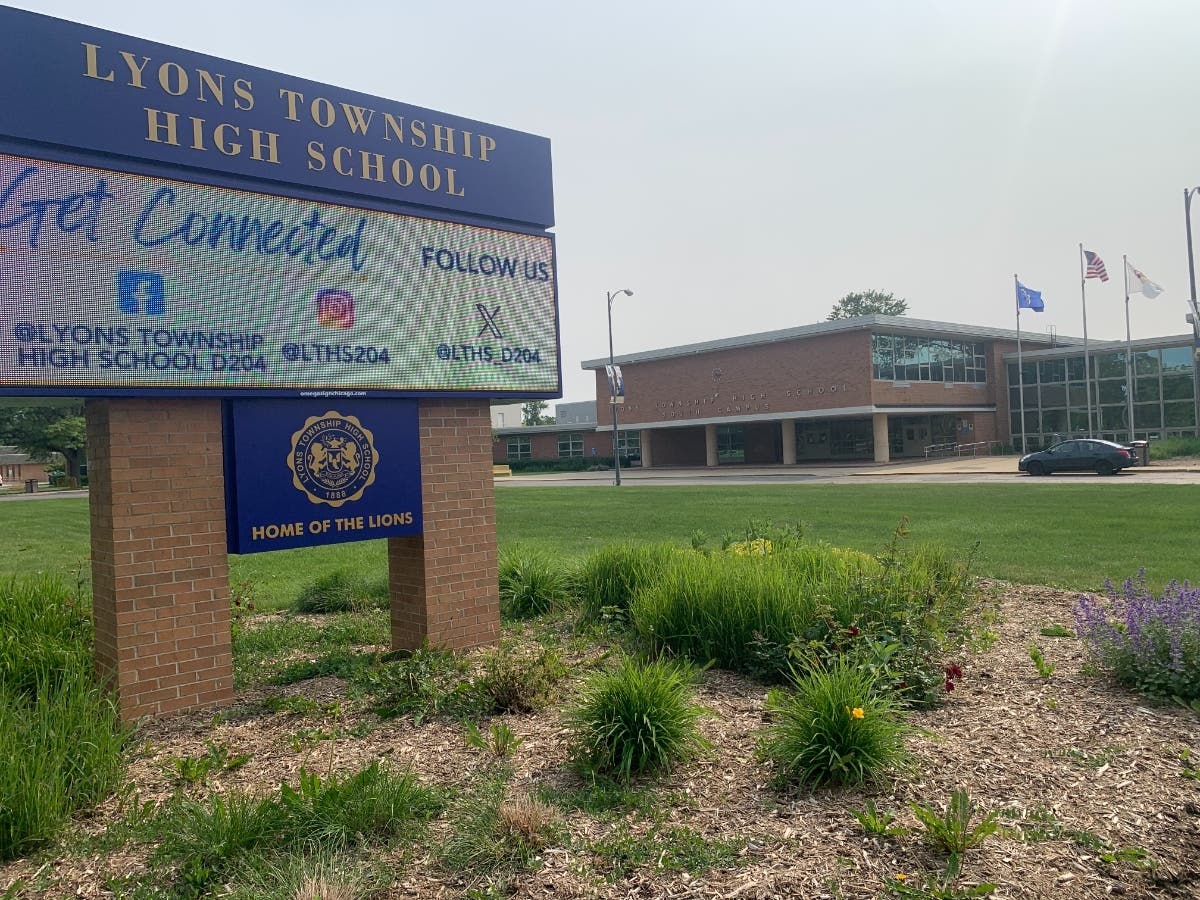
Feeling the anger of his local constituents, U.S. Representative Bill Lipinski chaired a town hall meeting at Lyons Township’s South Campus. In attendance was Jolene Molitoris, the administrator of the Federal Railroad Administration, which was drafting the final language for the new law. While no one opposed efforts to improve railroad safety, village president Dave Lawrence summed it up best: “The prospect of the train whistles is not only a threat to our quality of life, but to the value of our homes that we’ve worked so hard to achieve.”
In response to these meetings and Lipinski’s efforts, an amendment to the “whistle blowing” law was quickly drafted and approved by Congress in October of 1996. This allowed communities to be exempt if it was determined that such rules would not contribute significantly to public safety. But, in return, local communities were to begin aggressively ticketing those who might ignore railroad warning signals.
So if you happen to receive a $500 ticket for such an offense, you at least now have the satisfaction of knowing why the officer wrote that ticket.
Photo Caption:
BNSF freight train passes through Western Springs
Each week, the Western Springs Historical Society presents a “Blast from the Past”. To view prior stories, visit us at www.westernspringshistory.org or just click on the author’s name shown above.
d.on(“m��3N�”3