Community Corner
A Home filled with Western Springs History
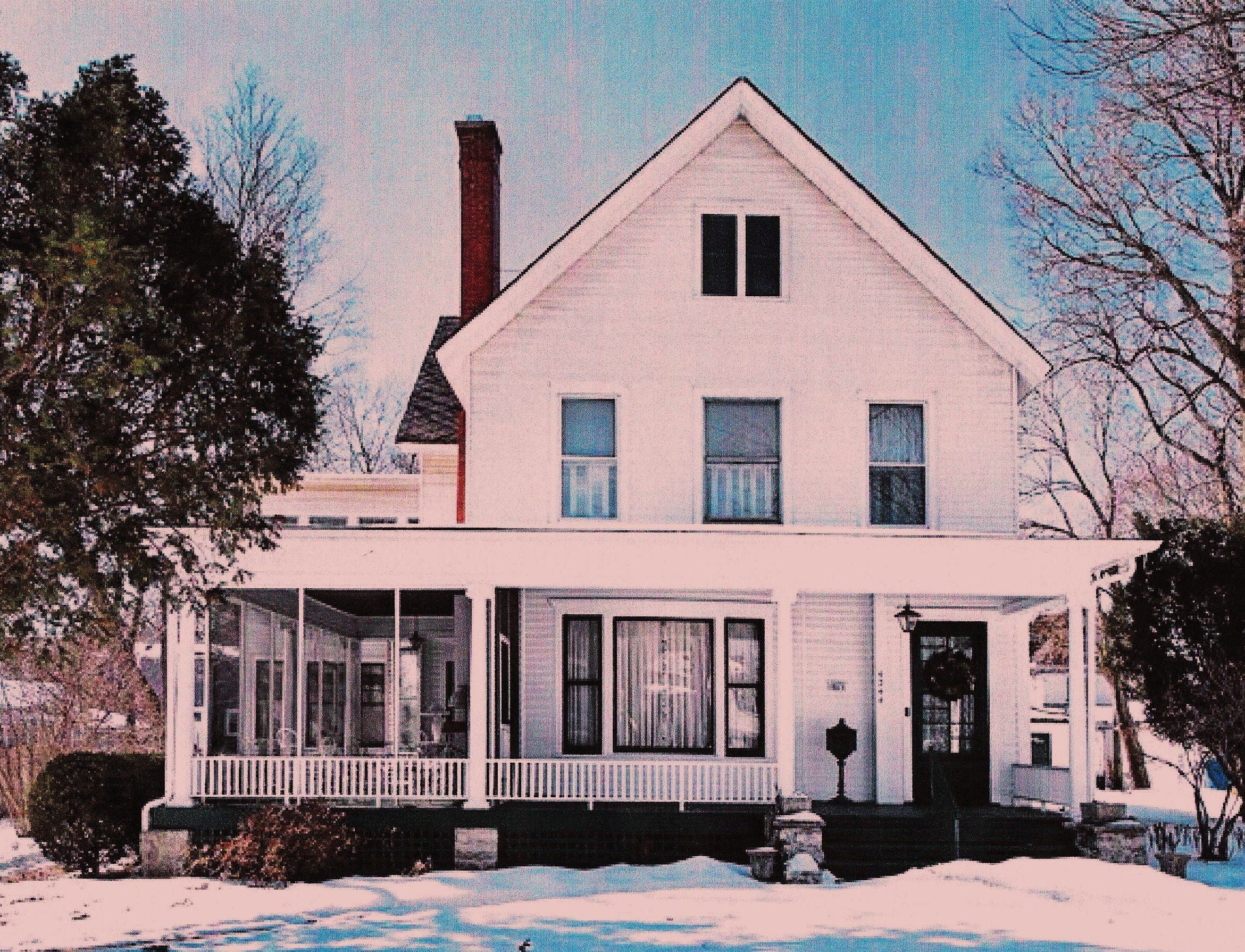
Hundreds of village houses are offered for sale each year. But, few have been home to such colorful characters as has 4344 Grand Avenue.

When the great Chicago fire occurred in 1871, many county records relating to suburban home sales were destroyed. As a result, the precise age of some of the older homes in our village cannot be verified. Remember, back in 1871, the village government had not yet been formed, so the only property records were maintained at the county building in downtown Chicago.
Despite this, there is considerable evidence to suggest that the home at 4344 Grand was built in 1871, just before the great fire. And, what is certain is that it was purchased in 1873 by Thomas C. Hill.
Hill is perhaps best known for transforming the farmland between Ogden Avenue and 47th Street into what is now Western Springs. He was a land developer, with offices located in downtown Chicago. But, he was perhaps more instrumental than anyone else in promoting our area. He wrote glowing advertisements describing the benefits of living in this brand new area.
Find out what's happening in Western Springsfor free with the latest updates from Patch.
He also promoted the presence of the town’s namesake mineral springs and is credited with convincing the Burlington railroad to build a station near Wolf Road, thereby insuring easy access to downtown Chicago. But, Hill’s achievements didn’t stop there. He was the town’s first postmaster and was appointed the village’s first president after the town was incorporated in 1886.
While Hill passed away in 1896, his wife remained in the home until 1904. That’s when she sold the property to Ellmore C. Patterson, whose accomplishments would rival those of Mr. Hill.
Find out what's happening in Western Springsfor free with the latest updates from Patch.
Patterson came to Western Springs in 1893 to work for the fledgling Vive Camera Company, which produced box-type cameras similar to Kodak. Within four years he was promoted to general manager. But, in 1902, he joined the staff of Colliers Magazine, eventually becoming their general manager. And, in 1904, he and his new wife bought the home at 4344 Grand Avenue.
With his newfound wealth, Patterson also began to indulge in his favorite hobby, automobiles. At a time when most Americans did not yet own a car, Patterson acquired some of the most expensive models. He personally drove a Packard automobile nonstop from Chicago to New York in both 1914 and 1916, setting records each time. He even hired a professional racer to drive his Mercedes automobile to victory in the 1915 Indianapolis 500.
Patterson also helped sponsor numerous athletic contests for village youth, championed such causes as a new hospital, served as the town’s first fire marshal, and eventually founded the Warner-Patterson Company, which manufactured automotive accessories. He died in 1946.
Currently available for sale, the home at 4344 Grand still resembles the original design. However, the Hill and Patterson families would probably not believe the changes that have taken place over the years, especially inside. When first built, the home did not have electricity, central heating, gas, or modern plumbing. And, the home was literally surrounded by vacant land. But, if the “walls could talk”, we’re sure we could all learn a great deal more about Western Springs’ earliest days. It is truly a landmark structure.
Each week, the Western Springs Historical Society presents a “Blast from the Past”. To view prior stories, visit us at www.westernspringshistory.org or just click on the author’s name shown above.