Politics & Government
Referendum Meeting on Synthetic Field Tax Raise Shows Mostly Support for Proposal
New information came to light as residents questioned the Park Board and a TurfField spokesman about specifics of the proposed referendum.


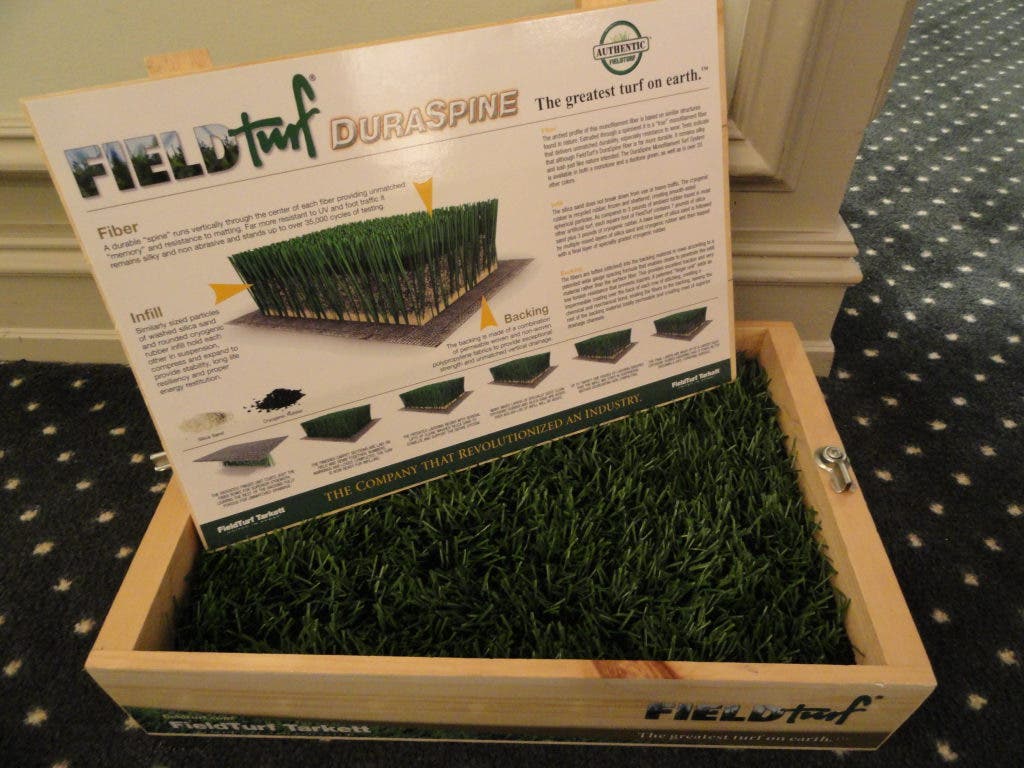
While attendees of Tuesday night’s Western Springs Park Board referendum on the construction of a turf field in Spring Rock Park had a number of questions, the general tone was one of support for the proposal.
“Anyone who’s taken a casual look at it might say, ‘don’t come to me for another nickel, we’re done with taxes,’” said resident John White, in reference to the property-tax raise that would accompany the proposal. “But I think it’s presented in logical terms, and, as a taxpayer, this is something you can literally dig your hands right into, and there’s going to be a lot of kids down the road who benefit from this.”
However, the most vocal attendee was less enthusiastic. Brad Walse, a resident and frequent environmental watchdog of the Park District, questioned the Board for nearly a half hour, asking if the choice of location on a soggy hundred-year flood plain could lead to the field being contaminated with sewage and requiring an expensive turf replacement.
Find out what's happening in Western Springsfor free with the latest updates from Patch.
He also expressed concerns about aniline and phenol, chemicals that can be found in the rubber filling the synthetic turf, potentially washing into Flagg Creek.
“The studies that you [FieldTurf] guys are quoting [on your website,] if you actually read the studies, say that these chemicals should be looked at in further studies,” Walse said, displaying several sheets of printed paper. “That’s where I have issues.”
Find out what's happening in Western Springsfor free with the latest updates from Patch.
A spokesman for FieldTurf, Jonathan Huard, who has overseen more than 100 synthetic field installations, replied that there shouldn’t be any problems.
“Everything so far from the EPA and everything we’ve looked at has said there’s no cause for concern,” Huard said. “Nobody’s come out to say there’s zero risk, and nobody’s come out to say that there are legitimate issues out there and we should stop putting in fields. We’re going to keep continuing to look for data, but there’s no reason not to install fields at this point.”
Additional information about the proposed project also came to light during the meeting.
The cost of the field is actually expected to be somewhat less than the $1.5 million being collected for the purpose—the expected cost is closer to $1.3 million. Board members said the additional funds are necessary in case the project goes over-budget. In the unlikely event that even the $1.5 million is insufficient, the Park District would pay for the rest out of its ordinary budget.
Additionally, although taxes to residents would be calculated as a percentage of property values, the total amount collected would not rise if property values rose; the tax would be adjusted to bring in exactly $1 million.
The field would be enclosed by a fence, ostensibly to prevent vehicles from driving onto it and damaging the turf. There may or may not also be a concrete pad to accommodate portable bleachers.
When considering booking time on the field for organizations, the Park District will give precedent to Western Springs organizations and organizations with a high percentage of Western Springs residents. It is also probable that the field would be open to use by residents for, for example, a Thanksgiving football pick-up game, without charge, as long as it was not otherwise booked.
The referendum will be voted on by Village residents on April 5.
Get more local news delivered straight to your inbox. Sign up for free Patch newsletters and alerts.