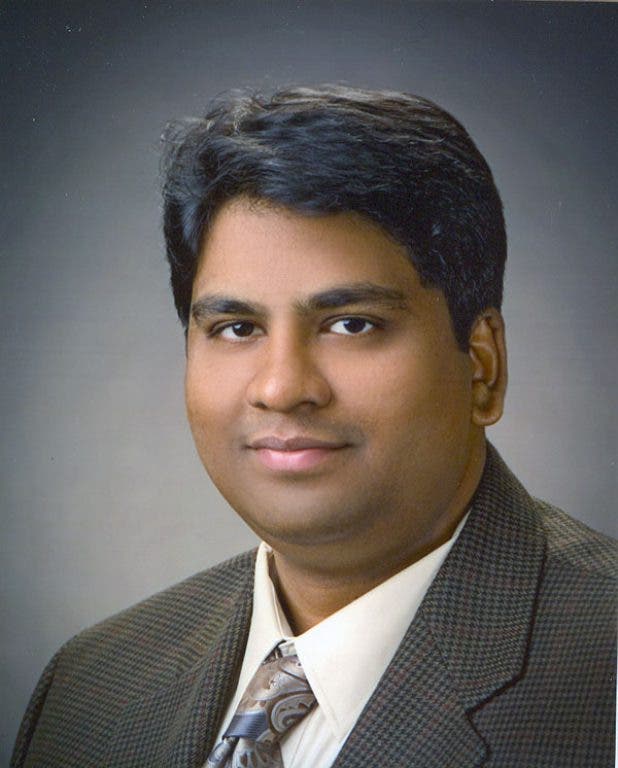
Mohammad Sajed, MD has joined the Edward Neurosciences Institute as Medical Director of Neurocritical Care. Dr. Sajed is board certified in neurocritical care, neurology and vascular neurology (stroke). He comes to Edward from SwedishAmerican Health System in Rockford, where he was the director of stroke and neurocritical care, and the University of Illinois-Chicago College of Medicine, where he was an assistant professor.
Dr. Sajed earned his medical degree from the Deccan College of Medical Sciences in Hyderabad, India. He completed his internal medicine residency at Seton Hall University and St. Francis Medical Center in Trenton, N.J.; neurology residency at Seton Hall and the New Jersey Neuroscience Institute in Edison, N.J. and fellowship in stroke and critical care neurology at Michigan State University and Sparrow Hospital in East Lansing, Mich.
Prior to joining SwedishAmerican, Dr. Sajed was director of stroke and neurocritical care for the Blanchard Valley Health System in Findlay, Ohio and on the medical staff of Mercy Hospital of Pittsburgh, division of neurology, stroke and critical care neurology.
Find out what's happening in Wheatonfor free with the latest updates from Patch.
Dr. Sajed is a member of the American Academy of Neurology, American Stroke Association/American Heart Association and Neurocritical Care Society.
The Edward Neurosciences Institute in affiliation with the Northwestern Medical Faculty Foundation offers world-class stroke care for patients who suffer strokes or have other neurological disorders. The Institute features the most advanced drug therapies, interventional neurosurgery techniques and a $5 million state-of-the-art neurointerventional lab.
Find out what's happening in Wheatonfor free with the latest updates from Patch.
The lab features an advanced biplane angiography system that provides three-dimensional images and unparalleled quality for physicians and, for patients, reduces their procedure time, radiation exposure and time under anesthesia. In the biplane lab, doctors can stop a stroke in its tracks and even reverse its effects. In one minimally invasive procedure, a tiny catheter can be inserted in an artery in the patient’s leg, moved up to and past the heart and into the blood vessels in the far reaches of the brain, grab the clot and then remove it.
Check www.edward.org/neuro or call (630) 527-7730 for more information about Dr. Sajed and the Edward Neurosciences Institute.