Health & Fitness
Being Bahá’í: What Makes a House of Worship a Temple?
Where I introduce myself as the new Wilmette-Kenilworth Patch Bahá'í Blogger, meaning I have the privilege of telling stories about the Bahá'í House of Worship in Wilmette.
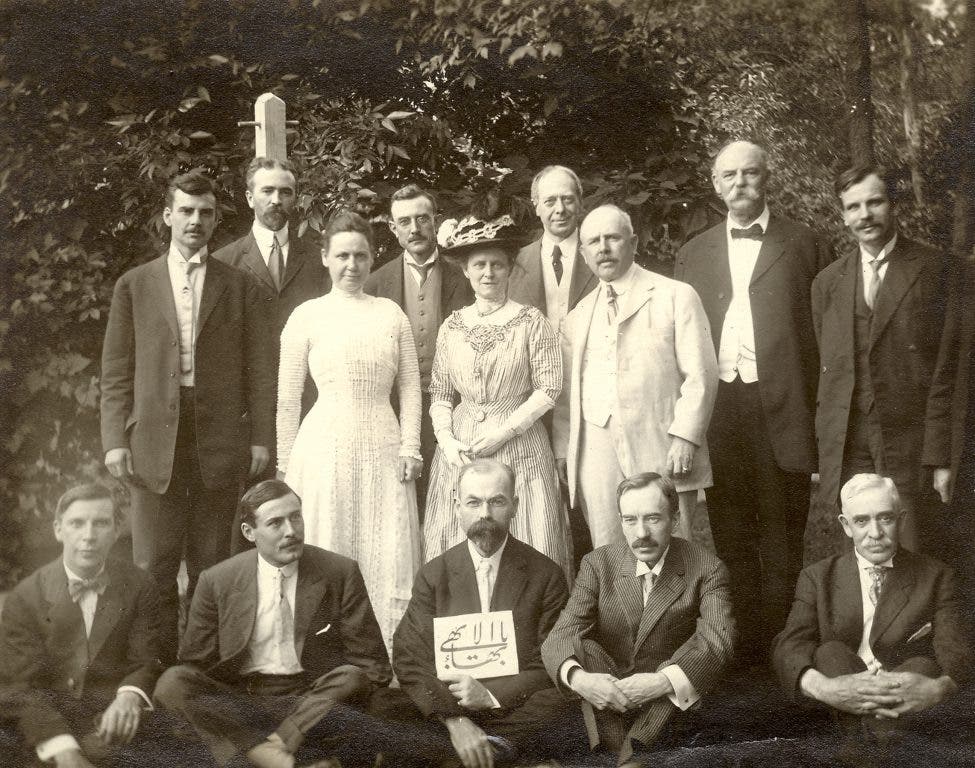
Greetings to the readers of Wilmette and Evanston Patches,
Today I introduce myself as your local blogger of all things at 100 Linden Ave. and its environs. Think fast, what world famous building of historic proportions, listed on the National Register of Historic Places, is at the corner of Linden Ave. and Sheridan Road? Oh, you knew, the Bahá’í House of Worship for the North American Continent.
Yes, that’s the formal name of your neighborhood Bahá’í Temple. You might notice that it isn’t called a temple in any of its signs or literature these days. So, why do we call it a temple in everyday conversation? The House of Worship hosts no ceremonies, or rituals that must take place there. Devotional programs are simple, there is no altar; there are no priests or ministers. That was one of the questions I asked when gathering together the photos for Arcadia Publishing’s Images of America book Bahá’í Temple, published in 2010.
Find out what's happening in Wilmette-Kenilworthfor free with the latest updates from Patch.
Finding the photographs for the book was easy, there are thousands of them neatly filed in the Bahá’í Archives. Matching facts and figures to those excellent construction photographs was also not difficult. Former Administrator Bruce Whitmore had already written the definitive history of the building of the House of Worship in 1984 and I only had to adapt that information into seventy word captions. Now that was difficult.
Those first Chicago Bahá’ís at the turn of the last century knew exactly what they wanted to build. The formal name for a Bahá’í place of worship is Mashriqu’l-Adhkár, a phrase in Arabic that means, “the dawning place of the mention of God.” I am pleased to say that I can pronounce this word with authority because my friends who do speak Arabic are too polite to correct me in public. But you can imagine in the 1920s and 30’s that folk would cast about for a more familiar term.
Find out what's happening in Wilmette-Kenilworthfor free with the latest updates from Patch.
Seeing that Chicago had a Masonic Temple, a Women’s Christian Temperance Union Temple, the Methodist Chicago Temple in the Loop, and our lovely white dome on the lakefront certainly looks like a temple, this usage crept in. Someday, someone will dive into those extensive archives from one hundred years ago and trace the usage of this term.
It doesn’t matter really. As long as everyone understands that the purpose of the Bahá’í Temple is to open its doors every day for anyone and everyone to pray and meditate in peaceful, quiet, and beautiful surroundings. You will find the door open from 6 a.m. to 10 p.m. daily, all year round.
This “local” blog, will endeavor to explain more about those lovely surroundings, the development of the property in general, events that take place there, and the history of how this “great bell” came to be on the shores of Lake Michigan.
Do you have a question about the Bahá’í Temple? That’s what the comment box down there is for, please feel welcome to ask.