Neighbor News
The Evanston Center for Transcendental Meditation Offers an Oasis in a Turbulent World
Carol Morehead reveals the benefits of transcendental meditation, including how easy and natural it is to learn.
Is stress inevitable? It comes at us daily. Everyone has individual life stressors and demands and sometimes they’re relentless. As a raging backdrop, we’ve got the daily news and it never seems good these days.
Is there a refuge? A place that offers a respite from life’s relentless pressures and upheaval?
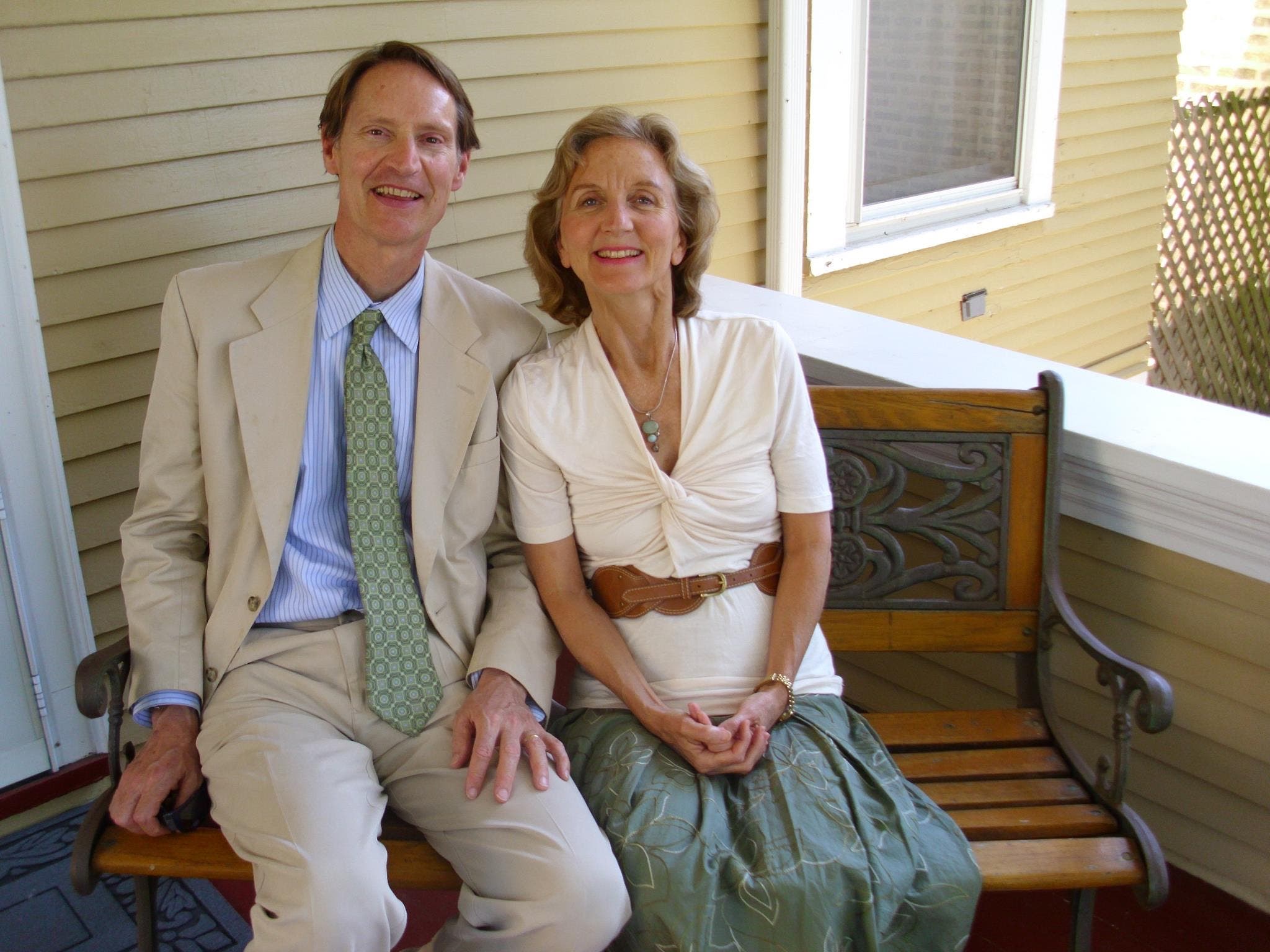
Honestly, my initial answer would have been no. There is no such place. But then I spoke with Carol Morehead, co-owner with her husband Paul, of Evanston’s Center for Transcendental Meditation. Carol and Paul both trained at the world famous Maharishi University of Management in Fairfield, Iowa where Paul is also director of the Department of AyurVeda and Integrative Medicine.
Find out what's happening in Wilmette-Kenilworthfor free with the latest updates from Patch.
It turns out that peace and quiet does exist and it exists within us if we know how to access it. If you’re not already a TM practitioner, you may be chortling right now in between answering texts, paying bills, cooking dinner, pacifying your boss and calculating how long before the dog really needs to go out. Peace? Serenity? Within us all along? Doesn’t sound possible or realistic!
But there are famous and not-so-famous names who say it’s true. Celebrities from Robin Roberts to Jerry Seinfeld to David Lynch swear by TM’s impact on health, calm and creativity. David Lynch even sponsors a worldwide initiative to bring TM to the world’s most traumatized populations and the results have been dramatic.
Find out what's happening in Wilmette-Kenilworthfor free with the latest updates from Patch.
Harvard, Stanford and Yale medical schools and the American College of Cardiology represent just a few of the medical professionals who have studied TM and recommend it as a way to improve health and quality of life. In fact, many of the people who come to the Evanston Center are referred by their physicians.
Carol kindly took time to speak with me by phone about the universal benefits of TM, whether it’s easy to learn (even if you’re a skeptic or a previously failed meditator) and how she became a believer in TM at age thirteen and then committed to it for a lifetime.
Q: What is transcendental meditation?
A: Transcendental meditation is a simple and natural meditation technique which one practices for twenty minutes twice a day, sitting comfortably with the eyes closed.
Transcendental meditation is distinguished from other meditation techniques by the naturalness of the technique and how easy it is for anyone to learn. It doesn’t involve concentration or effort or control of the mind. It doesn’t require monitoring your thoughts or contemplation, so it’s also quite different from mindfulness techniques. That’s the mini summary.
The goal of meditation is to allow the mind and body to relax deeply. This happens automatically. There is a specific technique. The body becomes deeply relaxed and gains a deep state of rest and relaxation which allows stress to dissolve. Almost everybody we teach notices changes in the first few days.
Q: Does it have anything to do with religion?
A: Not at all. TM is practiced by people of all religions all over the world and it’s not a lifestyle or a set of beliefs. It’s just a simple meditation technique. We have Catholic priests and Buddhist nuns and monks and rabbis and Muslims and people of all religions.
Q: What is the difference between mindfulness, meditation and transcendental meditation? Sometimes I hear those terms together and I’m not sure how they’re the same or different.
A: They’re quite different. In mindfulness you’re trying to monitor your breath, thoughts and surroundings to stay in the moment.
In TM, we’re not doing any of those things. In TM, the mind travels inwards. The mind settles and becomes quieter.
Mindfulness is a horizontal technique where you’re trying to keep your mind present or on your breath. In TM the mind goes vertical so we experience quieter and quieter levels of our own awareness. We still have thoughts, but the mind becomes more still.
Scientific research has compared what’s going on in the brain during different types of meditation techniques and there are specific differences. In TM the brainwaves becomes very coherent, very orderly. The brain starts to create alpha-1 rhythm. This is unique to TM.
Q: Is alpha-1 a certain stage of wakefulness?
A: Yes. We call it restful alertness. The mind is awake and alert, yet restful at the same time and the body is also very restful. Normally, we experience being awake, being asleep, or dreaming. This is a fourth state of consciousness. It’s a quieter, more subtle more refined level of consciousness that we all have inside of us all the time. It’s there within us. We’re just not usually aware of it. We don’t allow the mind to become quiet enough to experience it. But that’s what we do in TM by learning this simple technique.
Q: Is it a possible state for everyone? Is there anyone who’s unable, just too tightly wound?
A: The majority of people we teach are learning to meditate because they’re feeling the effects of too much stress in their life and realize that they need a tool to be able to relax and quiet their minds. In today’s society and especially in big cities, people are under so much stress and pressure all the time, they are experiencing stress-related illnesses and not sleeping. The majority of people who come to us are usually in that boat.
What we see week after week is that people start feeling better very soon. Anxiety comes down. If a person hasn’t been sleeping well, we almost always see relief from insomnia remarkably fast.
We just finished teaching a new group last night where one of the ladies has been suffering from depression and hadn’t been sleeping well. Right away she started sleeping deeply and it continued through the course. We see that kind of thing all the same.
Q: When you say “right away,” what do you mean?
A: The very first night after her first instruction she slept better than usual and then it continued every night. It sounds hard to believe, but we actually see this kind of thing pretty often.
We taught one young man who is 26, and had ADHD. He had been on ADHD medication since he was ten years old, but stopped taking it because of the side effects. As a result, his sleeping rhythms became disrupted. So he hadn’t slept more than a couple of hours a night through high school. He had severe insomnia for years and couldn’t have a normal life.
On his first day of instruction, he went home and he slept for eight hours and then it happened the next night and the next night and the next. From the first day of meditating, his brain and nervous system re-set and his insomnia was gone just like that. We’ve seen other cases where people have had insomnia for years and have been on medication and it’s like flipping a switch. The brain suddenly remembers how to function normally.
Q: What a wonderful thing to be able to give someone.
A: Yes, it’s a very fulfilling career.
Q: How did you discover transcendental meditation? I read that you started really young.
A: Yes, it was in 1969. I was thirteen years-old and my older brother had just learned TM. He’s six years older than me. It was around the time it was getting very popular. The Beatles were meditating and many people were learning TM. My brother talked me into it. I didn’t know whether I wanted to do it or not, or even really what it was, but we lived in southern Connecticut and he convinced me to come to an introductory talk in New York City.
I went to the talk and decided to see what it was about, so my sister and I started together. She’s three years older. It was kind of a family thing. My father was already doing it, actually. First my brother started, then my father, then my sister and I, then my mother.
Right from the first meditation, it was a very pleasant, very restful experience and I enjoyed doing it. So it became part of my life and part of my routine.
One thing led to another and I started to attend courses led by Maharishi Mahesh Yogi during the summers. He was from India and the founder of transcendental meditation. I started going to one-month summer retreats. I did that three summers in a row when I was fourteen, fifteen and sixteen years-old. I went on a one-month meditation retreat that was led by Maharishi and decided I wanted to learn to teach it, also.
So I did my four-month full-time training in 1973 while I was still in high school. I went to Spain for four months. My high school let me take the time off and gave me credit for it, which was pretty great. So that’s when I became a teacher.
Q: Adolescence is such a rocky time. Do you think it made a difference to those years?
A: Definitely. We had some challenging family problems. I won’t go into details, but it really helped me get through all that and gave me a lot more stability. I wasn’t tempted by any of the things that kids get into at that age. I never drank. I never took drugs. I never smoked. None of that was appealing to me at all. Because of the situation of our family, I had to be very self-sufficient. I had to grow up quickly and be very independent and meditation really helped me to do that.
Q: How so?
A: No matter what was going on outside in my life, the upheaval, the family situation, it gave me a safe place that I could always go to inside. If you’re feeling upset or angry about something and can find your center, find that peace and quiet and sit and meditate, within a few minutes you’ll feel better. You’ll feel calmer and have a broader perspective and come out refreshed and able to face whatever challenges are going on. It helps you to deal with those things more easily without getting so stressed out.
Q: I saw that you’re working with the Chicago schools. It does sound like something that all kids should be taught along with math and reading.
A: Yes, we have a wonderful program in the Chicago public schools. The David Lynch Foundation, which is the organization that teaches TM to at-risk populations all over the world, started the program in the San Francisco school district and it was a huge success. Now they’re focusing on Chicago.
Last year, the David Lynch Foundation received a grant from the Chicago Crime Lab to start three programs in three Chicago schools, so they taught fifty kids in each school along with the principals and the administrators. They start with teaching the administrators and the principals first so that they know what it’s about and they understand it. The first semester the program was a very obvious success, so now they’re going to expand the program and head up much bigger projects.
Q: What kind of results did you see?
A: The results included a 10% improvement in test scores and GPA, 25% increase in graduation rates and a 40% reduction in psychological distress, including stress, anxiety and depression and reduced ADHD symptoms and symptoms of other learning disorders. There was also significant reduction in teacher and administrator burn-out.
The research also shows that TM is effective at solving different health issues. The American Heart Association issued a policy statement saying that TM is the only meditation technique shown to reduce high blood pressure and even arteriosclerosis.
Q: What is happening physiologically for all those improvements to occur?
A: That is a very good question. There is a lot that goes on. The stress hormone cortisol goes down markedly while meditating and it stays lower afterwards, too.
When we’re under stress, the heart beats fast and you feel the stress response throughout your whole body. The exact opposite of that takes place when we meditate. The heart slows down, the breath slows down. There are changes in the blood chemistry.
The American Medical Association, the American College of Cardiology, the American Psychological Association and NIH have all funded research and many doctors are now recommending TM. We’ve taught a lot of health professionals, including counselors, psychologists and psychiatrists. They’re doing TM for themselves to reduce their stress levels on the job and then they also recommend it to their patients. We get a lot of referrals from doctors.
Q: How is TM taught? Is it one-on-one or in a group or both?
A: It’s both. It’s taught over four consecutive days, about an hour each day. Most courses start on Saturdays, but we do have flexible schedules. The first day is one-on-one instruction for an hour. You start meditating at home from the very first day.
Then there are three small-group classes on Sunday, Monday and Tuesday. Each time you get a little more experience and understand a little more. By the end of the class, everybody is meditating successfully. It would be extremely rare and almost never happens that someone wouldn’t be able to do it.
So whether a person has never meditated in their lives or has tried other techniques and didn’t feel they had results, it doesn’t matter. Everybody can get this.
Q: So if something stressful happen, a stressful piece of mail or a difficult phone call or event, how does your reaction differ from someone who’s not trained in TM?
A: Something happened not that long ago which I thought was really interesting. We were driving in downtown Evanston and my husband started turning onto a street and we almost hit another car. There was a parked car blocking his vision and he didn’t see the other car coming. So he slammed on the brakes and I sort of let out a scream to try to get his attention and I screamed pretty loud. He got the brakes on in time, but the other fellow was pretty angry and yelled, giving us the finger and all that.
But what we both noticed was that the initial reaction, the agitation, didn’t last. It was gone. We were driving down the street just moments after it happened and we noticed that we both felt extremely calm. It was almost like nothing had happened.
My husband noticed the same thing another time he was driving on the highway when a car went out of control in front of him. He reacted in the moment, he had that initial automatic reaction to the situation, but he didn’t hold onto that stress. The stress doesn’t take hold in your physiology. You can let go because your nervous system has become more resilient and flexible.
Many of the people we teach report even in the first couple of days that they’re feeling more patient and not reacting as much. You’re able to let go.
Q: How does it work with a stressful situation that’s ongoing?
A: Sure, well, that’s a different kind of situation, but similar in that every time we meditate we’re dissolving stress from our physiology. Maybe you have a job you don’t like or a boss who gives you a hard time. TM is going to help in that situation, too, because we’re going to be calmer in general.
When you’re feeling less stressed every day you’re better able to handle situations in a more easy way. TM gives you tools to be more creative and more resilient. It makes you stronger from the inside. It’s then easier to deal with whatever life is throwing at you.
Q: Wow. So what would you say is the best thing about TM?
A: Everybody gets something different from their practice depending on why they’ve come. It’s important to point out that it’s not just a stress management technique. Some people are doing great. They’re enjoying their life. They’re not necessarily dealing with a lot of stress or challenges, fortunately for them.
TM can also be a means of developing one’s consciousness and to grow into our full human potential. The ultimate goal is to be using all of my God-given potential, all of my brain potential and as a human being, to grow into the fullest, most enlightened person I can be, which can be a life-long process.
Q: What is it like teaching with your husband? TM must be a boost to a marriage if two people can consistently handle things in a calm and relaxed way. I’m just thinking of all the crazy things that keep happening in our house. My husband and I are thinking, how much money is this going to cost? How hard is this going to be to figure out? And then we’re both so tense and stressed! TM must impact communication in a really positive way.
A: Yes, it can definitely help with relationships. Because you know how it is in a relationship. Two people are feeling stressed and tense and upset and then it’s magnified. You bring it to each other. If you can reduce the overall stress, relationships can be more fulfilling and you can prevent escalated arguments and things like that. So much of that is not really necessary. My husband is a very easygoing person. I’ve never seen him lose his temper and we’ve been married for thirty-six years now. A lot of that is his nature, but a lot of it is from meditating all his life. So TM definitely can help with relationships.
We often ask our students, “Has anyone remarked on a change in you?” Many times people say, “Yes, my wife noticed that I’m less stressed” or “my kids are noticing that I’m more patient with them.” Things like that. Many times a spouse or someone else in the family notices some change in the person before the person notices it themselves.
Q: How does TM boost creativity? I’ve read that it can do that, too.
A: Brain research shows that transcendental meditation actually allows us to use more of our brain’s potential. During meditation, the prefrontal cortex of the brain, which is like the CEO of our brain, is activated and better utilized. The prefrontal cortex is associated with our higher human qualities.
The lower brain, the amygdala which is more like the primitive brain, gets deactivated. So every time we’re meditating we’re enhancing the function of our prefrontal cortex and creating more connections. The mind comes to a very quiet level of awareness which means we’re also able to access a deeper level of intuition.
Q: One thing I’ve been curious about and I hope it’s okay to ask, how do you create a person’s mantra?
A: You can ask! Everybody always wonders about that. It’s normal to be curious about it. When a person decides to take the TM course, we have them fill out a one-page interview form. Choosing the mantra is not a mysterious thing. We’re not trying to read their aura or anything like that. Choosing a mantra is part of our training and it’s based on the information that a person gives us on their interview form.
Q: Are there certain sounds that go with certain aspects of a person’s personality?
A: Well, we don’t go into the exact details of that. It’s sort of proprietary. But it’s a simple process. It’s not complicated. The mantras that we use in TM are time-tested and they’re very ancient sounds. Different people receive different mantras. There is not of course going to be a different mantra for every person in the world because that would be impossible, so we have a set of mantras we choose from. They are traditionally used for meditation and time-tested for thousands of years.
We know that the mantras themselves have a life-supporting positive effect on the mind and the body. They don’t have any meaning, but they do have certain qualities.
Q: I’m just thinking how I live every day in a certain state of consciousness, but there’s another part of existence I’m not even aware of even though, as you say, it’s always there.
A: Yes, it’s part of who we are. It’s right there inside of us.
Q: I think so many people, me included, don’t realize there’s something to access like that.
A: It really provides another dimension and richness. It enriches our life and our experience of life. We’re so outwardly directed all the time. Every waking moment we’re focusing on something outside of ourselves and missing that inner experience. That’s part of the reason everyone is experiencing so much stress and anxiety these days. Life is moving so fast all the time. There’s so much coming at us. We never give our brains a chance to rest. As a result, our brain and nervous system can become overstimulated. This is a chance to step back from all that and reconnect with yourself and that helps bring more balance in all aspects of our lives.
When I talk about the self I’m not talking about the changing aspects of our personalities or our likes or dislikes, but that silent, peaceful field inside of us.
An analogy is an archer pulling the arrow back on a bow. For the arrow to hit the target, you have to pull it all the way back on the bow to a point of stillness. In that dynamic stillness, there’s a lot of potential energy. Then you let it go of it and it shoots forward and hits the target.
When we meditate it’s like that. We bring our minds within and come back to that still place within ourselves. When we come out of meditation it’s with more momentum and focus and clarity.
Q: What else would you like people to know?
A: I would encourage anybody who is serious about learning more to get in touch and to come to one of our talks so we can answer all of their questions. You can be skeptical. It doesn’t matter whether you believe in TM for it to work. It’s automatic and scientific. It works no matter what.
You don’t have to be in a certain mental state. The technique works for everybody. Even if in the past someone tried another type of meditation and it didn’t work for them and they think, “Oh, meditation doesn’t work for me. I can’t do it,” it still works.
Another concern people have is, “I am so busy. My life is so crazy. How can I possibly find time to meditate twice a day?” That’s a realistic concern because everybody is crazy busy these days. People find that taking time out to meditate gives you a sense of more time. You feel less harried, less stressed and less pressured. Everything unfolds more easily and you tend to be more efficient. You see the task at hand and you do it.
There was a young man we taught over the holidays. He was brilliant. He translates materials into Arabic. He said normally it required intense focus and he would only be able to do it for a certain amount of time before he had to take a break. When he came back for a follow-up session after about ten days he said he was now able to stay focused and work on the translations for hours at a time without a break. He couldn’t believe it. He’d never been able to do that before. Things like that are not uncommon.
We want to send the word to people who don’t know what transcendental meditation is and we want to reach as many people as we can. Most importantly, we can help people enjoy life more.
-----------------
Carol Morehead and Dr. Paul Morehead can be reached at the Center for Transcendental Meditation. For more information and to learn about their free introductory talks, call 847-563-8437 or email Evanston@tm.org. Website: http://www.tm.org/transcendental-meditation-evanston
MPRݒ