Politics & Government
Kenilworth Trustees Set To Vote On Controversial TIF District
Officials in Illinois' richest town say its Green Bay Road business district is at risk of becoming blighted without a TIF district.


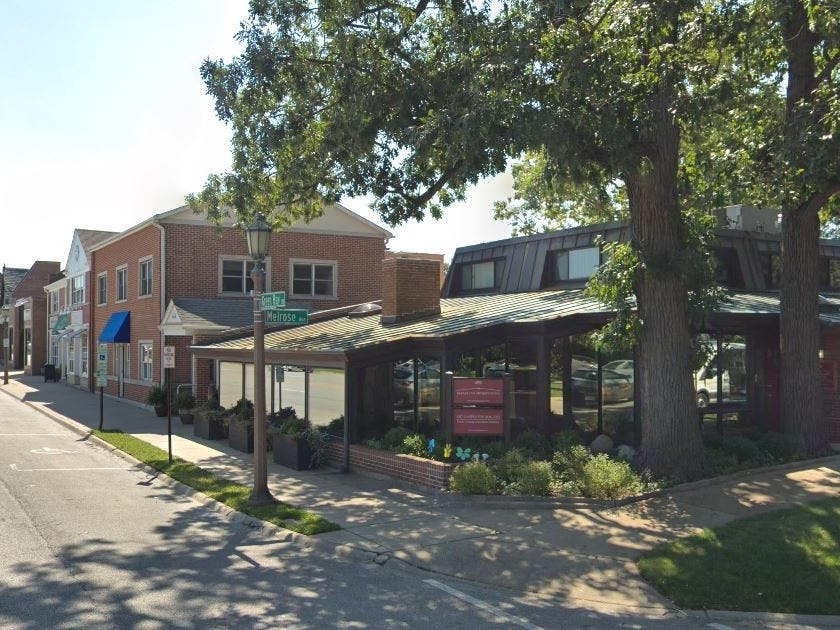
KENILWORTH, IL — Village trustees are set to vote later this month on whether to create a tax increment financing district in Kenilworth's downtown. Village officials say the move will "revitalize" the town's business district without increasing property taxes. But residents opposed to the proposed TIF district warn it will divert taxpayer money into an unaccountable "slush fund" and the pockets of developers.
Kenilworth is the richest ZIP code in the state and the eighth-wealthiest in the nation. But without the creation of a $23.7 million redevelopment project, its business district risks becoming blighted, according to a consultant's report commissioned by the village. The village board is set to vote on an ordinance creating the district on July 15, despite lacking the backing of any local school districts.
TIF districts are an economic development tool governed by state law that municipalities can employ. The districts divert property tax revenues generated by increases to property values within their boundaries away from the public bodies that would otherwise receive them. Instead, the "incremental" revenue is deposited into a village-managed TIF fund.
Find out what's happening in Wilmette-Kenilworthfor free with the latest updates from Patch.
Money in the fund is then set aside for improvements to infrastructure, facades, assembling properties or environmental cleanup. Illinois has more than 1,300 TIF districts across over 440 jurisdictions, according to the village. The idea is to spur increases in private investment and leave the area with higher property values once the TIF expires, leaving all its taxing bodies to benefit from the growth. More than $1 billion of the $14.4 billion in Cook County property tax was due to TIF districts, former Clerk David Orr announced last year.
According to village staff, the proposed Green Bay Road TIF currently generates about $1 million in tax revenue. Over the life of the district, which could last until 2042 if approved, they hope to increase the tax revenue provided by the area to $3.6 million, according to the village's website.
Find out what's happening in Wilmette-Kenilworthfor free with the latest updates from Patch.
Last month, Village President Ann Potter released a letter to residents explaining why she supported the establishment of the Green Bay Road TIF. She said the village's 2008 comprehensive plan identified the decline of the business district as a concern.
"Our business district is an under-utilized asset that I feel has great potential," Potter explained. "Most successful downtowns provide residents with options to shop, dine, and naturally establish a sense of place for the community. A result of this vibrancy is an increase of property values and shift of tax burden from property taxes to sales taxes."
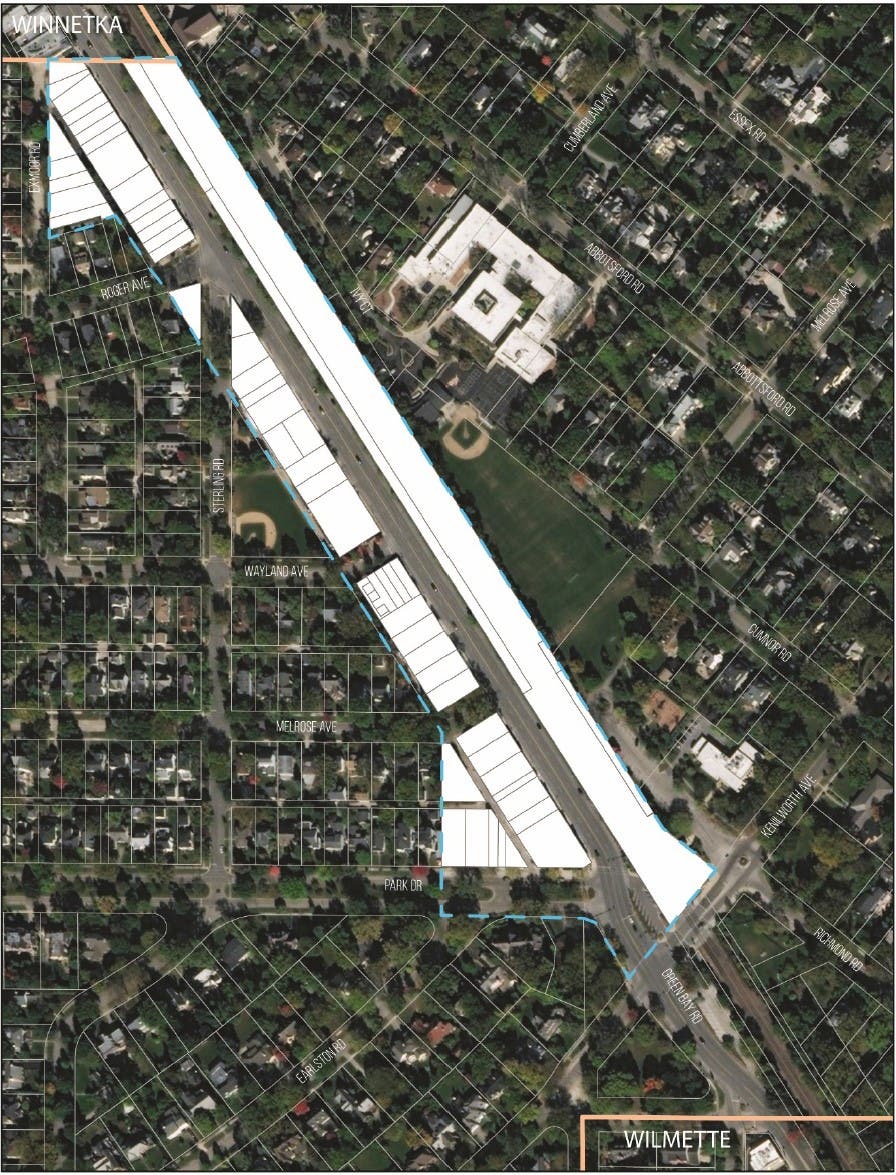
The municipality must show that without the public investment, redevelopment would not take place within a proposed TIF district's boundaries. Since the districts are intended to be established only in areas that would not otherwise be developed, Illinois law sets out eligibility standards for their creation, sometimes called the "blighting requirement."
According to the redevelopment plan prepared by Teska Associates, the 0.6-mile strip of Green Bay Road proposed for the district does not qualify as blighted. But it can be classified as a "conservation area," which "may become a blighted area."
Under state law, such an area is defined as one where more than half of the structures are at least 35-years-old — 94 percent of structures in the area qualify, according to the report — and which meets at least three other blighting factors. The report listed four: deterioration, inadequate utilities, lack of community planning and decline in assessed value.
A group of residents have organized the Our Kenilworth Committee in opposition to the creation of the district. Its website argued that establishing the TIF district would be financially risky and redirect school funding into "shadowy financing" for private developers. It also warned creating a TIF district would "raise property taxes and put Kenilworth taxpayers on the hook for millions in new debt," "fundamentally change the look and character of Kenilworth forever with high-density development and increased vehicle traffic" and "take away Kenilworth residents’ voice in changes to our community."
The village said its trustees have yet to discuss borrowing against the TIF fund, taking a "slow and measured approach" to any development, according to its website. It assured residents there "will be no high-rises coming to Kenilworth" and creating a TIF district will not grant the village new powers to "secretly issue debt."
A joint review board, which consists of representatives of all taxing bodies affected by the potential district, was not unanimous in support of the move. It did not have support from either of the two school districts who collected more than half of residents' property taxes.
In its nonbinding recommendation, representatives of the Village of Kenilworth, Cook County, the Kenilworth Library District, Kenilworth Park District and the member of the public appointed to the board voted to support the measure.
But the superintendent of New Trier High School District voted against the proposal and the superintendent of Joseph Sears School District abstained. Representatives of New Trier Township and Oakton Community College were absent.
The 15-acre area represents less than a quarter of a percent of New Trier's property tax base and 4 percent of Kenilworth's, according to village staff.
The "wait and see approach to redevelopment" has failed, according to a presentation from the May 20 public hearing on the district. Without the TIF, the area is anticipated to continue to deteriorate, its said. But with the TIF district in place, assessed property values in the area are expected to nearly quadruple by its 23rd year, rising from nearly $11.86 million to over $42.86 million.
Following discussions in 2017, neighboring Winnetka decided against a TIF district in its Elm Street business district. The same year, Highland Park approved a new TIF district along Route 41 and Old Skokie Road. In Northbrook, the village board declared the west side of Northbrook Court blighted and created a TIF district in May before approving final redevelopment plans last month, which included $27 million in economic incentives for developers.
UPDATE: The Village Board adopted ordinances establishing a TIF District by a 6-0 vote at its at its July 15 meeting.
Get more local news delivered straight to your inbox. Sign up for free Patch newsletters and alerts.