Arts & Entertainment
Recital Shows off Bahá'í Temple's Rare Piano
Local pianist connects with Bösendorfer for a powerful afternoon of music.
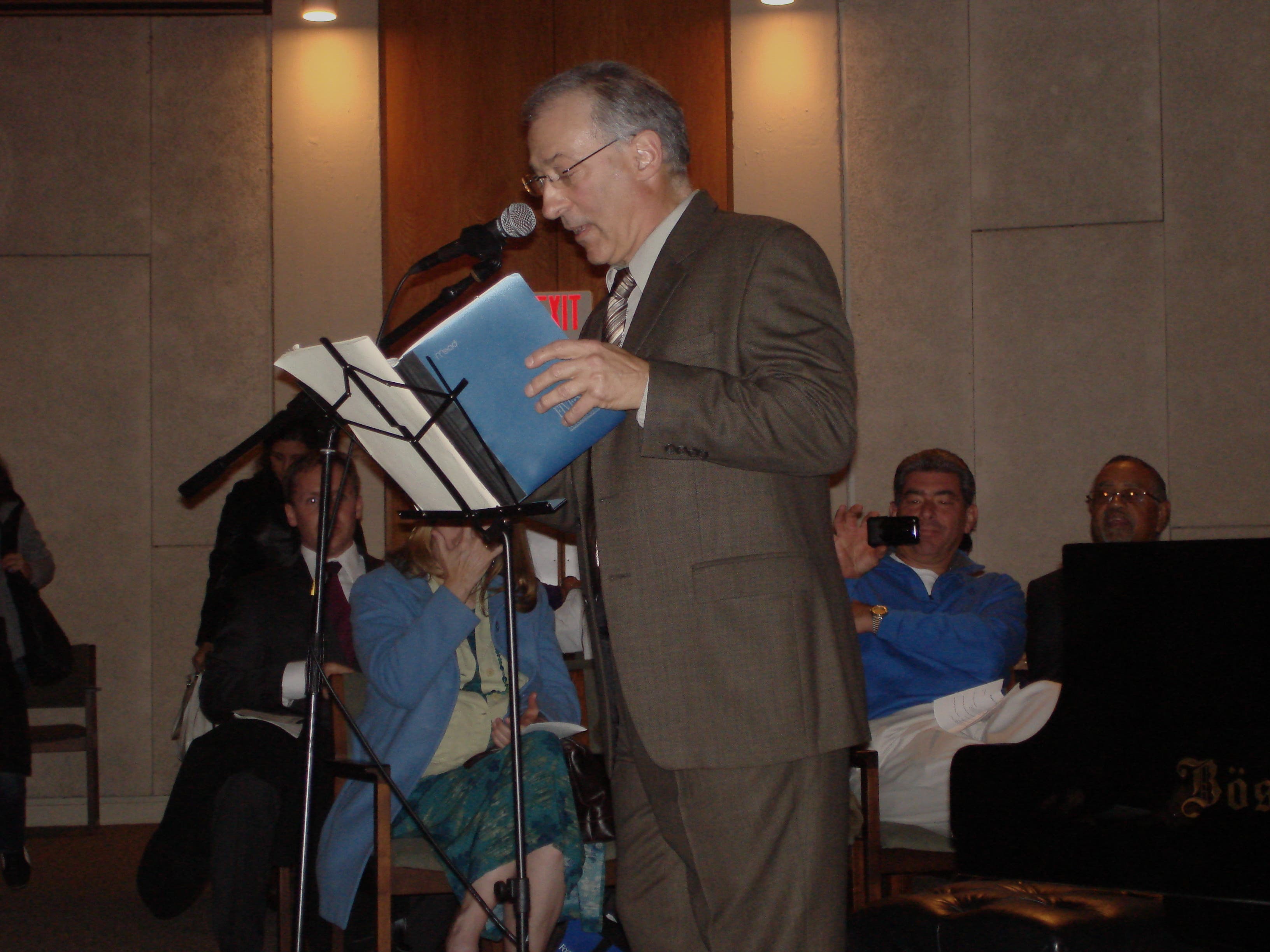


Dark, creamy flourishes flowed fervidly from the rare Bösendorfer Model 290 Imperial concert grand piano.
Earlier this month, the Bahá'í House of Worship was filled with delectable 19th and early 20th Century classical music, presented on this unique instrument by pianist Salvatore Spina.
While all good musicians must have an intimate connection with their instrument, Spina's association with the Bösendorfer Imperial may run deeper than most.
Find out what's happening in Wilmette-Kenilworthfor free with the latest updates from Patch.
Since 1978 he has been servicing pianos as a technician and for the past six years, has specialized in servicing the Bösendorfer line. In that capacity, Spina has had the exceptional privilege of touring the Bösendorfer Manufactory in Vienna.
But unlike the majority of musicians, who tote their personal instruments to every concert, pianists are often at the whim of the venue.
Find out what's happening in Wilmette-Kenilworthfor free with the latest updates from Patch.
"It can take performers 30 to 60 minutes to figure out the nuances of the instrument they will be performing on," Spina said, "but with the Imperial, I was comfortable in about 15 seconds," a testament to the playability of the Bösendorfer flagship.
Attesting to the iconoclastic nature of the instrument, he disclosed during the recital that the Bahá'í's Imperial likely is the only functioning model in the Chicagoland area.
The piano was generously presented to the Bahá'í House of Worship from an anonymous donor in 1998, according to music director Van Gilmer.
Perhaps the most distinguishing feature of the Imperial — apart from its brilliant, dark voice — is its extended keyboard.
Whereas typical pianos have 88 keys, the Bösendorfer Model 290 has 97—fully eight octaves—with the extra nine keys added to the bass end of the instrument. The added deep hues of the Imperial contribute to the low richness that is a trademark of the Bösendorfer brand.
Spina showcased that distinctive richness as the Imperial rollicked and frothed through Chopin's Polonaise in F-sharp minor and slithered around the sweet jazzy harmonies of Ravel's Sonatine.
The full timbre of this rare beauty was patently evident as Spina played late works by Brahms and the difficult Appassionata Sonata of Beethoven.
The concert was held in the Bahá'í House's Foundation Hall, in deference to Temple regulations and tradition.
An accoustician might note that the circular shape of Foundation Hall, coupled with its domed ceiling, may cause the music to appear turbid, but Spina's sound was lovely and transparent throughout. The atmosphere was made more pleasant with the addition of audience seating on three sides of the piano, as in 18th and 19th Century chamber concerts.
Concert attendee and administrative assistant for the Bahá'í House Christina Wright said the setting was engaging.
"I was very excited about the way the seating was arranged," she said. "Creating a horseshoe around the piano created a much more intimate atmosphere than if [Spina] had been up on the stage."
The Bahá'í House of Worship periodically hosts events, such as this recital, that are free and open to the public. The Temple's schedule posted to its online website calendar.