Neighbor News
Identifying Dyslexia
Dyslexia is the most common learning disability in our schools. Twenty percent of people have some form of the learning disability.



Warning Signs
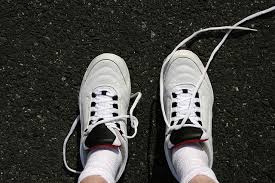
What if twenty percent of students had a learning disability that went undiagnosed? What if these students were incorrectly diagnosed or never identified? This is happening every day in our schools. Do you know a child who has terrible handwriting from kindergarten? Do you know a child who painfully struggles with spelling? Do you know a child who mispronounces words long past the age where their peers have learned the correct pronunciation? Do you know a child who struggles to learn his address or phone number? How about a child who cannot figure out how to tie his or her shoes?
All of these seemingly random issues are often tied together. Many times they are ignored, or parents and teachers are at a loss to help a seemingly bright and intelligent student who cannot seem to put the pieces together and succeed in school. Teachers are rarely trained to identify their causes. These children are slipping through the cracks and very few are getting the kind of help that they need in order to help them succeed.
Dyslexia is not reading backwards or seeing words backwards or even letter reversals. Dyslexia is a common condition that affects as many as one in five students. These are intelligent students who should by all accounts be successful in school, but aren’t. Parents and teachers are often at a loss for how to help.
Find out what's happening in Yorkvillefor free with the latest updates from Patch.
A number of years ago, I attended a seminar on dyslexia because I believed that one of my students might have the condition. I was unsure of the symptoms but knew I needed to do all I could to help this students. While the presenter displayed symptoms and behaviors, I began to cry. Not only was I sure this student could be helped, I realized that my 16 year old son had all of the same behaviors and issues. While my son was in elementary school and middle school, I brought the question to the school district several times. Teachers, special education teachers, reading teachers all assured me it was not dyslexia.
What I Have Learned
On that day, I became an advocate for my own children and those I taught. Dyslexic students have a higher likelihood to suffer from ADHD. Half of dyslexics are left-handed. I have one son who is left handed, and one who is right handed. I am right handed in most things and am also dyslexic.
Find out what's happening in Yorkvillefor free with the latest updates from Patch.
In the preschool years, dyslexics often are late to speak. There is an increase in stuttering or grasping for words that will complete their thoughts. Learning their address and phone number are challenging. For the dyslexics, it is a random series of numbers and incredibly difficult to remember.
In school, spelling is the most painful experience. Remembering random letter order is a struggle. Have faith; there are ways to help make this easier. Reading aloud is a challenge. They are choppy and slow when reading aloud. This takes a great deal of effort and they become tired quickly. Dyslexics will often skip articles such as a, an, the, of, is, to, of. This is because they read words by their shape. They will choose the word that most likely matches the shape of the small words. Otherwise they skip it entirely. Many times they will switch entire words, car for van, trip for journey. They also mispronounce words such as basketti instead of spaghetti, aminal for animal. In small children, this is normal, however, by school age, most of these mispronunciations have been self-corrected.
Dyslexic children cannot manipulate words. Rhyming words is stressful and difficult. They see the entire word as one unit. They do not break words into sounds. Another horrifying task for a dyslexic student is when younger classes will play games where they are changing one sound in a word.
“Let’s start with bat. Change the t to a d. What’s the new word? Change the b to an s. What’s the word?” And so on. This becomes very overwhelming for a child who looks at language differently than the rest of the class.
Dyslexics tend to avoid the jump from picture books to chapter books. The pictures are their comprehension checks to verify their own understanding. Take the illustrations away, and the comprehension will decrease. This strongly impacts the students in the later part of second grade and into third grade. Dyslexics will regularly avoid punctuation when reading. They do not pause at the end of sentences, or rest at a comma. This too, will destroy comprehension.
Dyslexic students look at numbers and letters differently, as though they are a puzzle that must be analyzed. They bring their heads down as close to the paper as they can in order to recreate the letter or word. The lines on the paper may as well be invisible for many dyslexics in early grades. Their writing will never stay on that line! Dyslexics avoid writing! When they express their thoughts, their spelling limits their thoughts. They will also write without punctuation. It is one great thought.
Words are memorized in blocks or shapes. For example “it” is a short and a tall. “if” and “at” also fit the same pattern. A dyslexic student in kindergarten, first, or second grade will often throw out these choices when reading the words in isolation. He or she will pick the most common or most likely response. In the same regard, “sat,” “rat,” “sad,” all follow the same shape. That is why dyslexic students may read the word correctly on one page and incorrectly on the subsequent page. The inconsistency is confusing and frustrating for parents and teachers.
The good news is that there is help! Parents and teachers with dyslexic students do not need to work harder, they need to work smarter! If we approach reading as a logical task, and share the “rules” the students will begin to pick up reading much more easily.
(To read the complete article: http://juliedaniels.hubpages.com/hub/Identifying-Dyslexia)
This is the first in a series of articles helping families live with dyslexia.