Politics & Government
Why Iowa Dreamer Thanked President Trump For DACA Wind-Down
Des Moines resident Mónica Reyes says the immigration system is broken, DACA is only a Band-Aid and she wants to be part of the solution.


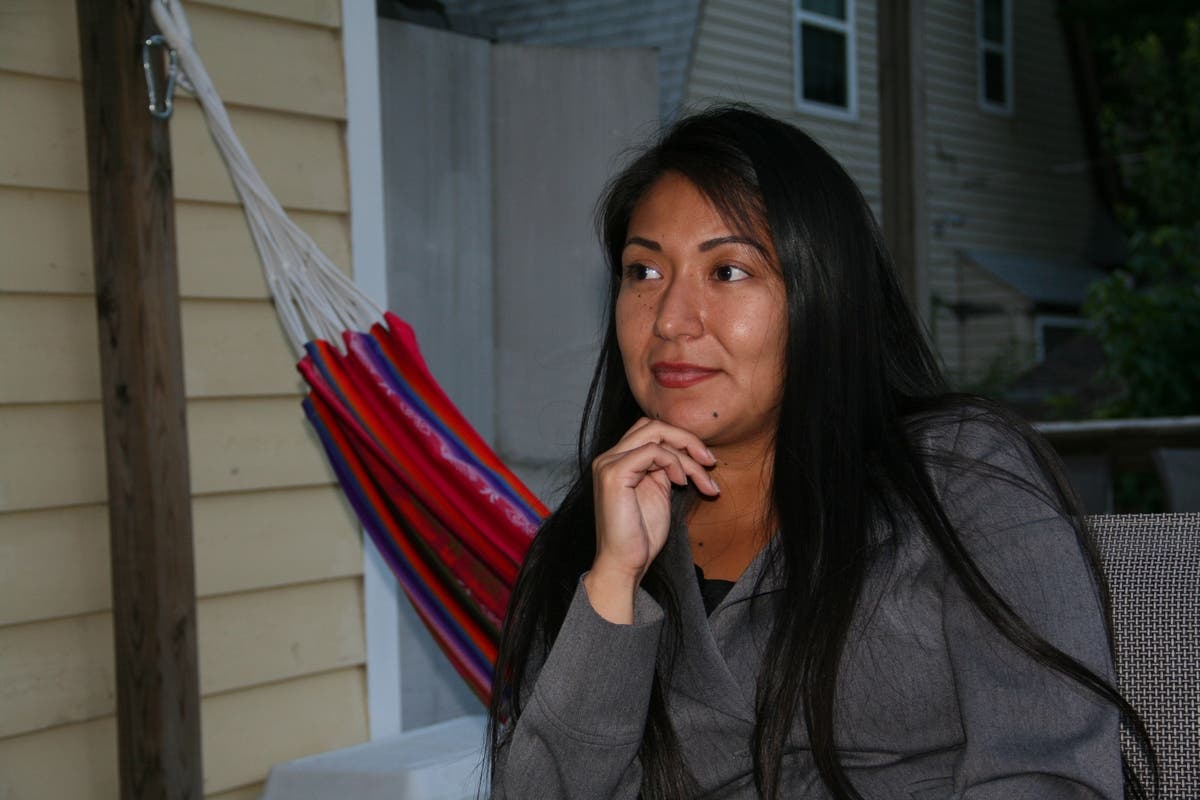
DES MOINES, IA — In the middle of America, her home since she was 3, “Dreamer” Mónica Reyes has two words — “thank you” — for President Donald Trump and Attorney General Jeff Sessions, who said Tuesday the administration would wind down the 2012 Deferred Action for Childhood Arrivals, or DACA, program and give Congress six months to legalize it.
The message may be surprising, given that DACA has allowed Reyes and about 800,000 other undocumented immigrants who came to the United States as children to remain here legally. And certainly, the prospect of being shipped back to Mexico, a place the now 26-year-old Des Moines resident barely remembers, is fraught with anxiety. But the immigration system is broken, DACA was never anything more than a temporary stop-gap measure and the Trump administration’s decision to walk back DACA provides an avenue to get it right, Reyes said.
“It’s great that Donald Trump encouraged Congress to act on the issue of immigration,” Reyes told Patch. (Iowa Patch is coming back. Find your local Iowa Patch here and sign up for real-time news alerts and free morning newsletters.)
Find out what's happening in Across Iowafor free with the latest updates from Patch.
But that’s where she breaks ranks with the president and his administration on the issue of immigration. Trump centered his campaign for the White House around promises to create barriers — some physical, like a wall to seal off the southern U.S. border with Mexico, and some legal, like ending DACA — to make it more difficult for Mexicans to enter the United States.
“It’s an attack on our community, for sure,” said Reyes, who says immigration reform efforts should create “a more elastic and efficient system that is welcoming to all.”
Find out what's happening in Across Iowafor free with the latest updates from Patch.
Also See: States Challenge Trump's DACA Decision In Court
“Family is part of the core of the American way of life,” she said. “We must come up with legislation that is in line with those values and keep all families together.”
As things stands now, Reyes could be deported when her DACA protections expire in two years. She could be separated from her husband, who is a U.S. citizen, as well as a younger sister born in the United States, and extended family members and lifelong friends. Her mother, who has found work as a bilingual interpreter for Des Moines police, state courts, hospitals and clinics and has been offered full-time jobs she can’t take because of her immigration status, could be deported as well.
Nowhere To Turn
Reyes’ mother fled Mexico and crossed the border with her young daughter to escape an abusive partner.
“The last time he beat her, he left her in very bad condition,” Reyes said, noting her mother’s batterer only spent two days in jail. “There was nowhere she could turn for empowerment and support.”
Reyes’ childhood was difficult. The family didn’t have a car, so they pushed a baby stroller full of dirty clothes to a Laundromat. She battled sexism and violence in her own family, and even a class system that exists among immigrant families, who looked down on immigrants without papers “as less than,” she said.
But in America, families like hers who came to the United States with nothing but a desire for a better life, can succeed, she said.
Reyes has proven that. Her life mirrors America’s expectations of its citizens.
After living, studying, working, paying taxes and “participating like any other person” as an undocumented immigrant, Reyes applied for DACA protections in 2012 as soon as former President Obama made the program available through an executive order. She got a driver’s license for the first time in her life, a Social Security number and, as a result of both, a better paying job that increased her tax contributions to her adopted country.
“Within a year of DACA, I was able to buy a house and finish my education,” said the University of Northern Iowa graduate, who majored in sociology and centered most of her papers and research around immigration issues.
Now a mortgage lender for a Des Moines credit union who is buying her second house, Reyes says her life doesn’t look that much different than those of the other 2,798 Dreamers in Iowa. Of that group, 2,434 Iowa Dreamers have jobs. According to some estimates, ending DACA would result in a loss of more than $400 billion from the American GDP, with more than $188 million of that activity occurring in Iowa.
She is also a tireless volunteer who works with immigrants and refugees to help them assimilate, but also with kids born into generational poverty — something Reyes well understands after having broken through it.
And while Trump hammered away at immigrants — “When Mexico sends its people, they’re not sending their best ....,” he said in June 2015 when he announced he was running for president. “They’re bringing drugs. They’re bringing crime. They’re rapists. ...” — the reality is much different, said Reyes.
DACA recipients went through an intense vetting process to sort out the lawbreakers and endured background checks, multiple interviews with the State Department, multiple fingerprint screenings, disease screenings and many layers of security checks.
“My mom and me and my other immigrant friends stay as far away from calling any kind of attention to ourselves,” she said. “We walk a very fine line, have obeyed this country’s laws and have the utmost respect for the law.”
Of course, there are exceptions, but the same can be said for any group, Reyes said.
Terrible Tuesday For Dreamers
Tuesday was a terrifying day for Dreamers nationwide, who fear they will be uprooted from the only lives they known and plunked down in a country whose customs they don’t understand and whose political system can be dangerous even for people who have lived their entire lives there.
For immigrants who have lived most of their lives in America, deportation to Mexico would be “like traveling to England,” Reyes said. “You know the language and can read it, write it and get by with it, but there are a lot of things that may be socially acceptable for us, but not in a culture that is very different.”
Reyes, who learned through her difficult childhood to stand up for herself, knows that she wouldn’t fit in the place she was born, and that she would likely have to become a less empowered, meeker version of herself to succeed.
“I speak up when I see something wrong, but if you do that in certain countries, you might not live very long,” she said bluntly.
Deportation may be in her future, but for now, Reyes says she will use her “insider’s perspective as someone who has been through a system that is definitely broken” to affect change.
“I’m more than happy to be part of the solution,” she said. “We are living globally with the exchange of ideas and commerce,. The United States is a global power, and it’s time for this country to fix the broken immigration system. There are 12 million people who came here illegally, but let’s talk more about the root of the problem.”
She has a few solutions in mind.
“Why not have a check-in system that issues Social Security numbers and work visas for people who are here to work and do so peacefully?” she said. “Everyone benefits from new immigrant families and visitors checking in.”
Dreamers and immigrant families don’t expect giveaways or “born rights,” she said, but intelligent reform and a pathway to legal citizenship. Also, Reyes emphasized, immigration reform shouldn’t break up families.
“It should not separate youth, who through no fault of their own, were brought here, and separate them from people like my mom who made the decision to break the law so their children would be able to accomplish some of the same things I’ve been able to accomplish,” she said. “We need to protect the original Dreamers, who are our own parents.”
While immigration issues are sorted out, Reyes refuses to give in to fear of deportation.
“I will keep chipping away at my dreams,” she said. “And I’m going to accomplish them, whether or not the government acknowledges me as a citizen. My immigration status does not define me as a person. Contributions and actions speak louder.”
More About Iowa Dreamers
Reyes is also the lead activist for DREAM Iowa, an organization she founded with her sister, Nilvia Bownson, after both enrolled in DACA. Among the group’s projects was a documentary, “Every DREAMer Has A Story,” which you can watch below.
Patch photo
Get more local news delivered straight to your inbox. Sign up for free Patch newsletters and alerts.