Schools
More than 2,000 Kids Among Story County's Hidden Hungry, Panel Tells Ames Crowd
Almost half of the students in three Ames elementary schools are eligible for the free and reduced lunch and breakfast program.


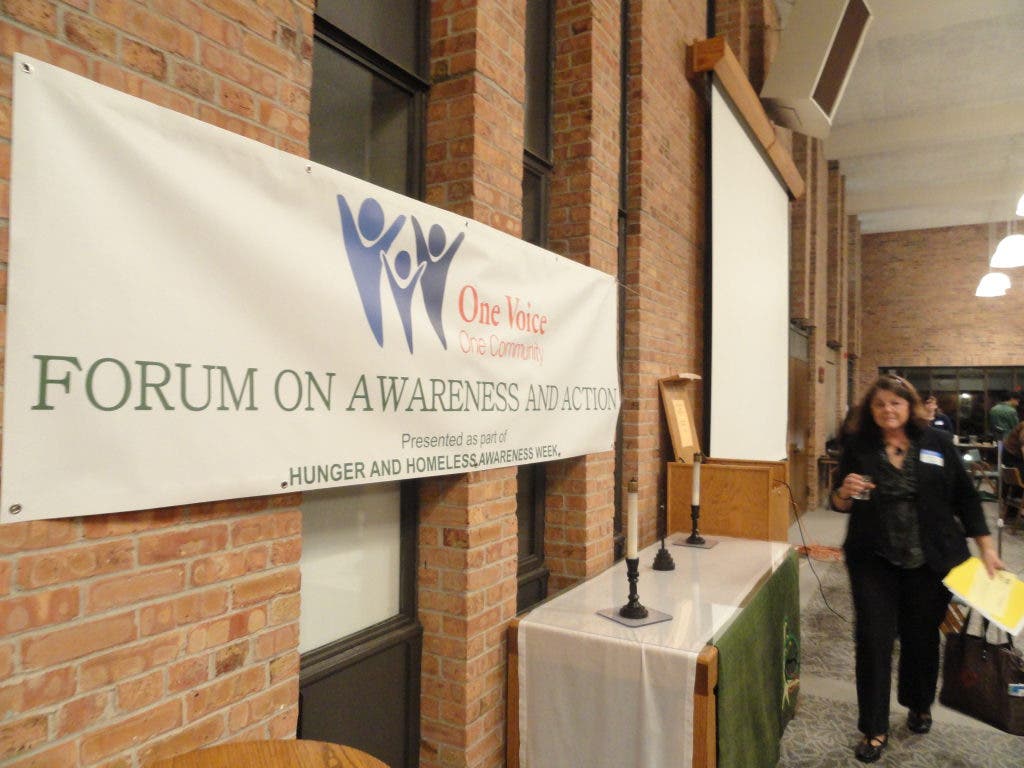
Staff members at an Ames elementary school used to worry about kids having Christmas gifts over the winter break, a group of about 200 people in the learned at Monday's Fighting Hidden Hunger forum.
Now, they worry whether students will have something to eat.
For Principal Pam Stangeland, the approaching four-day Thanksgiving weekend and the two-week winter break are more like a nightmare, because she fears many of her students will spend those days hungry.
Find out what's happening in Amesfor free with the latest updates from Patch.
In October, 44 percent of students at the school were eligible for its free and reduced breakfast and lunch program.
About this time last year she told another educator, “My biggest fear is coming up, my biggest fear is I can ensure they have those two meals a day … I don't know what happens over the weekend. I don't know what happens over the holiday break,” Stangeland said.
Find out what's happening in Amesfor free with the latest updates from Patch.
Families at 130 percent and 185 percent of poverty are eligible for the free and reduced meal programs. A family of four earning $29,055 or less in 2011 would be eligible for the national free lunch program and that same family would be eligible for reduced-price lunches if earnings were $41,348 or less.
Stangeland said Kate Mitchell no longer has the highest percentage of impoverished students in the district. It is tied with , where 44 percent of kids are also eligible, and at , 45 percent of kids are eligible for the program.
In 1986 about 12 percent of kids in Ames were eligible for such programs and their parents might have been struggling college students, but Stangeland said generational poverty seems to be the root of today's numbers.
It's been passed down from “generation to generation and they do not know how to dig themselves out of this,” Stangeland said.
Stangeland said the problem hit her in the face when she tried to reward a challenging kindergartner with a sticker or a Tootsie Roll for behaving well. The girl said she would take a sandwich.
Another time a student Stangeland called Jordan came to school on a snowy day when there was no school. She offered to give the first-grader a ride home and while he waited in the office he asked if the school was serving breakfast.
When she told him no, the look on his face was indescribable, she said.
“I'm not going to get breakfast or lunch today,” he told her.
She stopped at McDonald’s on the way to his home.
To combat the problem the school has implemented a community garden and backpack buddy program in which students are sent home with food.
Representatives from area food banks said the need for food seems to have gotten worse.
Jordan Vernoy, Iowa Food Bank Association state director, said a growing number of people are what he calls food insecure, meaning they lack adequate access to food that meets nutritional guidelines. In Story County, 14 percent of people are considered food insecure and 2,570 of them are children. Hidden hunger lies within those numbers. About 45 percent of the county's food insecure are not eligible for public assistance, he said.
Laura Miller of the Bethesda Community Food Pantry said they've seen a recent increase in the number of people asking for help.
Miller said they serve about 400 families (about 1,500 people) every month, but in the past four weeks they had to cut the amount of grocery vouchers from two per family to just one.
“If we were to keep at the current rate, we are going to run out of money too,” Miller said.
Get more local news delivered straight to your inbox. Sign up for free Patch newsletters and alerts.