
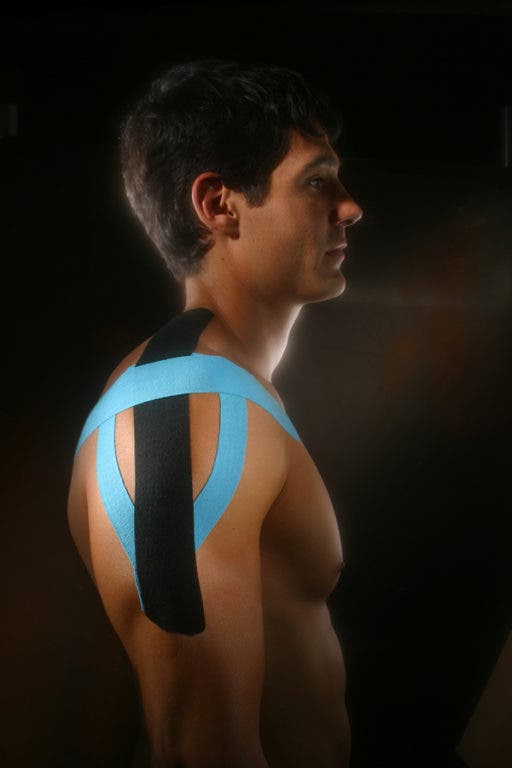

According to Training Edge Magazine by NASM kinesiology tape seems to be sticking as a trend - here's why.
The innovation began in Japan more than 30 years ago. But kinesiology tape really caught on after the 2008 Olympics. Made of a cotton material with an acrylic adhesive, the tape has a one-directional stretch of 40% to 50% of its resting length. Once applied to the skin, its meant to mimic the elasticity of human tissue. Here are the potential benefits by Nick Tsaggarelis, BKin, DC, DAc, MEd, COO and director of professional education of Collabborans.
1. Manage Pain - The tape acts through sensory gating mechanisms similar to rubbing the skin, helping to manage pain and normalize muscle activation and control.
Find out what's happening in Ankenyfor free with the latest updates from Patch.
2. Optimize Performance - If someone has poor glute activation, you can incorporate tape to help - similar to how a trainer would put a hand on a client to help activate muscles.
3. Improve Posture - The tape can be placed on shoulder blades to remind clients not to slouch. It creates stretching sensation, so people can be aware of bad postural positions.
Find out what's happening in Ankenyfor free with the latest updates from Patch.
A 2012 Sports Medicine review found the tape may have a small beneficial role in improving strength, range of motion in certain injured cohorts and force sense error. The tape is noninvasive, relatively inexpensive and might be worth a try.
From my own experience, through my chiropractor at Optimal Health, I have found the tape to be beneficial.
Side Note - Soak the tape in the shower or bath before removing.