Health & Fitness
Small Business Cuts Costs with SaaS
Reduce the upfront computing investment for your growing business with SaaS and pay for only what you need by scaling up or down on-demand.

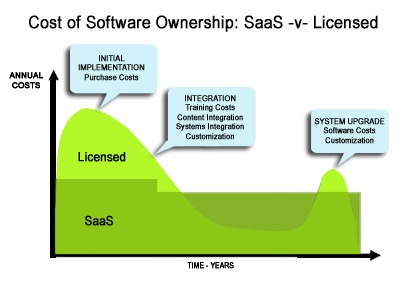
Software as a Service (SaaS) is a form of cloud computing, where you use a browser and the internet to access a program or application that's hosted and managed on a remote server. The appeal to small businesses is pretty obvious; it's cheap and flexible. The cost is typically less than paying for licenses and maintenance fees since SaaS pricing is based on a monthly fee. In many cases, software licences and maintenance fees can be (an annual) 20 percent of the initial software purchase price.
Growing companies don't need to invest in additional hardware, handle the installation or set-up or deal with upgrades and maintenance. Your business has the advantage of getting an application up and running more quickly while minimizing the upfront investment in the software and license fees. Since typical access is browser-based, you can use the software from a wide range of desktop and mobile devices.
A very simple example is people that use Gmail or Yahoo mail services. Users can access their account on these services from any personal computer, a tablet or a smart phone (anywhere). SaaS just goes further for business, an entire company and thousands of employees can access their computer tools as online rented products. As your business grows and you need to add more users, just adjust your monthly SaaS subscription instead of buying more software licenses and in-house server capacity.
Here's an example: you want to expand your computing capabilities of your two cosmetology business locations in Ankeny and Waukee. You need new software tools for your book keeper, two receptionists and your other staff. As the owner, you also need mobile access for yourself and your part-time sales person. Instead of hiring a part-time IT person to build a system and purchase the equipment and software, you use an SaaS provider to gain access to the software and files from the cloud through SaaS. This reduces start-up costs significantly, speeds implementation and reduces IT maintenance costs by spreading those lower SaaS subscription costs out over time.
There are some downsides to consider with SaaS; nothing is really perfect. Obviously, you must have an Internet connection at your business location(s). Some SaaS programs run a little slower, not painfully, just not quite as fast as desktop software. Likewise, the functionality of some programs is not quite as refined or as full as the same desktop software applications. However, these are usually minor functions or features and this aspect continues to disappear as SaaS refinements are added.
The question of moving your business to SaaS is a good one if you think about it. Compare the monthly costs of cloud hosting to the overall cost of a standard software program, including the price, licensing and upgrade fees. This is the only way to determine if you’ll save money in the long run. In the end, if SaaS meets your business needs, you can achieve your Return of Investment (ROI) faster!
To learn more how SaaS can help your business grow without a huge capital investment, please visit: www.savvisdirect.com