Politics & Government
3 Weeks After ‘Dreamer’ Is Deported, Mexican Drug Gang Kills Him
An Iowa "Dreamer" was deported to one of the most dangerous areas of Mexico, and three weeks later a drug gang slit his throat.


DES MOINES, IA — An Iowa “dreamer” who was deported to Mexico was brutally killed by drug lords three weeks after he was forced to leave what is essentially the only country he ever knew. Manuel Antonio Cano Pacheco, who came to America without a visa with his parents as a 3-year-old, was due to graduate from high school when immigration agents arrested him earlier this spring.
Pancheco had lived for years under Deferred Action for Childhood Arrivals program deportation protections that shielded him and most other young people who came to America as young children without proper paperwork.
His death illustrates the peril the so-called dreamers face when they’re deported. Not only are they often strangers in a foreign land, they are many times thrown into a chaotic system controlled by drug gangs.
Find out what's happening in Des Moinesfor free with the latest updates from Patch.
When his throat was slit, Pacheco was living in Zacatecas, one of the most dangerous places in Mexico a deportee can land. He and an acquaintance of one of his cousins, who apparently was known to the killers, were ambushed and killed.
A federal immigration judge terminated Pacheco's DACA status because he had two misdemeanor convictions, U.S. Immigration and Customs Enforcement said in a statement to Des Moines Register columnist Rekha Basu. The agency said Pancheco’s status came to their attention when he was stopped for speeding last fall and charged with driving under the influence.
Find out what's happening in Des Moinesfor free with the latest updates from Patch.
Pacheco wasn’t technically deported, ICE Public Affairs Officer Shawn Neudauer said in the statement. Rather, ICE deportation officials escorted him to the border at Laredo, Texas, on April 24, under what’s called a voluntary departure process that doesn’t carry the penalties of a formal deportation process.
“But the impact was the same: Manuel had no choice but to go back, either as a deportee or in a ‘voluntary departure,’ ” Basu wrote. “He chose the ‘voluntary’ route.”
Pacheco "was in the wrong place at the wrong time,” his friend in Des Moines, Juan Verduzco, 20, told Basu after he and several others joined for a June 3 memorial service at Des Moines' Trinity Las Americas Church.
Zacatecas is located in north-central Mexico, northwest of Mexico City. Pachero's family and millions of other Mexican immigrants lived before coming to the United States. The homicide rate there is skyrocketing, and last year, Mexican authorities linked the discovery of 14 bodies in a mass grave to violent drug gangs. In some cases, bodies were dismembered or handcuffed, Zacatecas prosecutor Francisco Murillo told reporters at the time.
A report by Alfredo Corchado, the Border-Mexico correspondent for the Dallas Morning News, says drug gangs prey on deportees, particularly in the particularly in the Texas-Tamaulipas region, where the unsolved killings and kidnappings of deportees is regarded as a humanitarian crisis. Oftentimes, the report said, desperate-for-money gang members kidnap recent deportees and hold them for ransom until relatives in the United States pay for their release.
The states of Tamaulipas as well as the Coahuila, which Zacatecas borders, are among the most dangerous crossing points into Mexico. More than 31,000 U.S. deportees entered Mexico through those states from January to June 2017, according to Mexico’s immigration service, and the U.S. State Department regularly issues travel alerts and warnings for that part of Mexico.
Sending deportees to those regions is “willful blindness on the part of the United State and binational conspiracy on the part of the United States,” longtime El Paso immigration lawyer Carlos Spector told the Dallas newspaper.
Shawn Neudauer, the ICE spokesman from Des Moines, told Basu that once deportees are turned over in the country of origin, “they are the responsibility of their own government.”
Corchado of the Dallas newspaper reported that Mexican officials have pressed the U.S. government to transport deportee to safter interior locations, ideally Mexico City. Sen. Marco Antonio Acevedo, who represents Zacatecas, said there is “growing debate” in Congress on the need to protect those deportees.
“We need to find other places less dangerous to deport them,” he said.
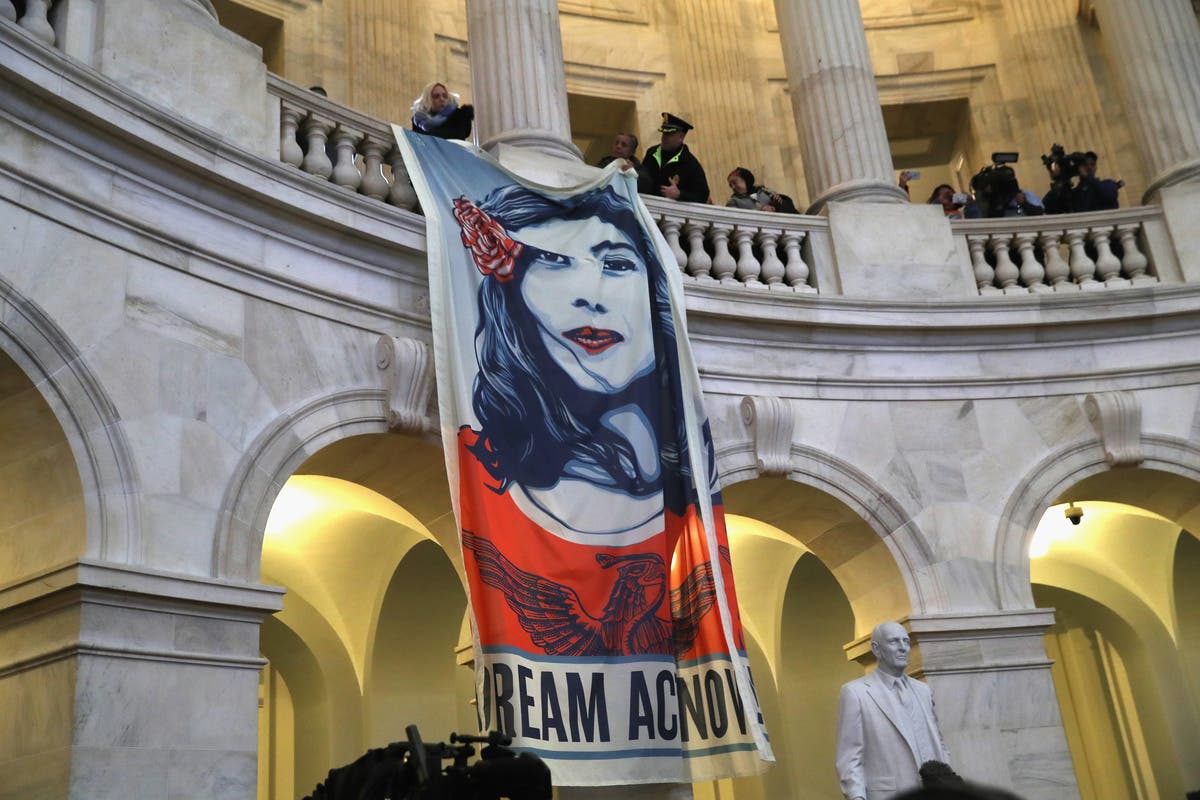
Image: Immigration activists conduct an act of civil disobediance in the rotunda of the Russell Senate Office Building on February 7, 2018 in Washington D.C. A coalition of activists from across the U.S. staged the demonstration to pressure Congress to pass legislation protecting 'Dreamers' as part of federal budget negotiations. (Photo by John Moore/Getty Images)
Get more local news delivered straight to your inbox. Sign up for free Patch newsletters and alerts.