Community Corner
Memorial Tree Planted With Mom’s Ashes Yanked For Amphitheater
In Des Moines, Iowa, about 180 flowering crab trees planted as living memorials will be torn out in one of the nation's largest urban parks.


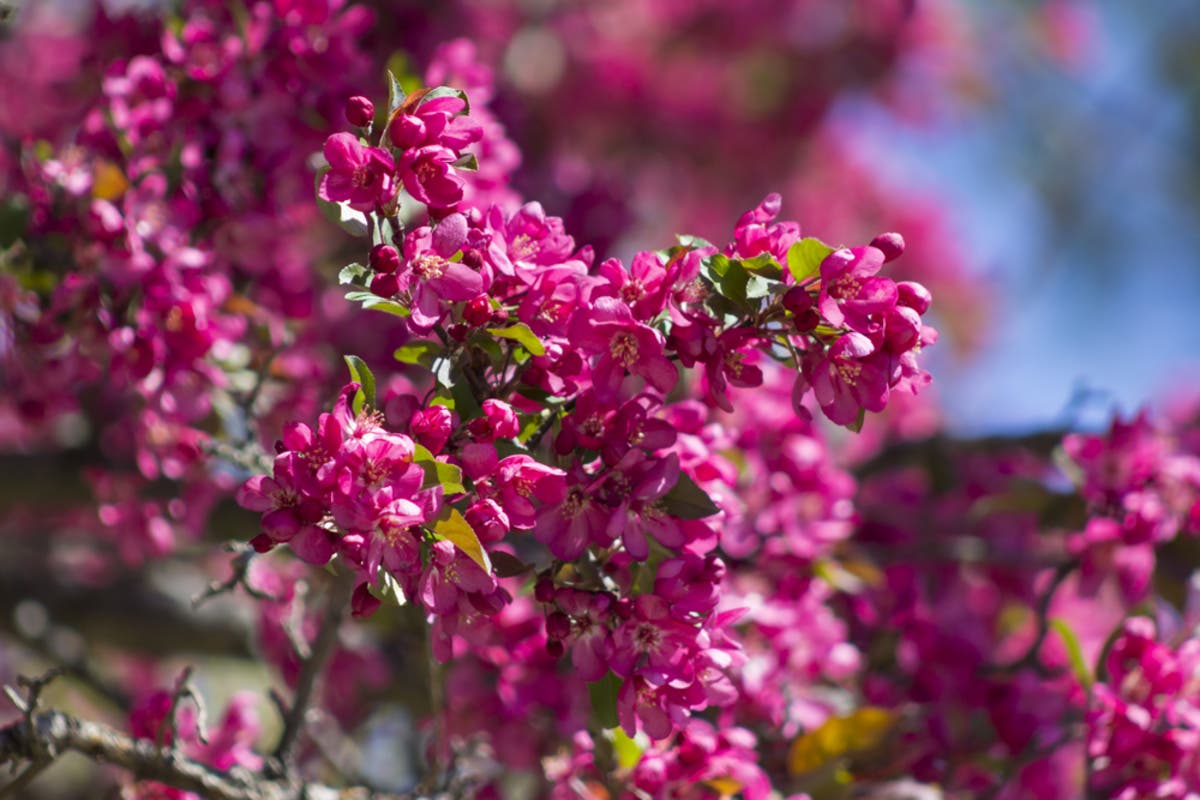
DES MOINES, IA — Ruth Cook loved crabapple trees. When she was living, she tried to grow them, but the saplings never took root. She died a decade ago, and friends of her daughter, Michelle Eash, donated a living memorial, a flowering crab that sits on the edge of an arboretum at Des Moines Water Works Park, where it and 1,200 crabapple trees bloom in a glorious canopy of pink every spring.
But that won’t happen this year. The tree is one of 180 memorial trees that will yanked out to make room for a $9 million improvement project that includes an amphitheater, playgrounds and room for food trucks and art vendors. Planning has been in the works for years.
The Arie den Boer Arboretum is a sacred place for Eash, who buried some of Cook’s ashes at the base of the tree and expected it to outlive her.
Find out what's happening in Des Moinesfor free with the latest updates from Patch.
“I ride my bicycle a lot, and when I go through the park, I stop to see the tree and talk to my mom,” Eash told Patch. “It gives me a sense of peace. She would be so happy to see that tree and how pretty it is.”
Her mom is buried two and a half hours away from Des Moines in Roseville, Iowa, so getting to the cemetery to visit her requires planning. Eash visits her mom’s tree often, hanging whimsical wind chimes and crosses from the branches and adding small seasonal decorations.
Find out what's happening in Des Moinesfor free with the latest updates from Patch.
The timing of the tree removal is particularly cruel for Eash, occurring around the 10-year anniversary of Cook's death on March 24, 2008.
“I wish they had said that this may not be a permanent thing,” Eash said. “I wouldn’t have put the ashes there. It was my choice to put her ashes there — it was a little bit of something from my mom at a tree she always wanted.”
It did seem the tree was permanent.
“I was always under the understanding that if a tree doesn’t make it or dies, the city would replace it,” Eash said. “What bothers me most — why couldn’t they have incorporated the trees in the improvements?”
Eash didn’t directly find out the tree would be removed, but learned from the friends who bought it that the 180 memorial trees would be removed to make room for improvements at the nearly 1,500-acre park, one of the largest urban parks in the country. Eash said her intent isn’t to start a community uproar, but she wonders how many people who didn’t directly purchase the trees are unaware the living memorials are being uprooted.
“People don’t know it’s happening,” she said. “They waited until last week to tell us.”
Water Works CEO Bill Stowe said the tree removal is unfortunate, but unavoidable.
“We certainly regret the fact that people thought they'd have a tree planted here forever,” he told KCCI-TV.
In compensation, Des Moines Water Works is giving memorial donors crabapple tree saplings they can plant at their own homes or other sites — just not at Water Works Park. They’ll also get their trees’ memorial tags, and at some time in the future, “a memorial feature will be constructed that will include the name of the donors,” the utility said on its website.
“I understand it’s hard for them, and they’ve been very kind,” Eash said of the Water Works staff. “I understand changes. I love Water Works Park, and I ride my bike there. I just wish the community could continue to enjoy the trees and stop to remember someone or find out someone they knew had passed.”
Only a fraction of the 1,100 memorial trees are affected by the 90-acre improvement project. In all, there are about about 2,800 trees in the park, the majority of which will be untouched by the improvements.
Des Moines Water Works said crabapple trees have a “relatively short lifespan” of only about 30 or 40 years and don’t tolerate flooding well. The park, situated along the Raccoon River on Des Moines’ South Side, floods frequently and new trees planted will be more resilient, the utility said.
Photo via Shutterstock
Get more local news delivered straight to your inbox. Sign up for free Patch newsletters and alerts.