Politics & Government
Iowa City City Council Sidesteps Petition on TIF, Votes Again to Fund Moen Highrise Project
The council voted to take the recommendation of city staff and do what they voted to do originally, by slightly different means, thus avoiding a public election on the project.


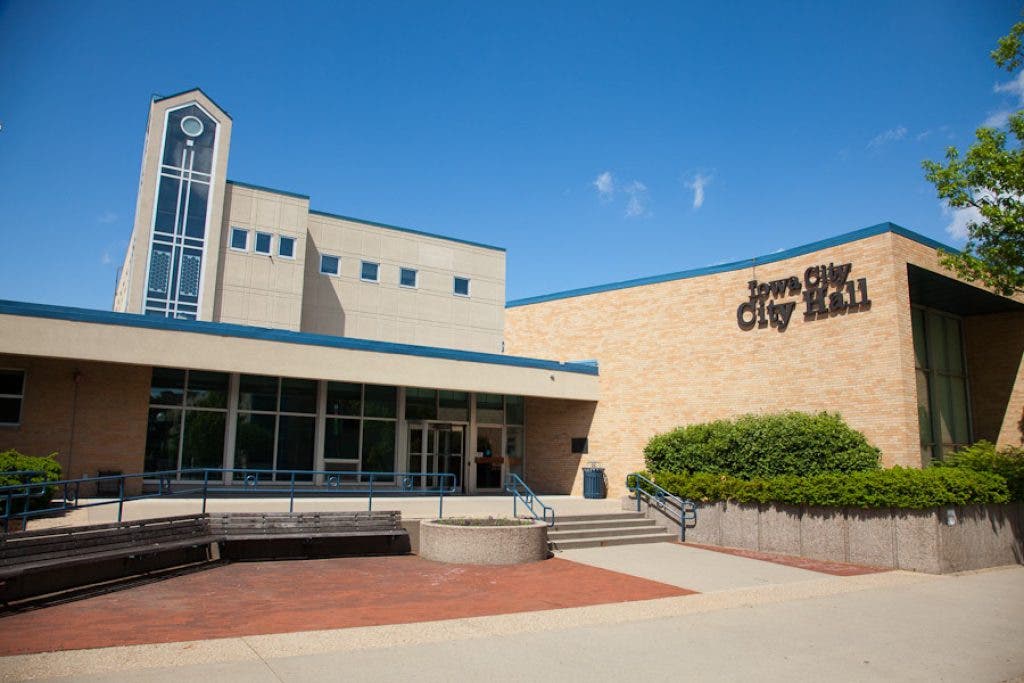
This week, Iowa City residents opposed to the city providing $2.5 million in Tax Increment Financing funding for developer Marc Moen's 14-story presented a valid petition for the city council's consideration, collecting 862 signatures compared to the required 697. The petition was intended to force the city council to either abandon the funding or put the issue to a public vote.
At its Tuesday night meeting, the city council did neither.
With a unanimous vote, the Iowa City City Council voted to turn down the funding of the Moen project through the sale of general obligation bonds, thus invalidating the petition that it otherwise would have had to follow. The council members then voted to approve funding the project with revenue bonds instead, a different funding method which cannot be challenged by petition under city code.
Find out what's happening in Iowa Cityfor free with the latest updates from Patch.
The petitioners, predictably, were not happy.
"It seems like contempt for the citizens of this city when you don't allow a public vote on something like this, when people have put their names on the line," said Caroline Dieterle, an Iowa City resident who spoke against the Moen project. "That is the worst thing about this whole affair."
Find out what's happening in Iowa Cityfor free with the latest updates from Patch.
James Knapp, of Iowa City, was also not a fan.
"You're railroading this down the throat of the taxpayers," Knapp said. "I think the project, if Moen wants to do it, should be done with his own capitol."
For his part, Moen was on hand as well, and argued once again that he would not be able to build the building on the site of the Wells Fargo Building on the Pedestrian Mall without outside funding sources: in this case, Tax Increment Financing provided by the city.
Moen also rebutted claims that he would be willing to build a smaller building on the site without TIF.
"There's no way we're building a 12-story building or an any story building on that site if we don't get TIF funding for it," Moen said.
Moen said there had already been outside interest in the building, which will feature a mixture of residential and retail spaces.
As the meeting continued with contentious exchanges between petitioners and councilors, the councilors asserted that as elected officials they were going to make the decisions they felt are right, even if it was not popular.
Mayor Matt Hayek said that although he understands that part of the public doesn't not want the building, and others have problems giving public money to a wealthy developer like Moen, the development is necessary to compete with quickly growing neighbors Coralville and North Liberty as the city's traditional streams of revenue dry up.
"For decades we have had the luxury of being what I would call relatively complacent about growth," Hayek said. "And I would say that those days are over.
"All of the services that we have come to enjoy in Iowa City cost money, and we cannot rely on the steady 4.5 to 6 percent growth. That is what this is about."
Susan Mims, mayor pro tem, said that due to the longterm process and delicate research in economic development, it was not suited to be decided by public votes.
"We have a responsiblity to sit up here and set up policy for the community," Mims said. "We have to look at what is best for the economic development of the community over the long term."
Council member Rick Dobyns said due to the nature of the votes being unanimous, he felt comfortable not sending the vote to the public.
After the meeting, city attorney Eleanor Dilkes said it is unclear why revenue bonds are not able to be able to be challenged by a petition while general obligation bonds can be. She said it could be because the risk of general obligation bonds are measured against the full faith and credit of the city, whereas revenue bonds are restricted against the revenue of the urban renewal district.
This higher risk makes the interest rates higher, Dilkes said. In fact, over the projected 20-year period of the loan a revenue bond will cost approximately $170,000 more in interest than a general obligation bond would have.
City manager Tom Markus said that before the meeting Moen had agreed to pay this $170,000 difference so the cost of the two funding options would be identical.
Get more local news delivered straight to your inbox. Sign up for free Patch newsletters and alerts.