Politics & Government
Iowa City Patch City Manager Interview: Part Two, On Neighborhoods and High Density Apartments
In this interview with Iowa City City Manager Tom Markus, Iowa City Patch asks about Markus' was he thinks about city planning, stabilizing neighborhoods, and the resistance to high-density apartments.


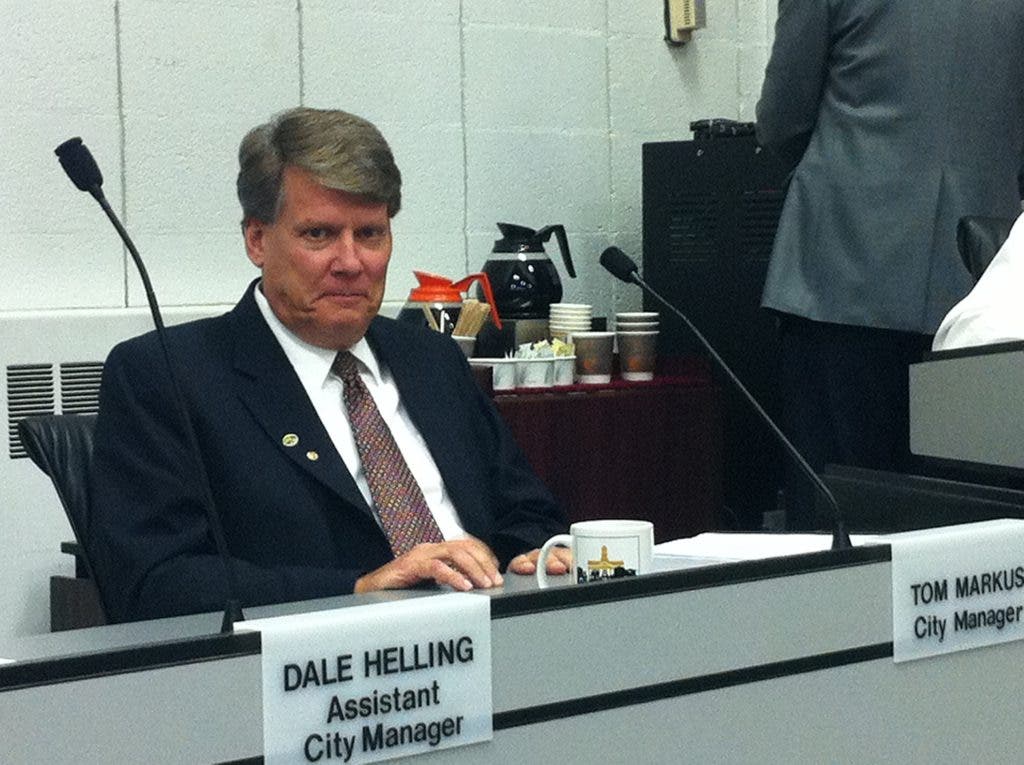
Iowa City Patch sat down with Iowa City City Manager Tom Markus last Thursday and talked with him about a variety of subjects, including high density apartments, maintaining neighborhoods, and the trouble with TIF.
In this installment, we ask Markus about his rationale for city planning, the reason to revitalize neighborhood downtown, and the reasoning behind discouraging high-density apartments in these areas.
(Editor's Note: This is an abridged and edited version of the interview)
Find out what's happening in Iowa Cityfor free with the latest updates from Patch.
In continuation of of this Interview, City Manager Tom Markus is here explaining how city governments should look at their planning decisions. This was related to how TIF or any other form of government incentives should be properly used in his view.
Tom Markus: When I look at a project, and I know that it needs an infusion of additional capitol, whether that be public or private, I have to have some rational basis to presume or expect that if I invest in infrastructure, I will be able to get some return on that investment.
Government needs to change its thought process, so that when we make an investment we consider what's our return on that. When we improve a street, for example, what's our return on that? Are we going to stabilize a neighborhood? Are we going to bring people who in that create new investment? Are people going to fix up their homes? Are people going to build new businesses?
So to me, government needs to have that same kind of investment return perspective that the private sector does.
Iowa City Patch: When you talk about returns, though, does it always have to be a financial return that you're looking at?
Markus: No, it can be other considerations. Unfortunately, thinking in terms of dollars and cents is probably the more common way of creating that metric, but I would say to you that some of that can be subjective as well. Quality of life issues and things of that nature also correspond to that.
More and more lately, though, the way we compete in a global way, that financial aspect has to be a component of that analysis. It doesn't have to be the only part of that but it has to be one of them.
Iowa City Patch: So you were talking about trying to bolster the downtown areas, or I guess the main core town areas, to discourage flight to the city's edges.
Markus: Yeah, you know where I came from I've primarily been in major metropolitan areas. I've been in Minneapolis, Chicago, and Detroit. And there's always that dynamic of business and population moving to the burbs and all of that. And I think as we see what is happening in our economy, I see that as an opportunity for us.
The autocentric sort of environments that we've created in suburbia, I think are going to yield to probably some more efficient type of models going forward. That plays well for an older established community like Iowa City, where things are relatively close in, you have the opportunity to get all your needs in a close-in area, and as our population has aged I think they are looking for less maintenance responsibilities, as well as all of those things and you can do conveniently in closed-in environments.
This is one of the reason I think we're interested in stabilizing these inner neighborhoods between rental and home ownership, and all of those type of issues, so people feel like they can move into these environments, reduce their maintenance loads, and make them walkable and bikeable and as a result more livable. For there to be overall less dependence on the autos.
Iowa City Patch: I wanted to ask you a question about stabilizing neighborhoods. One of the hot topics right now is on the amount of high density apartments downtown. I thought this is a good example of a role the government should play. This is because in a way the developers are really responding to the university's population boom, and there's a demand for more student housing.
Markus: (nodding) And they're trying to fill that.
Iowa City Patch: Yes, near the school. So I can see it from the perspective of why it might be good to maintain the neighborhoods, but by what rationale do you deny their requests -- where do those developers go?
Markus: I don't think it's a denial to the developer, I think it's shaping what the community wants versus what the developer wants, which is a role that government gets into. With any zoning ordinance, quite frankly, that's exactly what they do.
It's a zoning fix for what is considered to be a problem within the neighborhoods, and an attempt to stabilize the neighborhoods. I think that is a proper role for government. But it's not completely shutting out development by any measure. In fact, some of the developers tell me that years ago they suggested to not have that many units or bedrooms in that area.
Iowa City Patch: What were their reasons for not wanting to do that?
Markus: Years ago?
Iowa City Patch: Yeah.
Markus: I think they just saw that it was going to be too intense a use for a traditional neighborhood. That's what these are, these are traditional single family neighborhood that have been infused with multiple. My sense of what the community is saying is that the density is just too high in some of those neighborhoods.
Iowa City Patch: Do you think the discussion that is going on right now, along with the moratorium, will bridge where the city is now to the comprehensive plan when it's coming this fall?
Markus: Yeah, I think there are some linkages there that make a lot more sense for those urban pioneers that are moving into the neighborhoods, and are trying to reinvest in the neighborhoods.
People generally want to live in these areas and the values are high. The values are high because there is such demand for this type of dense housing to fill the need that the university has for residency.
The other side of that is, in comparison, our university has not provided the university based housing that other universities not only in the state but elsewhere have provided. So it creates more of a challenge for this community in the process.
Find out what's happening in Iowa Cityfor free with the latest updates from Patch.
We talk about city planning more later in the interview. In the next installment, we discuss the fate of the Sycamore Mall.
Get more local news delivered straight to your inbox. Sign up for free Patch newsletters and alerts.